History is often written as a grand, sweeping epic of crowns, banners, and clashing steel, but it is remembered in the quiet, dusty corners of silence. For a thousand years, a king lay far from the soil he once defended. Not hidden in some romantic, undiscovered tomb, but sitting quietly across a border, waiting for a bureaucratic machine to grind its way through history.
Czar Samuel of Bulgaria is back.
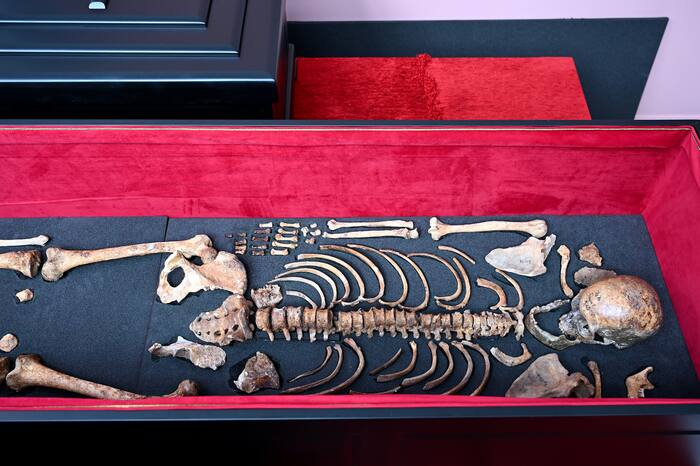
It sounds like the opening line of a historical fiction novel, but it is a cold, strange reality of modern geopolitics meeting ancient ghosts. After decades of tense negotiations, diplomatic friction, and institutional inertia between Sofia and Athens, the mortal remains of one of medieval Europe’s most tragic figures have finally crossed back into Bulgarian territory.
Consider what it means to be a ghost in diplomatic limbo.
For decades, the physical remnants of a man who once broke the Byzantine empire—and was subsequently broken by it—rested in Greece. They were not forgotten by historians, nor by the families whose ancestral memory stretches back through centuries of Balkan turbulence. Yet, between governments, a dead king is not an ancestor; he is a file. He is a diplomatic chip. He is a complication in bilateral relations that officials would rather leave in a museum basement than unpack.
To understand why Samuel's return matters, you have to step away from the dry ink of treaty reports and stand in the cold pass of Kleidion in the year 1014.
The air smells of woodsmoke, wet wool, and copper. The ground is steep, treacherous, and choked with the terrifying realization that an empire is crumbling around you. Samuel, leading the First Bulgarian Empire through its agonizing twilight, faced the relentless machinery of Byzantine Emperor Basil II, a ruler history chillingly dubbed the "Bulgar-Slayer."
The confrontation at Kleidion was a cataclysm. Thousands of Bulgarian soldiers were captured. Basil, in an act of calculated psychological terror that still echoes through the canyons of time, ordered the prisoners blinded. One out of every hundred men was left with a single eye so he could lead his broken brothers home in a weeping, shuffling column of agony.
When Samuel beheld the wreckage of his army—men he had led, men who had trusted him—the shock was too much for a king's heart. He suffered a fatal stroke just days later.
A kingdom does not simply vanish when its king dies; it fractures. And Samuel’s story fractured across borders that didn't exist when he breathed his last.
For modern travelers driving through the rugged landscapes of the Balkans, the past is never past. You can feel it in the slate roofs of ancient villages, the heavy mist clinging to mountain ridges, and the stubborn pride of people who have survived centuries of shifting flags. When I stood in Sofia years ago, listening to old men argue about boundaries and battles in neighborhood cafés, I realized that history here is alive. It breathes. It demands resolution.
The bones discovered in Greece, attributed through decades of anthropological research to the fallen tsar, became a quiet symbol of this unfinished business. Why did it take decades? Because every repatriation of a royal body is a delicate negotiation over identity, ownership, and national pride. Who owns a king who fought a war that carved the geography of two modern nations? Is he a historical relic to be studied in a lab, or an ancestral anchor demanding the dignity of native soil?
Decades of talks. Think about the phrase.
Decades of diplomatic notes passed back and forth over mahogany tables. Decades of committees meeting, deliberating, postponing. While modern politicians argued over protocol, Samuel waited in quiet obscurity.
Borders shift. Ideologies rise and crumble. Empires dissolve into memories. Yet a skeleton remains, whispering of a time when men fought and died for patches of dirt now crossed by high-speed trains and tourist buses.
The return of Czar Samuel is not just a news headline about an archaeological transfer. It is a rare moment where history catches up with itself. It is a reminder that nations are built on stories, and stories demand closure.
As the motorcade crossed the border, bearing a casket that held the physical remains of a medieval monarch, there was no grand battle, no clash of cavalry, no triumphant fanfare. There was only the quiet dignity of a homecoming delayed by a thousand years.
Sometimes, the longest journey a king can make is the one back to his own people.