Thousands of miles from any frontline, a steel hull cuts through dark, churned waters. On board, ordinary men and women keep the world moving. They do not wear uniforms. They carry no rifles. Their days are measured in watches, engine oil, cooked meals, and crackling radio calls back home to waiting families.
Then the sky breaks open.
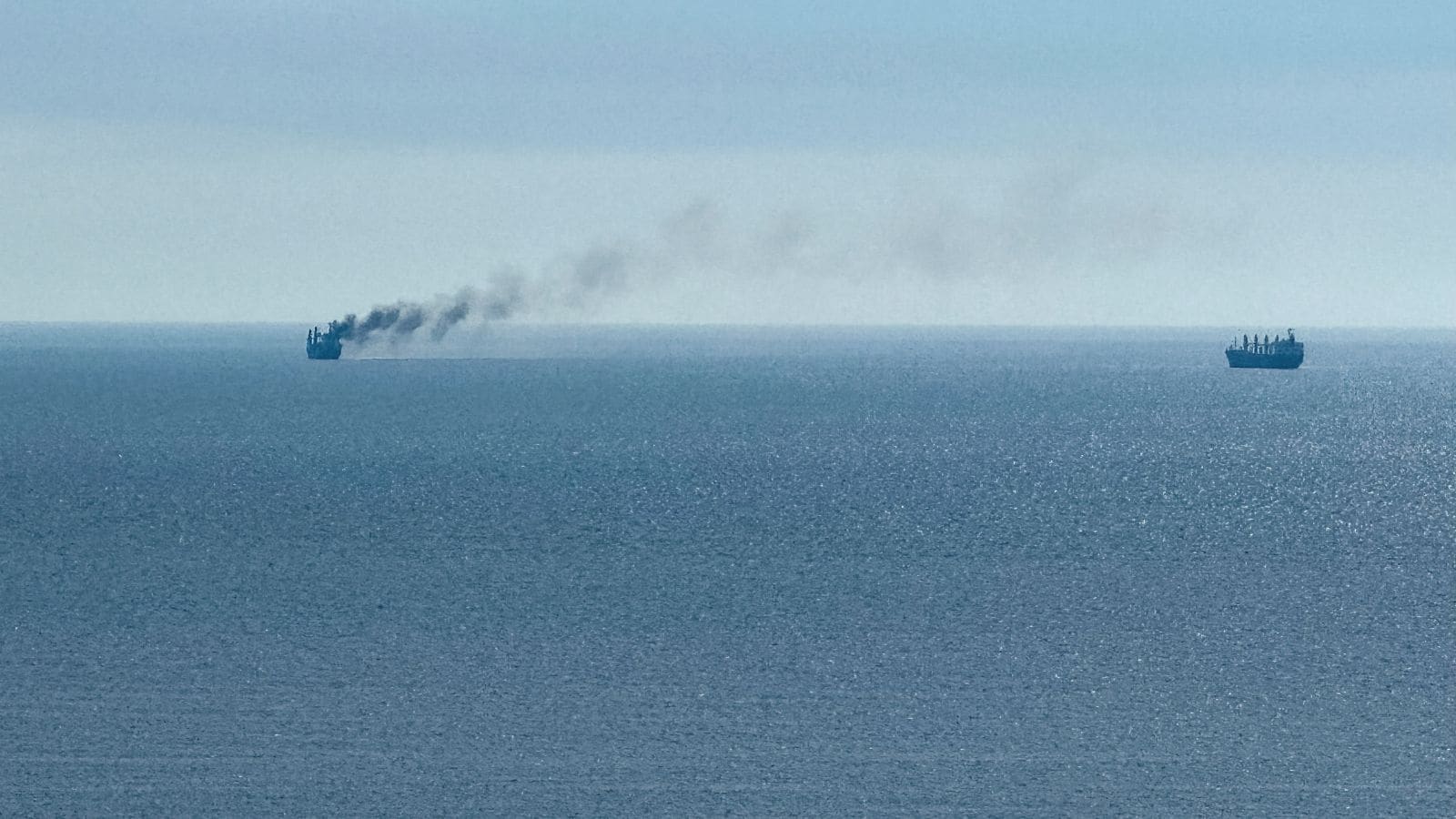
A flash of fire lights up the deck of a commercial cargo vessel off the coast. Smoke pours into the night sky, and in an instant, a routine merchant voyage turns into a site of international tragedy. Among those caught in the crossfire was an Indian crew member whose life ended abruptly in a war zone he had no part in making.
When maritime violence spills into civil shipping lanes, it rarely stays contained on water. It reaches into living rooms across the globe.
The Invisible Engine of Global Trade
We rarely think about the ships.
Grain moves across oceans. Fuel travels from continent to continent. Electronics, steel, fertilizer, and medicine flow through narrow sea corridors around the clock. The modern economy depends on an unseen fleet manned by seafarers who spend months isolated from land.
India supplies a major portion of the world's maritime workforce. Young engineers, deck cadets, and experienced captains leave home for months at a time, sending paychecks back to quiet neighborhoods in Kerala, Punjab, Tamil Nadu, and Maharashtra. They accept long separations from their families as the price of building a life.
What they do not sign up for is becoming targets in international conflict zones.
When a commercial vessel in the Black Sea was struck, the casualty was not a combatant. It was a worker doing a job. The official statement from New Delhi followed swiftly—a stark, formal condemnation of attacks on innocent civilian merchant shipping. The foreign ministry reiterated the necessity of respecting international maritime law and ensuring the safety of innocent seafarers.
Underneath the formal diplomacy lies a human reality that cannot be captured in press releases.
When Shipping Lanes Become Frontlines
The Black Sea has long been a strategic crossroads. Ports along its rim feed millions of people around the globe. Yet as geopolitical tensions escalated into active warfare, those vital trade routes morphed into high-risk passages.
Naval mines drift far from their origin points. Drones and missiles mistake target profiles or fall off course. For merchant ships navigating these waters, every transit becomes a exercise in calculated risk.
Consider what a merchant mariner faces in high-risk zones.
Suppose a crew of twenty prepares to enter a designated high-threat area. They rig fire hoses along the deck railings. They secure night-vision equipment, double their watches, and wear heavy body armor while standing on the bridge. The hum of the engine room below feels different when every vibration carries the threat of an explosion.
Every shadow on the radar screen requires scrutiny. Every distant blast sends a shockwave through the bridge windows.
This is not war as fought by armies. This is civilian labor conducted under the shadow of military hardware.
The Cost Borne by Families
Diplomatic statements use precise, measured words. Governments call for restraint, demand investigations, and reaffirm commitments to international law.
Back in a quiet home thousands of miles away, the news arrives through a phone call.
The contrast is painful. On one side, high-level diplomatic channels draft language to address sovereign nations and global bodies. On the other side, a family sits in a quiet living room staring at an empty chair, trying to reconcile the concept of global maritime trade with the sudden loss of a son, brother, or father.
When an Indian national dies on a ship in the Black Sea, the consequences ripple through an entire community. The community gathers. Neighbors drop off food. Questions linger that no official briefing can truly answer.
Why was the ship there? Who fired the projectile? How does a merchant mariner become a casualty of a war fought between nations that are not his own?
A Question of Safe Transit
The international community operates on a basic principle: civilian ships in international waters must not be targeted. Freedom of navigation is not merely a legal phrase; it is the bedrock of international stability.
When merchant ships are struck:
- Insurance rates for commercial vessels skyrocket, driving up the cost of goods for everyday consumers worldwide.
- Shipping companies struggle to crew vessels heading into unstable corridors, leaving essential commodities stranded in port.
- Global supply chains stutter, demonstrating how fragile our interconnected systems really are.
India's swift condemnation of the Black Sea attack reflects both moral outrage and practical necessity. As a nation with hundreds of thousands of citizen mariners serving on international vessels, protecting those lives is a matter of direct national interest.
Yet legal frameworks move slowly. Missiles move fast.
The tragedy in the Black Sea exposes a gap between international law and the realities of modern warfare. Weapons used today are precise, powerful, and often autonomous. When launched into crowded maritime corridors, the margin for error shrinks to zero.
The Echo on the Deck
The sea does not retain footprints. A ship passes, its wake folds back into the water, and the surface looks unchanged.
On the vessel that survived the attack, the crew remains. Damage is assessed. Reports are logged. The remaining crew members look out at the grey horizon, aware that their contract is not yet finished and the voyage must go on.
Back home, an Indian flag flies at half-mast in the memory of a worker who simply went to sea to make a living, and never came back.