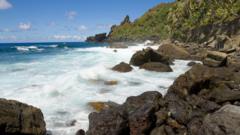
Isolation isn't a new concept for the residents of Pitcairn Island. Located thousands of miles from the nearest continent in the vast expanse of the South Pacific, this tiny British Overseas Territory is the definition of remote. But for one woman currently living there, the usual isolation of island life has taken a much more clinical, high-stakes turn. She’s currently sequestered in a makeshift quarantine after potential exposure to hantavirus, a rare but dangerous respiratory illness. This isn't just a story about a medical scare. It's a look at how a community of roughly 50 people handles a potential outbreak when the nearest hospital is a multi-day boat ride away.
The situation began when the individual, who had recently traveled from an area where hantavirus is endemic, reported potential symptoms or contact. On an island with no runway and a tiny population, any infectious disease is treated like a five-alarm fire. You don't take chances when your medical infrastructure consists of a single health clinic and a resident doctor. The logistics of a South Pacific quarantine are brutal. It's not like being stuck in a suburban house with DoorDash. It's about being stuck on a rock in the middle of the ocean while a small community watches the horizon for signs of trouble.
Understanding the Hantavirus Threat
Hantaviruses are a family of viruses spread mainly by rodents. People get it through contact with rodent urine, droppings, or saliva. The most common way is breathing in misted droplets that are contaminated with the virus. In the Americas, we worry about Hantavirus Pulmonary Syndrome (HPS). It's nasty. We’re talking about a severe respiratory disease that starts with fever and muscle aches but can rapidly progress to something much worse.
If you think this is just a bad flu, you’re wrong. HPS has a mortality rate of around 35% to 40%. That’s why the authorities on Pitcairn aren't playing games. While hantavirus doesn't usually spread from person to person—the "Andes virus" variant in South America is the rare exception—the risk profile for a closed community like Pitcairn is unique. If someone gets sick there, they can't just call an ambulance. They need a specialized medevac that could take days to organize and execute.
Why Pitcairn Is the Worst Place for a Medical Crisis
Pitcairn is famous for being the home of the descendants of the HMS Bounty mutineers. It's rugged. It’s beautiful. It's also a logistical nightmare for healthcare. There is no airport. To get there, you usually have to fly to Mangareva in French Polynesia and then take a 32-hour boat trip. If a patient’s lungs start filling with fluid—a hallmark of severe hantavirus—they don't have 32 hours.
The island’s resident doctor and nurse are capable, but they aren't equipped for intensive care or mechanical ventilation over long periods. In a case like this, the British government has to coordinate with regional partners, likely in New Zealand or Tahiti, to prepare for a possible emergency extraction. It’s a massive, expensive, and terrifyingly slow process.
The woman in isolation is basically living out a survival movie. She has to monitor her temperature and oxygen levels while the rest of the islanders keep their distance. In a place where everyone knows everyone’s business, the social pressure of being "the person who might have brought a virus" is immense. It's a psychological burden on top of the physical risk.
The Rodent Connection and Environmental Risks
You might wonder why a hantavirus scare is happening on a remote island. Most people associate the virus with dusty old cabins in the Rockies or rural barns in South America. But rodents are everywhere. While the specific species that carry the most dangerous strains of hantavirus, like the deer mouse or the white-footed mouse, aren't native to Pitcairn, the global nature of shipping means things move around.
Ships bring cargo, and cargo brings hitchhikers. The island has been working hard on biosecurity for years to protect its unique ecosystem. An incident like this highlights the cracks in those defenses. It's a reminder that even the most isolated places on Earth are connected to global health trends. If you're traveling from a region with known outbreaks, you carry that risk with you.
How the Island Responds to the Scare
The Pitcairn Island Council and the Foreign, Commonwealth & Development Office (FCDO) have protocols for these scenarios. They have to. They’ve dealt with COVID-19 and other threats by essentially locking the island down. For this specific hantavirus contact, the protocol involves:
- Strict physical separation of the individual.
- Regular communication via radio or phone to monitor symptoms.
- Disinfection of any areas the person may have occupied.
- Coordination with the supply ship, the Silver Supporter, to ensure no further cross-contamination occurs.
Honestly, the islanders are pros at this. They have a "we look out for our own" mentality that’s hard to find in big cities. If she needs food, someone leaves it at the door. If she needs a book, someone drops it off. But the tension is real. Until the incubation period—which can last up to eight weeks, though usually shows up in one to five—is over, the island stays on edge.
What This Tells Us About Global Health
We live in a world where a virus can travel from a rural forest in South America to a speck of land in the South Pacific in less than a week. The Pitcairn situation is a microcosm of the risks we all face. It’s a reality check for travelers. You might think you're going off the grid, but your biology doesn't care about your vacation plans.
Medical experts often talk about "One Health." This is the idea that human health, animal health, and the environment are all linked. When we move into rodent habitats or transport goods across oceans, we're shuffling the deck of viral risks. For the woman on Pitcairn, this is no longer a theoretical concept. It’s her daily life until the tests come back clear or the quarantine clock runs out.
Practical Steps for High Risk Travel
If you’re planning to head to a remote area after being in a region known for hantavirus—like parts of the US Southwest, Chile, or Argentina—you need to be smart. Don't just wing it.
- Know the symptoms. It starts like the flu. Fever, chills, muscle aches. If it turns into shortness of breath, it’s an emergency.
- Disclose your travel history. If you feel sick, tell your doctor exactly where you’ve been. This saved time for the Pitcairn team.
- Practice rodent control. If you're in a cabin or a rural area, don't sweep up droppings. Use a bleach solution to wet them down first so you don't kick up dust.
- Check your insurance. Make sure you have medical evacuation coverage. A private medevac from a place like Pitcairn or a remote jungle can cost $100,000 or more.
The situation on Pitcairn is ongoing. For now, the island waits. The woman waits. It’s a stark reminder that in the battle between modern travel and ancient viruses, the virus still has a very long reach. Keep your gear clean, keep your rodents away, and always have a backup plan for when things go south in the middle of nowhere. It's the only way to stay safe when you're thousands of miles from the nearest ICU.