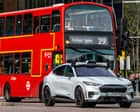
Everybody loves a grand tech promise until reality hits the pavement. London's much-hyped driverless taxi future was supposed to arrive this year, but if you are waiting to book a trip without a human behind the wheel, you're going to be waiting a lot longer.
The high-profile rollout of autonomous ride-hailing services across the UK capital has slammed hard into a regulatory roadblock. Transport for London (TfL) still hasn't published the crucial rulebooks and guidance that private hire firms need to follow before they can legally launch commercial operations. While tech companies and fleet operators are keen to test their software on notoriously congested British streets, the bureaucratic machinery is moving at a snail's pace.
The Reality Behind the London Robotaxi Delay
If you follow urban mobility trends, you know that cities like Phoenix, San Francisco, and various Chinese hubs have already normalized driverless transit. Naturally, people assumed London would follow right behind, especially after political leaders talked up an accelerated timeline for trials.
Instead, major players like Uber-backed Wayve, Google's Waymo, and China's Baidu are stuck holding pattern. Wayve and Uber secured private hire vehicle licenses for specialized test fleets equipped with AI software and camera arrays. Those vehicles are hitting the road, but they aren't truly driverless yet. A licensed human safety driver has to sit right there in the driver's seat, ready to take over the second things get messy.
Christina Calderato, TfL's director of strategy, made it clear during a recent London Assembly transport committee session that the transit authority isn't rushing to push guidelines out the door. Behind-the-scenes safety evaluations take precedence, and officials admit they won't be accepting full commercial applications for quite some time.
Why London Traffic Breaks Standard AI Models
Running an autonomous fleet in London isn't anything like cruising through the grid layout of a sun-drenched American desert city. The British capital presents a uniquely chaotic driving ecosystem.
- Narrow, medieval street layouts mixed with heavy pedestrian foot traffic.
- Aggressive cyclists darting blindly through blind spots.
- Unpredictable weather patterns and faded road markings.
- Potholes, sudden delivery vans blocking lanes, and complex roundabout junctions.
Autonomous software trained on simpler international grids frequently stumbles over these localized quirks. Wayve's chief executive, Alex Kendall, has pointed out that bringing autonomy to London is a massive step up in complexity. Building artificial intelligence that can safely navigate a sudden swarm of delivery scooters outside a crowded Tube station requires intense validation. Nobody wants a high-profile accident on Oxford Street to completely kill public trust in the technology before it even leaves the starting gate.
What Needs to Happen Before Driverless Taxis Hit the Streets
Passing national laws like the Automated Vehicles Act created a broad legal framework, but local execution requires specific administrative permits. Operators need an automated passenger services permit from the Driver and Vehicle Standards Agency (DVSA), alongside explicit local clearances from TfL.
Right now, more than 100,000 eager Londoners sit on waiting lists curated by operators hoping to pilot the service. Yet, until TfL finalizes its operational guidelines and safety thresholds, companies cannot legally transition from monitored testing to uncrewed, fare-paying public rides.
If you're tracking this space, keep an eye on how small-scale trials with safety drivers unfold over the coming months. Those preliminary miles will dictate how quickly regulators feel comfortable loosening the leash. Real autonomy in London isn't dead, but it's proving that complex urban infrastructure answers to a much stricter timeline than Silicon Valley pitch decks ever admit.