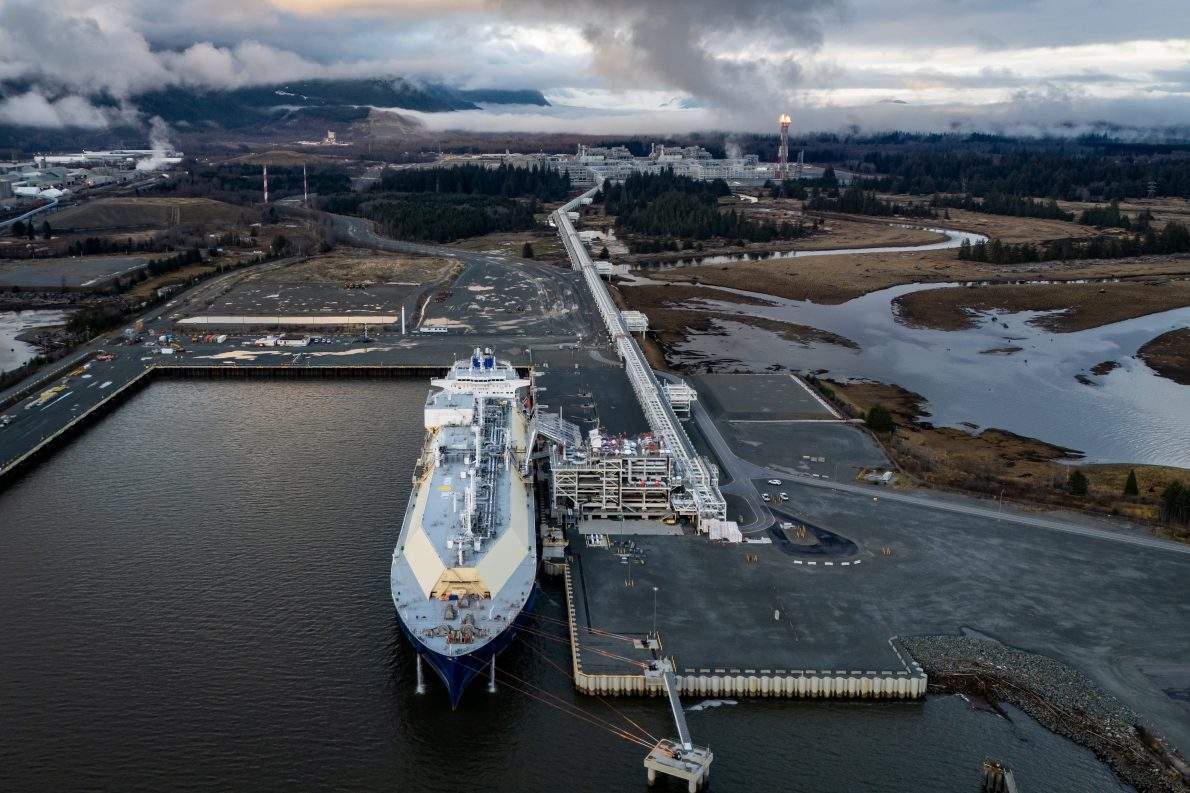
The world’s energy map just got redrawn, and the ink is still wet. While headline writers are obsessed with the terrifying chaos in the Strait of Hormuz, a much quieter—and arguably more significant—shift is happening on the rugged coastline of British Columbia.
LSEG data reveals that the LNG Canada facility in Kitimat isn't just "up and running"—it's aggressively hitting its stride exactly when the global market is staring down a massive supply void. In the first 11 days of March 2026, the plant pushed out five full cargoes. To put that in perspective, that’s already more than half of what it managed in the entire month of February. A sixth ship is literally pulling away from the dock as you read this.
You don't need a PhD in economics to see why this matters. With the US-Iran conflict essentially paralyzing 20% of the world’s LNG supply, Canada has suddenly transitioned from a "potential player" to a critical global safety valve.
The Qatar-sized hole in the market
For decades, the energy world relied on the predictable flow of gas from Qatar. That predictability died on February 28. Following the joint strikes by the US and Israel on Iranian infrastructure, Iran’s retaliatory threats have turned the Strait of Hormuz into a maritime no-go zone.
Qatar, which supplies roughly a fifth of the world’s liquefied natural gas, was forced to declare force majeure after tankers found themselves unable to safely transit the waterway. This isn't a minor hiccup; it’s a systemic collapse of a primary supply artery.
The timing of LNG Canada’s ramp-up feels almost scripted. While the plant only recently reached full Phase 1 operations—housing two processing trains with a 14 million tonne annual capacity—it’s already operating at or near its limit. Analysts at RBN Energy note that the facility is pushing for a "quick surge" to capitalize on the price spikes currently hitting Asia and Europe. When the world is desperate, being the only major terminal with a clear path across the Pacific is a massive advantage.
Why the Kitimat route is a logistics cheat code
If you look at a map, you’ll realize why Asian buyers are breathing a sigh of relief. Unlike US Gulf Coast exporters who have to gamble with the Panama Canal or the long haul around Africa, ships leaving Kitimat have a straight shot.
- Speed: It’s a direct maritime route to Japan, South Korea, and the Philippines.
- Safety: Zero chokepoints. No Suez, no Panama, and certainly no Hormuz.
- Reliability: The gas comes from the Montney Formation, one of the most stable and massive reserves in North America.
Just this month, the export logs show two cargoes headed to Japan, two to South Korea, and one to the Philippines. These aren't just business transactions; they're lifeline deliveries for nations that are 90% dependent on energy imports and currently watching their Middle Eastern supply lines go dark.
The brutal reality for Canadian producers
You’d think everyone in the Canadian gas patch would be popping champagne, but it’s more complicated than that. Last summer, producers ramped up drilling in anticipation of this very moment. When LNG Canada had some early startup jitters and didn't suck up the supply as fast as expected, prices in Western Canada actually went negative in some spots.
Imagine paying someone to take your gas. That was the reality for companies like Advantage Energy just a few months ago.
Now, the tide has turned. Spot prices at the AECO hub in Alberta are hovering around $2 per million British Thermal Units. That’s still a deep discount compared to the US Henry Hub benchmark, but with the Kitimat terminal finally acting as a high-volume drain for all that trapped gas, the "bottleneck" era is ending. For the first time, Western Canadian producers aren't just price-takers stuck selling to a saturated North American market; they’re global players.
Scaling up or staying small
The current crisis has exposed a glaring truth: 14 million tonnes isn't enough. There’s already talk about a Phase 2 expansion that would double capacity to 28 million tonnes. If you ask the federal energy minister, Tim Hodgson, he’ll tell you Canada could eventually hit 100 million tonnes.
That’s a bold claim, and frankly, it’s one that faces massive hurdles. Projects like Cedar LNG and Woodfibre are in the works, but they won't be ready to save anyone in 2026. If the Iran conflict drags on for months rather than weeks, the "security dividend" of Canadian gas will become the only thing keeping the lights on in Tokyo and Seoul.
The lesson here is simple. Reliability is the new currency. In a world where your primary energy supplier can be neutralized by a single week of drone strikes and naval blockades, the boring, stable, and predictable output from a rainy port in British Columbia is worth its weight in gold.
If you're looking at the energy sector, watch the export numbers out of Kitimat over the next 30 days. If they stay at this "surge" pace, we aren't just looking at a successful project—we're looking at the new backbone of Pacific energy security. Start paying attention to the midstream players connecting the Montney to the coast; they're the ones holding the keys to the exit door.