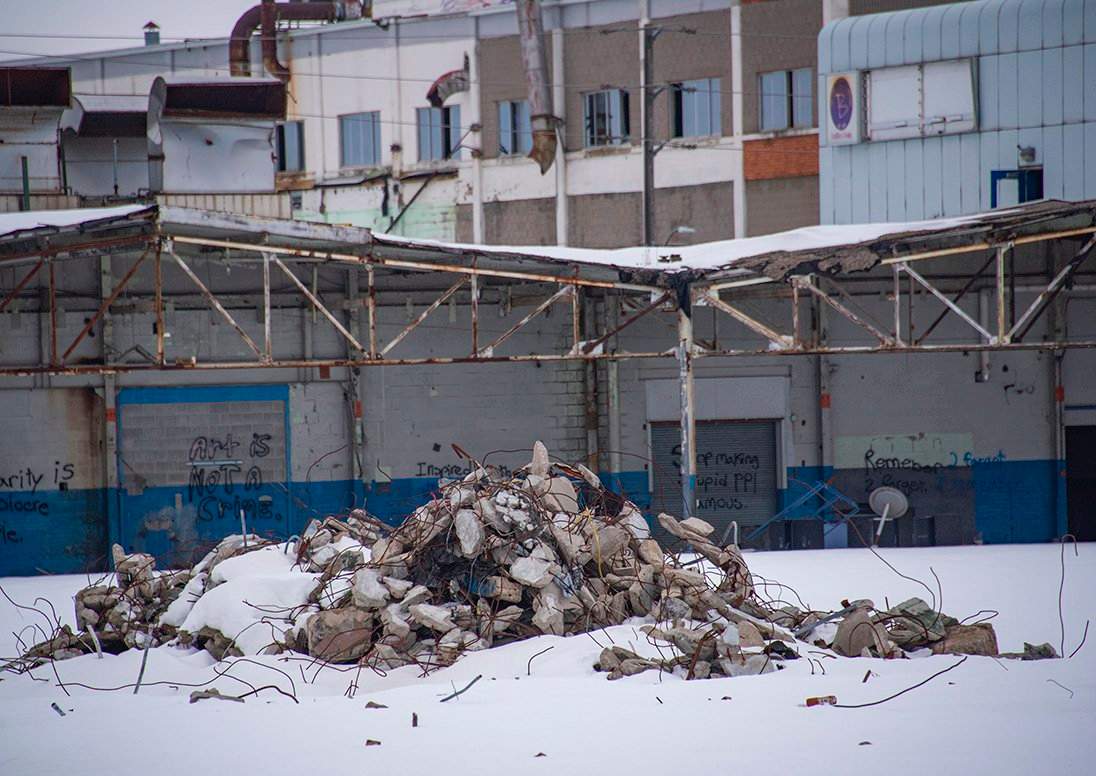
Legal Mechanics of Historical Industrial Site Remediation
Environmental liability disputes surrounding historical automotive manufacturing sites in Ontario operate at the complex intersection of common law torts, statutory administrative orders, and real estate valuation frameworks. When current site owners bring action against former industrial occupants in the Ontario Superior Court of Justice, the legal strategy moves past superficial property damage claims to address systemic risk allocation mechanisms.
The structural tension in high-stakes brownfield litigation stems from three distinct legal operational vectors:
- Statutory Liability Chain: The Ontario Environmental Protection Act (EPA) imposes strict liability parameters under administrative orders, empowering the Ministry of the Environment, Conservation and Parks (MECP) to name current and historic property owners, site occupiers, and charge-holders regardless of fault.
- Contractual Allocation vs. Regulatory Enforcement: Private indemnity agreements between historic sellers (e.g., General Motors) and subsequent buyers frequently attempt to cap, transfer, or waive civil environmental claims. However, private contracts cannot insulate parties from administrative regulatory orders issued by the MECP.
- Constructive Negligence and Nuisance Thresholds: Civil recovery depends on establishing strict liability under the rule in Rylands v. Fletcher, proving continuous historical nuisance, or establishing negligence based on the standard of environmental care required at the time the contamination migrated into subsurface soils and regional aquifers.
The friction between regulatory compliance and civil damages creates a capital preservation trap for current landowners. Current owners face immediate capital deployment requirements to satisfy government Orders to Comply while pursuing prolonged litigation to recover those expenditures from historic polluters.
Contaminant Migration Dynamics and Remediation Cost Functions
Evaluating financial liability in automotive manufacturing sites requires analyzing the subsurface behavior of dense non-aqueous phase liquids (DNAPLs), such as trichloroethylene (TCE) and tetrachloroethylene (PCE), alongside heavy metals and polycyclic aromatic hydrocarbons (PAHs). These legacy contaminants do not remain static; their migration patterns establish the baseline financial claims presented in court.
Subsurface Transport Physics
Industrial degreasing and painting operations historically released volatile organic compounds directly into urban soils. The physical properties of these compounds drive remediation costs exponentially higher over time:
- Vertical Migration Phase: High-density solvents descend through unsaturated overburden soils, bypassing lower-density groundwater tables until striking low-permeability clay or bedrock aquitards.
- Matrix Diffusion: Contaminants diffuse deeply into the fine-grained matrix of bedrock and clay, turning low-permeability geologic layers into continuous, long-term secondary sources of contamination.
- Horizontal Plume Dispersion: Dissolved-phase plumes migrate laterally off-site via natural hydraulic gradients, expanding civil liability to neighboring municipal or private properties.
The Remediation Cost Function
Remediation costs escalate non-linearly, driven by the shift from initial source-zone containment to deep subsurface matrix recovery.
Total Capital Expenditure = C_investigation + C_containment + C_treatment + C_monitoring
Where:
C_investigationencompasses high-density Phase I and Phase II Environmental Site Assessments (ESAs), continuous core drilling, and multi-depth monitoring well installation.C_containmentinvolves installing subsurface physical barriers, such as slurry walls or permeable reactive barriers (PRBs), to halt off-site plume migration.C_treatmentincludes active ex-situ excavation, soil vapor extraction (SVE), or complex in-situ chemical oxidation (ISCO) injection arrays.C_monitoringcovers multi-decade regulatory reporting, compliance sampling, and hydrogeological modeling updates.
Because historic site owners frequently assert that natural attenuation suffices, plaintiffs must present empirical evidence proving that passive degradation fails to stop off-site migration or mitigate volatile indoor air vapor intrusion risks.
Historical Contractual Defenses and the Limits of Liability Allocations
Corporate defendants in historical site disputes typically ground their defense in the legal terms established during original site divestments. These contractual defenses rely on specific structural clauses:
+------------------------------------+---------------------------------------------------+----------------------------------------------------+
| Contractual Defense Clause         | Operational Legal Intent                          | Judicial Vulnerability Threshold                   |
+------------------------------------+---------------------------------------------------+----------------------------------------------------+
| As-Is, Where-Is Real Estate Terms  | Transfer physical site risks to buyer at purchase | Fails to waive latent environmental hazards or     |
|                                    |                                                   | claims of historical fraudulent concealment.       |
+------------------------------------+---------------------------------------------------+----------------------------------------------------+
| Indemnity Expiration Horizons      | Enforce time limits on civil contamination claims | Unenforceable against statutory MECP orders;       |
|                                    |                                                   | vulnerable to claims of active off-site nuisance.  |
+------------------------------------+---------------------------------------------------+----------------------------------------------------+
| Comprehensive Release Agreements   | Preclude future litigation between parties        | Narrowly construed by courts; rarely applies to    |
|                                    |                                                   | unmapped or undisclosed historical dumping zones.  |
+------------------------------------+---------------------------------------------------+----------------------------------------------------+
The Breakdown of As-Is Clauses in Environmental Claims
An "as-is" clause functions primarily as a real estate valuation mechanism, acknowledging visible physical defects at the time of transaction. Courts in Ontario consistently restrict the scope of "as-is" provisions when dealing with subsurface contamination that was concealed or unmapped during historical operations.
When historical manufacturing operators controlled subsurface data through internal engineering audits that were not shared during transactional due diligence, the legal effectiveness of generic release language drops significantly.
Latent Defects vs. Patent Hazards
The distinction between patent defects (observable via standard Phase I ESAs) and latent defects (deep-seated historical contamination requiring intrusive hydrogeological probing) governs the applicability of limitation periods. Plaintiffs assert that latent subsurface contamination tolls standard limitation periods until a comprehensive Phase II ESA fully defines the horizontal and vertical extent of the environmental damage.
Strategic Evidence Synthesis for Superior Court Litigation
Winning environmental liability cases in the Ontario Superior Court of Justice demands an integrated evidentiary framework that combines forensic engineering, historical operational modeling, and specialized accounting.
                  ┌──────────────────────────────────────────────┐
                  │          Forensic Archival Audit             │
                  │ (Manufacturing logs, chemical inventories)   │
                  └──────────────────────┬───────────────────────┘
                                         │
                                         ▼
                  ┌──────────────────────────────────────────────┐
                  │        Hydrogeological Core Sampling         │
                  │   (Isotopic fingerprinting, stratigraphy)    │
                  └──────────────────────┬───────────────────────┘
                                         │
                                         ▼
                  ┌──────────────────────────────────────────────┐
                  │    Quantitative Subsurface Risk Model        │
                  │   (Plume velocity, degradation pathways)     │
                  └──────────────────────┬───────────────────────┘
                                         │
                                         ▼
                  ┌──────────────────────────────────────────────┐
                  │       Damages & Remediation Calculation      │
                  │  (In-situ treatment costs, land diminution)  │
                  └──────────────────────────────────────────────┘
Forensic Environmental Auditing
Litigants must construct an empirical timeline detailing industrial operations extending back decades. This requires:
- Chemical Inventory Reconstruction: Mapping historic procurement records for industrial solvents, transformer oils (PCBs), and cutting fluids against documented solvent dip tank locations.
- Infrastructure Asset Analysis: Reviewing historical drainage schematics, underground storage tank (UST) installation records, and legacy industrial sewer lines to identify structural breakdown points.
- Isotopic Compound Fingerprinting: Deploying Compound-Specific Isotope Analysis (CSIA) to distinguish between original industrial solvent releases attributable to the former owner and minor operational spills caused by subsequent site users.
Quantitative Land Diminution Accounting
Evaluating damages extends beyond calculating direct cleanup costs. The legal framework incorporates economic loss models that quantify the permanent impact on property utility:
- Direct Remediation Outlays: Expenses incurred to bring the site to baseline compliance standards under Ontario Regulation 153/04 (Records of Site Condition).
- Stigma Diminution: The persistent loss in fair market value caused by lingering market perception of environmental risk, even after receiving regulatory closure via a Record of Site Condition (RSC).
- Carrying Cost Escalation: Financial losses driven by delays in redeveloping brownfield lands, including capitalized interest, extended municipal property tax obligations, and lost opportunity costs during environmental testing and judicial proceedings.
Municipal Policy Conflicts and Brownfield Redevelopment Impasses
The legal battle in the Ontario Superior Court reflects broader policy frictions across municipal development priorities, economic development goals, and provincial regulatory frameworks.
Municipal Housing & Density Goals ◄───► Environmental Protection Act (EPA)
              ▲                                        ▲
              │                                        │
              ▼                                        ▼
Brownfield Developer Capital Outlays ◄───► Historic Polluter Liability Limits
The Regulatory Real Estate Barrier
Municipalities depend on converting underutilized industrial brownfields into high-density residential and commercial developments to meet urban growth targets. However, the regulatory mechanics established under O. Reg. 153/04 create strict operational hurdles:
- Property Use Change Thresholds: Transitioning a site from industrial use to sensitive residential or institutional uses triggers mandatory, exhaustive Phase I and Phase II ESAs, risk assessments, and the filing of a formal Record of Site Condition.
- Off-Site Liability Exposure: Landowners who submit a Record of Site Condition remain exposed to civil claims from adjacent property owners if subsurface plume migration occurred prior to or during the remediation window.
- Inflexible Remediation Standards: Generic Site Condition Standards enforce rigid chemical concentration limits in soil and groundwater, frequently requiring expensive off-site soil disposal unless a site-specific risk assessment (SSRA) receives formal ministry approval.
This regulatory burden forces brownfield developers to choose between absorbable risk and legal confrontation. When site cleanup costs exceed the underlying land value, litigation becomes the primary mechanism to restore project viability.
Actionable Strategy for Commercial Litigants in Industrial Site Claims
Plaintiffs and defendants involved in complex industrial site litigation should execute a structured evidentiary and procedural strategy:
- Execute Dual-Track Hydrogeological Investigations: Immediately initiate high-resolution site characterization using continuous direct-push core sampling and compound-specific isotope analysis. This establishes an empirical chemical baseline that separates legacy industrial discharges from modern surface contamination.
- Isolate Historical Insurance Capital: Trace historical Comprehensive General Liability (CGL) insurance policies held by former site operators. Legacy policies issued prior to standard absolute pollution exclusions (pre-1985) often provide a source of indemnity funding, even if original corporate entities have been restructured or dissolved.
- Secure Interlocking Expert Testimony: Coordinate hydrogeologists, environmental engineering consultants, real estate forensic appraisers, and brownfield tax specialists to build a unified damages model. The expert framework must demonstrate a direct connection between historical chemical releases, current regulatory cleanup requirements under O. Reg. 153/04, and measurable property value loss.
- Structure Pre-Trial Motions Around Limitation Clock Triggers: File early motions for summary judgment on specific legal issues—such as when the plaintiff discovered the subsurface contamination—to force the defense to reveal its interpretation of contractual release language and discoverability timelines before trial.


