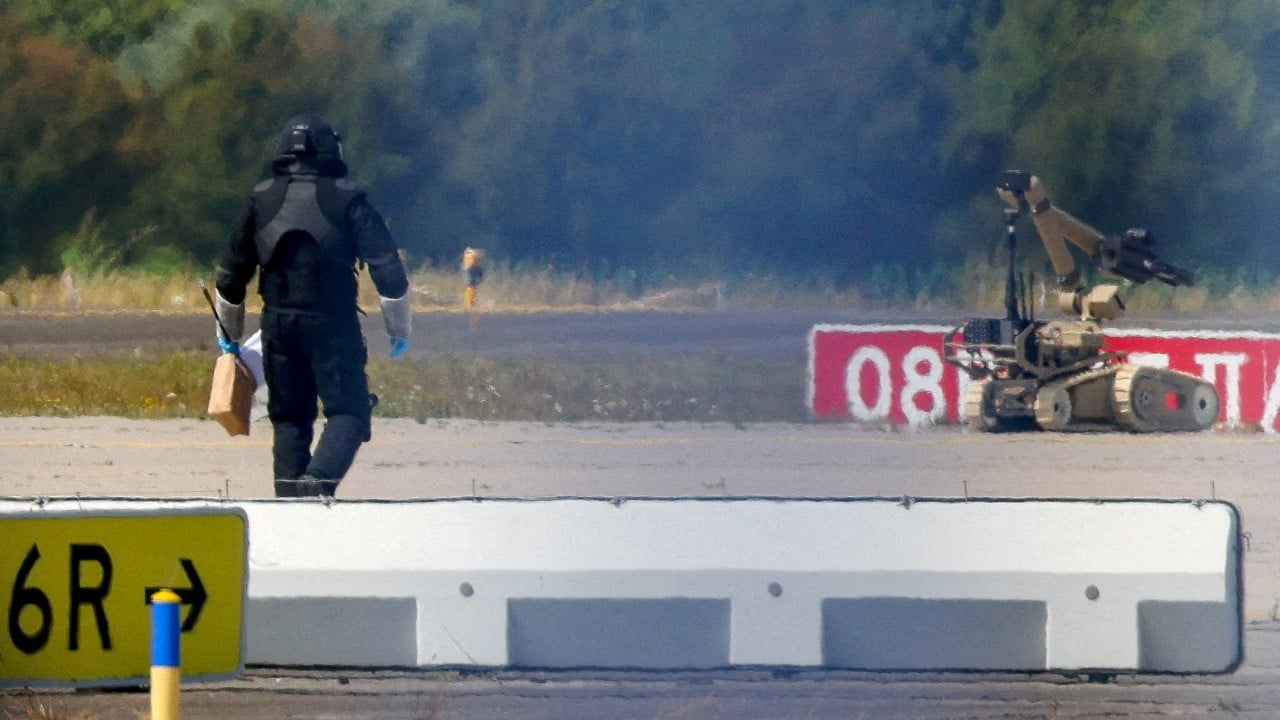
Marek does not hear an explosion.
He hears only the rhythmic, metallic clicking of an air conditioner overhead and the soft hum of fluorescent lights casting a sterile white glow across his midnight control room in Warsaw. On his screen, a cluster of green and red status indicators flickers. Then, a single node blinks amber. A regional power distribution hub three hundred miles away reports an inexplicable voltage drop. A minute later, a railway signaling system stutters. Trains do not crash. They simply halt, stranded in the freezing dark between provincial stations, their passengers peering out into an empty, mist-shrouded night, wondering why the world has paused. In other news, read about: Sentencing Architecture And Driver Negligence The Hong Kong Case Breakdown.
Marek is a composite figure, but his quiet panic is happening right now across Europe.
This is not the war history books taught us to expect. There are no iron-clad columns of tanks churning through muddy rye fields. There are no screaming sirens herding trembling citizens into subterranean concrete shelters. No aerial armada darkening the midday sun. Instead, the invasion arrives on silent digital pulses, through severed fiber-optic cables resting on the pitch-black floor of the Baltic Sea, through mysterious warehouse fires in London and Warsaw, and through invisible waves of radio frequency jamming that blind civilian commercial aircraft as they approach runways in the Baltic states. The New York Times has provided coverage on this important issue in great detail.
It is a slow-motion erosion of certainty. A war fought without a single formal declaration of hostilities.
Europe spent decades preparing for a storm that looked like the past. Military planners drafted doctrines around armored breakthroughs, artillery duels, and air supremacy. They built formidable walls of steel and deterrence against a conventional invasion from the East. Yet while the continent watched the horizon for smoke, the battlefield shifted beneath its feet.
Consider what happens next in an ordinary European capital on an ordinary Tuesday morning.
A wave of coordinated disinformation floods local social media channels. Automated bot accounts amplify fake reports of poisoned municipal water supplies. Panic spreads faster than any wildfire. Supermarket shelves empty within hours as frightened residents hoard bottled water and canned goods. At the exact same moment, a cyberattack paralyzes the ticketing and scheduling software of a major national railway network, while mysterious drone swarms hover unauthorized over critical nuclear energy facilities.
Is this an act of war?
That is the agonizing question paralyzing Western capitals. Under international law, an act of war triggers collective defense pacts, economic blockages, and military retaliation. But hybrid operations operate precisely in the gray zone designed to evade those thresholds. Each individual incident is carefully calibrated to remain just below the line of armed conflict. A cut cable can be blamed on a careless cargo ship dragging its anchor. A warehouse fire can be written off as faulty wiring or insurance fraud. A cyber intrusion can be attributed to rogue criminal syndicates rather than state intelligence officers.
Plausible deniability becomes a weapon of mass confusion.
The strategy is deceptively simple. Wear down the enemy from within until the cost of resistance feels higher than the cost of submission. It preys on the open nature of democratic societies. Free press, open borders, decentralized energy grids, and digital connectivity—the very pillars that make European nations prosperous and free—are weaponized against them.
Walk through the corridors of decision-making in Brussels, and you will encounter a heavy, suffocating weight of bureaucratic inertia.
Twenty-seven sovereign member states must agree before a unified countermeasure can be deployed. Each nation possesses its own unique vulnerabilities, its own economic dependencies on foreign energy, and its own political factions susceptible to external influence. While Moscow or other hostile actors move with ruthless agility, decision-makers in Western capitals are mired in endless rounds of diplomatic consultations, legal debates over jurisdiction, and evidentiary standards that demand absolute certainty before public attribution can be made.
Absolute certainty is a luxury that modern conflict no longer affords.
By the time a cyberattack is formally investigated, verified, and attributed to a specific military intelligence unit, the damage is already done, the servers have been wiped, and the operatives have vanished behind digital aliases. The attacker has moved on to the next soft target, leaving behind a bewildered bureaucracy drafting strongly worded statements of condemnation.
Condemnation does not stop a drone. Resolutions do not weld shut a severed communication cable.
To understand why this struggle is so profoundly difficult for Europe, one must examine the fundamental mismatch in philosophy. Democracies value rules, transparency, and proportionality. Hybrid warfare recognizes none of those constraints. It treats peace and war as a continuous spectrum where rules are meant to be broken, borders are porous suggestions, and civilian infrastructure is fair game.
Look closely at the Baltic Sea region.
Underwater infrastructure—pipelines carrying natural gas, data cables transmitting trillions of dollars in financial transactions every second—lies completely exposed to sabotage. A single specialized vessel equipped with submersibles can sever a vital artery of European commerce in minutes. When an undersea cable is cut, the economic disruption ripples across global markets, yet emergency repairs take weeks in treacherous winter seas. The psychological toll is even heavier. Every flickering streetlamp, every delayed train, every strange glitch in a banking app plants a seed of quiet dread in the minds of ordinary citizens.
Are we safe?
That doubt is the ultimate objective of the attacker. If people lose faith in the basic competence and security of their institutions, the democratic fabric begins to fray from the inside out.
Governments are slowly waking from their slumber, though the awakening is painful and uneven. Intelligence agencies are sharing threat assessments faster than ever before. Critical infrastructure operators are hardening their physical security, installing underwater acoustic sensors, and backing up sensitive data onto isolated offline servers. Naval patrols have been increased across vital maritime choke points, and counter-disinformation units work around the clock to flag and neutralize coordinated bot campaigns before panic can take root.
Yet these defensive measures feel like trying to catch leaking water with a sieve.
Defense alone has never won a sustained campaign. As long as the architects of these hybrid operations face zero tangible costs for their actions—no severe diplomatic isolation, no paralyzing economic counter-blows, no meaningful deterrent—the attacks will continue to escalate.
The hesitation in Western capitals stems from a deeply ingrained fear of escalation. No one wants to stumble blindly into a direct military confrontation between nuclear-armed powers. That caution is understandable, born of historical memory and a genuine desire to preserve peace. But that very caution is being calculated, measured, and exploited by adversaries who view restraint not as wisdom, but as weakness.
When a state can repeatedly violate sovereignty, sabotage critical civilian infrastructure, and manipulate democratic elections without facing decisive retribution, deterrence ceases to exist.
The quiet war continues in the shadows.
It happens in hospital networks frozen by ransomware, in university laboratories where intellectual property is siphoned away by invisible hackers, in coastal towns where anonymous vessels lurk near communication hubs under the cover of dense fog.
Marek closes his laptop at sunrise, rubbing his tired eyes as the first pale light of dawn breaks over the Polish capital. The trains are moving again. The voltage has stabilized. For now, the system holds. But outside his window, the morning air is cold, quiet, and watchful, holding its breath for the next invisible strike.


