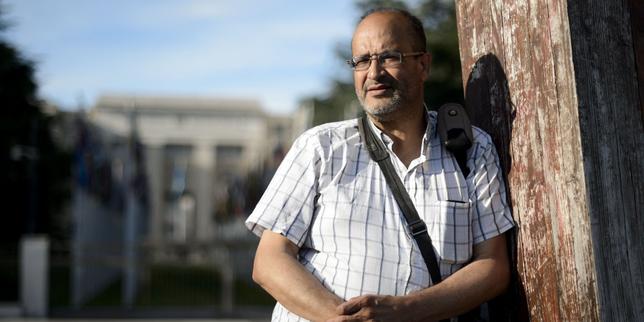
The Moroccan state has a very long memory, and it rarely forgives. If you doubt that, look at the situation facing Ali Lmrabet. The veteran investigative journalist and satirist finds himself waiting for a potential trial in Morocco. The accusations against him are heavy. He is accused of defaming two of the most powerful figures in the entire kingdom: Abdellatif Hammouchi, the country's formidable national security and intelligence chief, and Fouad Ali El Himma, the king’s closest and most influential advisor.
This is not a simple legal dispute. It is a stark reminder of how the Moroccan establishment handles dissenting voices. For decades, Lmrabet has refused to play by the unspoken rules of Moroccan media. Now, the state is reminding him—and anyone else watching—exactly what happens when you cross the palace’s red lines. For a different perspective, see: this related article.
To understand why this case is happening now, you have to look past the dry legal terminology of defamation. You have to look at how power actually operates in Morocco.
The Red Lines of Moroccan Journalism
In Morocco, journalists know there are certain topics you simply do not touch. They call them the sacred three: the monarchy, Islam, and the territorial integrity of the kingdom, specifically referring to the Western Sahara. Related analysis on the subject has been published by NBC News.
If you stay within these boundaries, you can usually operate. You might even get some state advertising revenue. But if you step over them, the state’s apparatus will come down on you.
Lmrabet did not just step over the line. He built his entire career on stomping all over it.
Decades ago, his weekly publications, Demain and Demain Magazine, pushed the limits of satire and investigative reporting. He published cartoons of the king. He investigated the finances of the royal family. The state responded by banning his publications, throwing him in prison, and eventually banning him from practicing journalism for a decade.
Many thought that ten-year ban, which ended in 2015, would quiet him down. It did not. Working from exile in Spain and utilizing social media and YouTube, Lmrabet kept writing and speaking. He kept naming names. That is what brought him to this current crisis.
The Men in the Crosshairs
The two figures Lmrabet is accused of defaming are not ordinary public officials. They represent the twin pillars of the Moroccan deep state, often referred to as the Makhzen.
Abdellatif Hammouchi
Hammouchi is the head of both the national police (DGSN) and the domestic intelligence agency (DGST). He is widely considered one of the most powerful security officials in the Arab world. Western intelligence agencies, including those in the United States and France, work closely with him on counter-terrorism. Inside Morocco, his authority is virtually absolute. Criticizing him is widely understood to be a direct ticket to a courtroom.
Fouad Ali El Himma
El Himma is King Mohammed VI’s childhood friend and his most trusted political advisor. He is the architect of much of the country's political strategy over the last two decades. If Hammouchi represents the hard security power of the state, El Himma represents its political brain.
When Lmrabet targeted these two men, he was not just criticizing government policy. He was attacking the very core of the regime's power structure. In Morocco, criticizing these men is viewed as a direct attack on the king himself.
How Morocco Uses Defamation as a Legal Weapon
The state rarely jails journalists for "press offenses" anymore. That looks too bad on international press freedom indexes. Instead, the Moroccan judiciary has become highly creative.
In recent years, independent journalists have found themselves accused of non-political, highly damaging crimes. We have seen journalists jailed for sexual assault, tax evasion, or espionage. Press freedom advocates argue these charges are completely fabricated to destroy the moral credibility of the writers.
With Lmrabet, the approach is slightly different but equally effective. Defamation laws in Morocco are incredibly broad. Under the penal code, almost any critical reporting on a public official can be construed as defamation if the official claims it damaged their honor.
The system is rigged against the reporter. In these trials, the defense is rarely allowed to present the evidence that proved their reporting true in the first place. The courts simply side with the state officials, hand down massive fines that destroy the journalist financially, or threaten them with prison time.
A Pattern of Silencing Independent Voices
Lmrabet’s situation is not happening in a vacuum. It is part of a broader, highly coordinated campaign that has decimated independent journalism in Morocco over the last decade.
Think about what happened to Omar Radi. He was an investigative journalist who looked into state land grabs. He ended up sentenced to six years in prison on charges of espionage and sexual assault.
Think about Souleimane Raissouni. He was the editor of the independent newspaper Akhbar Al-Yaoum. He was sentenced to five years on sexual assault charges after a hunger strike that nearly killed him. His newspaper was forced to shut down due to financial pressure.
The message from the authorities is loud and clear. If you do not police yourself, we will police you.
Lmrabet is fighting this battle from a distance, but the threat of a trial in Morocco remains a heavy sword hanging over his head. It prevents him from returning home safely. It keeps him in a state of permanent legal limbo.
What Happens Next for Independent Media
The legal pressure on Lmrabet shows that the Moroccan government has no intention of loosening its grip on the press. If anything, the red lines are moving closer together, leaving almost no room for genuine investigative work.
So, what can be done if you are trying to follow or support what remains of Moroccan independent media?
- Look beyond the official charges. When a Moroccan journalist is accused of defamation or personal misconduct, look at what they were investigating right before the charges were filed. The timing is almost always revealing.
- Support diaspora media. Because it is virtually impossible to publish critical journalism inside Morocco, the most important reporting is now happening abroad. Outlets run by exiled journalists are often the only source of uncensored information.
- Demand international accountability. Morocco cares deeply about its international image, especially as it seeks closer economic ties with Europe and the United States. International pressure from human rights organizations does occasionally force the regime to back down or issue royal pardons.
The case against Ali Lmrabet is not just about one man’s legal troubles. It is an attempt to close the book on a generation of journalists who believed that Morocco could handle the truth.