Silence.
That is the first thing you notice when a congressional subpoena lands on a desk in Silicon Valley—not the rattle of printers or the frantic ping of Slack channels, but the sudden, suffocating quiet of lawyers reading every word twice before anyone dares to speak.
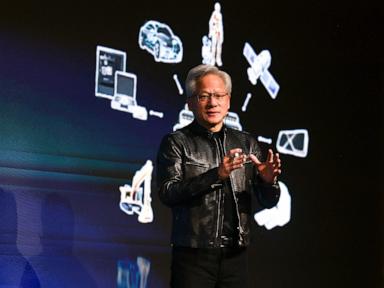
For years, Jensen Huang has moved through the world with the effortless gravity of a rock star who accidentally built the foundation of the twenty-first century. Clad in his signature black leather jacket, standing under the blinding stage lights of packed arenas, the co-founder and CEO of Nvidia has been the undisputed architect of the artificial intelligence boom. He signs autographs on the backs of fans. He speaks in sweeping, optimistic arcs about accelerated computing, digital twins, and a future where intelligence itself is manufactured like electricity.
Yet in the sterile, fluorescent-lit hearing rooms of Capitol Hill, a very different script is being written. House Republicans are weighing the prospect of issuing a formal subpoena to bring Huang before Congress—not to applaud his market capitalization, nor to marvel at the architecture of Blackwell and Hopper chips, but to demand answers about how the crown jewels of American hardware are finding their way into the hands of geopolitical rivals, and whether the man holding the keys to the modern world has been entirely forthcoming with the lawmakers trying to guard the gate.
To understand why this moment matters, you have to step out of the marble hallways of Washington and away from the glass campuses of Santa Clara. You have to look at what a graphics processing unit actually is when stripped of ticker symbols and keynote applause.
The Invisible Engine of Everything
Consider a hypothetical scenario to make the scale concrete. Imagine a structural engineer named Elena working in a mid-sized firm in Ohio, designing bridges, and a defense analyst named Marcus sitting three hundred miles away in a windowless room in Northern Virginia, tracking satellite telemetry over the South China Sea. Neither of them will ever meet Jensen Huang. Neither of them owns a single share of Nvidia stock outside a buried index fund.
Yet both of their worlds run on the exact same physical substrate.
When Elena runs a stress simulation to see how a steel truss behaves during a once-in-a-century freeze, her software routes millions of parallel calculations through a cluster of Nvidia data-center chips. When Marcus’s team trains a vision model to spot naval movements through thick cloud cover, they rely on the exact same proprietary software ecosystem—CUDA—that binds developers to Nvidia’s hardware like vines to a trellis.
Think of Nvidia’s chips not as ordinary computer parts, but as the specialized machine tools of the industrial revolution. During the nineteenth century, if you controlled the lathes and milling machines that built steam engines, you did not merely own a profitable factory; you controlled the speed at which every other nation could build railroads, warships, and cities. Today, high-end GPUs are those lathes. Without them, training frontier artificial intelligence models slows from a sprint to a crawl.
I have spent enough years watching hardware supply chains to know how fragile that dominance actually feels up close. You can walk into a server facility in Ashburn, Virginia, put your hand against the cold aisle containment door, and feel the low, relentless hum of thousands of fans pushing heat off silicon wafers etched with features measured in nanometers. The air smells faintly of ozone and warm plastic. Everything looks permanent, bolted into steel racks and redundant power grids.
It is an illusion. Behind every rack sits a supply chain stretching across Taiwan, South Korea, the Netherlands, and dozens of intermediary distributors—a chain where a single grey-market broker in a nondescript office park can divert millions of dollars of restricted hardware across borders before an export license even dries.
When Commerce Collides With National Security
That friction—between the relentless velocity of global trade and the slow, deliberate walls of national security—is precisely what has pushed House lawmakers toward the nuclear option of a subpoena.
For months, congressional committees, particularly those focused on strategic competition with China and national security oversight, have scrutinized how advanced AI chips continue to surface inside Chinese research institutions, state-linked universities, and commercial entities despite sweeping U.S. export controls introduced by the Biden administration and tightened repeatedly since 2022.
When the Commerce Department drew red lines around performance thresholds—limiting interconnect speeds and raw compute density—Nvidia did what any fiercely competitive public company is legally obligated to do for its shareholders. It engineered workarounds. It designed modified chips, such as the A800 and H800, and later the H20, tuned just beneath the regulatory ceiling so they could still be sold legally into one of the world’s largest technology markets.
To Wall Street, that was agile execution. To hawks on Capitol Hill, it looked like a game of regulatory whack-a-mole where the referees were always two steps behind the players.
But the tension goes deeper than modified SKUs. Lawmakers have raised pointed questions about smuggling networks, third-party resellers in Southeast Asia and the Middle East, and whether Nvidia has done enough to track where its most sensitive processors end up after leaving the loading dock. Furthermore, questions have swirled around Nvidia’s research partnerships, its domestic supply allocation during severe shortages, and how transparently the company has responded to prior congressional inquiries.
A subpoena is not a casual press release. In Washington, committees usually spend months negotiating voluntary document productions and transcribed interviews behind closed doors. A chair only reaches for compulsory process when they believe a company is slow-walking documents, offering curated talking points instead of raw records, or treating oversight as a public relations exercise rather than a constitutional mandate.
The Anatomy of a Congressional Reckoning
History offers a clear warning about what happens when technology titans underestimate the patience of Capitol Hill.
In the late 1990s, Bill Gates famously appeared detached and legalistic during antitrust depositions, treating lawmakers and regulators as interruptions to the real work of writing software. Two decades later, Mark Zuckerberg sat before Senate committees while senators asked basic questions about how Facebook made money—a spectacle that looked comical on television clips, yet ultimately permanently altered the regulatory climate around social media, data privacy, and cross-border acquisitions.
Jensen Huang is neither as combative as Gates once was nor as wooden as Zuckerberg appeared in 2018. Huang is charismatic, deeply technical, and fluently persuasive. If he sits behind a witness table under oath, he will not stumble over how a transformer model works. He can explain tensor cores, memory bandwidth, and supply chain logistics with the effortless clarity of a professor who built the chalkboard himself.
And that is exactly why lawmakers are divided on what happens next.
Bringing Huang before a committee under subpoena carries real political risk for Congress itself. If committee members ask vague, grandstanding questions, Huang will dismantle them politely in front of cameras, turning a disciplinary hearing into a free masterclass on American technological leadership. For a subpoena to land with weight, lawmakers have to arrive with receipts: specific shipping manifests, internal compliance memos, emails detailing how export thresholds were modeled, and hard evidence showing where corporate vigilance stopped short.
What No One Wants to Admit Out Loud
Here is the uncomfortable truth that rarely survives a thirty-second cable news segment: both sides of this standoff are trapped inside a genuine paradox, and neither has an easy exit.
I find myself torn every time I look at the export control numbers. On one hand, the national security argument is existential. If frontier AI systems become decisive in cyber warfare, autonomous weapons, bioweapon design, or intelligence synthesis, handing the hardware engine of those systems to an adversary is strategic self-harm. You do not sell the steel plating for a rival’s fleet and hope they only build ferries.
On the other hand, technology does not sit still inside a vault. Nvidia’s massive research and development budget—tens of billions of dollars plowed into next-generation architectures—depends on global scale. When U.S. restrictions cut American chipmakers out of foreign markets entirely, they do not freeze foreign innovation in amber; they hand domestic rivals like Huawei a captive customer base and an urgent state-backed mandate to build a self-sufficient alternative stack.
If you choke off too hard, you accelerate the birth of a competitor you can no longer see or regulate. If you loosen the grip, you risk arming the very capabilities you fear.
That is the tightrope stretched across the hearing room. When lawmakers threaten a subpoena, they are trying to assert democratic sovereignty over a company whose market value rivals the gross domestic product of entire G7 nations. They are reminding Nvidia—and every other hyperscaler—that national security is not a line item to be optimized around quarterly guidance.
Meanwhile, inside Nvidia, engineers and executives look at Washington and see a regulatory apparatus that struggles to understand the difference between a gaming card, an inference cluster, and a training supercomputer, yet wants to dictate the architecture of global computing by statutory decree.
The Question Hanging Over the Table
Whether the subpoena is formally signed this month or used as leverage to force a mountain of compliance records onto committee desks, the signal has already been sent. The era of pure, unexamined techno-optimism around artificial intelligence is over.
For the past three years, the public story of AI has been told almost entirely through product demos and stock charts—magical chatbots writing poetry, market caps climbing past three trillion dollars, and sleek keynotes promising a golden age of productivity. The physical, political reality underneath that magic was largely invisible to the people using the tools.
Now, the floorboards are coming up.
The next time you watch a video generated from three lines of text, or rely on an AI diagnostic tool at a clinic, or read about a breakthrough in protein folding, remember what sits beneath it. It is not ethereal code floating in an abstract cloud. It is hundreds of tons of copper, silicon, liquid cooling pipes, and geopolitical leverage—forged in a fragile global supply chain, fought over in closed-door committee rooms, and personified by a man in a leather jacket who suddenly has to answer to people who do not care how fast his chips run, only whose hands they land in.