Political leadership in a polarized legislature operates under an unforgiving lifecycle: the exact tactical skills required to survive internal caucus warfare eventually become fatal liabilities during moments of asymmetric external crisis. The widespread exhaustion with Senate Democratic leader Chuck Schumer is not a sudden wave of personal animus, nor is it an isolated disagreement over a single tactical retreat. It is the predictable terminal phase of an institutionalist operating model colliding with an era of scorched-earth legislative combat. When a party’s top strategist continues to optimize for incremental procedural survival while the opposition systematically dismantles governing norms, the leader ceases to function as a shield and instead becomes a structural bottleneck.
Understanding this breakdown requires separating surface-level political commentary from the underlying mechanics of congressional power. Standard punditry frames the tension inside the Democratic Party as an ideological tug-of-war between a cautious establishment and an impatient progressive wing, or as a simple generational dispute. That framing misses the operational reality. The friction is driven by a fundamental mismatch between two distinct leadership archetypes: the Transactional Broker, whose value proposition rests on managing internal factions and extracting marginal concessions within stable rules, and the Public-Facing Advocate, whose mandate is to define moral stakes, mobilize external coalitions, and force asymmetric political costs onto an opposition party.
The Architecture of Institutionalist Exhaustion
To diagnose why a multi-decade legislative operator loses the confidence of both his rank-and-file and his party’s voter base, we must examine the incentive structure that built his career. Over more than forty years in federal office, Chuck Schumer mastered the mechanics of the upper chamber. His operating system was forged in an environment where legislative success was measured by the quiet assembly of narrow majorities, the protection of vulnerable incumbents in swing states, and the avoidance of catastrophic institutional ruptures.
This model relies on three core mechanisms:
- Risk-Averse Consensus Building: Prioritizing the lowest common denominator within the caucus to prevent public defections, even when doing so dilutes the core policy objective to the point of voter illegibility.
- Procedural Deferral: Using committee timelines, cloture negotiations, and bipartisan working groups to absorb external political pressure rather than confronting it directly on the floor.
- Donor-Centric Insulation: Maintaining an aggressive fundraising apparatus that binds incumbents to the leadership structure through financial dependency, substituting capital allocation for ideological alignment.
In a high-trust, low-polarization legislature, this architecture produces durable, if uninspiring, governance. In a hyper-polarized environment characterized by constitutional brinkmanship, however, every single one of those mechanisms produces negative returns. When the opposing party treats legislative norms as weaponizable vulnerabilities rather than shared guardrails, risk-averse consensus building registers to the electorate not as prudent statecraft, but as unilateral disarmament.
The Three Failure Modes of the Transactional Broker
The erosion of Schumer’s authority stems from three compounding operational failures. Each represents a point where a legacy tactic actively undermined the party’s strategic position.
1. The Asymmetry of Procedural Restraint
In game theory, tit-for-tat strategies only stabilize cooperation when defection is met with immediate, proportional retaliation. Throughout the post-2020 political cycle and into the current governing era, Senate Democratic leadership repeatedly absorbed unilateral procedural escalations without imposing reciprocal structural costs. Whether navigating judicial confirmation blockades, debt-ceiling hostage-taking, or executive branch obstruction, the leadership’s default posture remained defensive containment.
This creates a destructive feedback loop. When the base observes leadership refusing to deploy available procedural counter-measures—such as aggressive filibuster reform or uncompromising floor holds—to protect core priorities, voter turnout collapses in subsequent cycles. The leadership then cites those narrow electoral margins as justification for further caution, locking the party into a downward spiral of diminished leverage.
2. The Information-Age Communication Deficit
Modern Senate leadership cannot be executed solely inside cloakrooms. In a fragmented media ecosystem, legislative leverage is directly proportional to a leader’s ability to command public attention and frame a coherent national narrative. A Transactional Broker communicates in the language of legislative mechanics: appropriations riders, cloture thresholds, and bipartisan frameworks.
That dialect is entirely unintelligible to the median voter. When confronting an opposition that communicates through visceral, populist grievance and clear binary choices, technical explanations of Senate procedure read as evasion. Without a leader capable of translating complex policy battles into immediate, human-scale stakes, Democrats consistently lose the framing war before a single vote is cast. The caucus is left defending technical compromises that inspire zero organic advocacy from grassroots organizers.
3. The Incumbency Trap and Talent Bottlenecks
Long-tenured legislative leaders naturally optimize for seniority and predictability. Over time, this hardens into an organizational hierarchy that suppresses emerging political talent. Committee chairmanships, floor time, and media amplification are allocated based on tenure rather than communicative efficacy or strategic agility.
This produces an acute succession crisis. By concentrating strategic decision-making within a tight circle of veteran aides and senior senators, the leadership starves the next generation of high-stakes operational experience. When the primary leader’s public standing deteriorates, the party discovers it has failed to cultivate an obvious, battle-tested replacement capable of stepping seamlessly into the breach.
The Cost Function of Retaining Legacy Leadership
Defenders of the current leadership structure frequently argue that removing a veteran tactician during a period of intense political vulnerability introduces unacceptable execution risk. This argument fails to account for the hidden costs of maintaining the status quo. The true cost function of keeping an exhausted leadership model in place comprises three distinct liabilities:
- Coalition Demobilization: Volunteer networks, small-dollar donors, and ideological activist groups operate on morale and perceived efficacy. When leadership signals that major structural reforms are off the table before negotiations even begin, these groups withdraw their labor, forcing the party to rely entirely on paid media to reach marginal voters.
- Narrative Capture by the Opposition: An unpopular, decades-long Washington insider serves as an effortless foil for opposition messaging. Rather than debating the tangible economic or civil impacts of Republican policies, Democratic candidates in competitive districts are forced to spend precious campaign capital distancing themselves from their own Senate leader.
- Strategic Paralysis During Crises: Crises require rapid, unscripted adaptation. An institutionalist leader conditioned to wait for complete consensus among fifty disparate senators will inevitably react too slowly when an executive or legislative opponent executes a sudden norm-breaking maneuver.
The risk of transition is finite and manageable; the cost of stagnation is cumulative and terminal.
Defining the Public-Servant Archetype
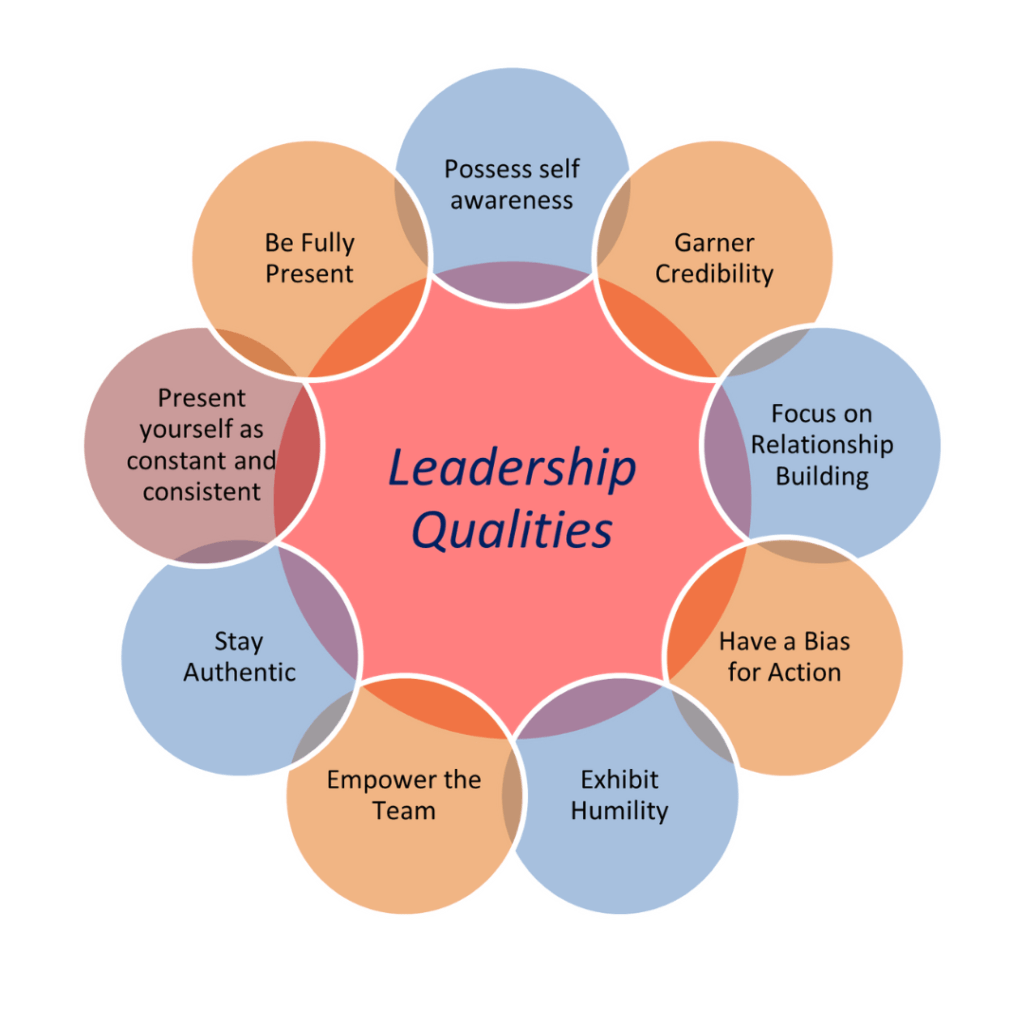
Replacing a Transactional Broker does not mean handing the gavel to a performative firebrand who prioritizes viral rhetoric over legislative math. The alternative to institutionalist paralysis is not ideological purity; it is Public-Servant Leadership—an operational model anchored in external accountability rather than internal self-preservation.
A leader operating under this framework exhibits four non-negotiable capabilities:
- Narrative Clarity Over Procedural Obscuration: The leader treats public persuasion as the primary lever of legislative power. Instead of hiding behind Senate rules to explain why a popular policy cannot pass, the leader forces opposition members onto the record through repeated, high-visibility floor votes, making the political cost of obstruction explicit to voters.
- Calculated Norm Enforcement: Recognizing that unilateral restraint invites aggression, the leader establishes clear red lines and enforces them with symmetrical procedural force. Rules are treated as tools to deliver democratic outcomes, not as sacred artifacts that outrank constitutional rights or economic stability.
- Decentralized Caucus Empowerment: Rather than centralizing all messaging and fundraising within the leader’s office, this model empowers issue-specific champions within the caucus to lead public campaigns, creating a distributed network of credible messengers tailored to different regional and demographic audiences.
- Institutional Humility: The leader views the office as a temporary stewardship rather than a permanent entitlement, actively grooming successors and establishing transparent benchmarks for strategic performance.
Operationalizing the Transition
A political party cannot simply wish a new leadership style into existence; it must alter the internal mechanics that reward institutional inertia. For Senate Democrats to execute a successful transition away from the Schumer era, the caucus must implement three structural changes before the next major electoral cycle:
First, decouple leadership selection from fundraising volume. As long as the primary qualification for Senate leadership is the ability to harvest millions of dollars from corporate and institutional donors, the caucus will continue to select operators optimized for donor comfort rather than voter mobilization. The party must shift toward a distributed, small-dollar digital infrastructure managed at the committee level rather than controlled by a single leader’s political action network.
Second, institute term limits on top caucus leadership positions. Capping the tenure of the floor leader and whip at three congresses (six years) forces continuous strategic renewal, prevents the ossification of staff networks, and guarantees that ambitious mid-career senators invest in building national communication skills rather than waiting passively in a seniority queue.
Third, restructure the Senate Democratic Policy and Communications Committee into a rapid-response war room led by the caucus’s most effective public communicators, regardless of seniority. Legislative strategy and public messaging must be developed simultaneously by the same team, eliminating the fatal lag between floor action and public explanation.
Limitations and Execution Risks
Shifting from an institutionalist broker to a public-facing advocate carries distinct operational hazards that cannot be ignored. A more confrontational, narrative-driven leadership posture increases the risk of short-term legislative gridlock, as opposition moderates—to the extent any remain—may recoil from high-profile floor traps. Furthermore, aggressive procedural tactics can alienate narrow slices of swing-state independents who retain an attachment to traditional bipartisan aesthetics, potentially complicating the electoral math for frontline senators in conservative-leaning states.
There is no silver bullet in a deadlocked legislature. A new leader cannot magically conjure sixty votes out of a narrow minority or slim majority. What a different leadership model can do, however, is alter the political environment in which those votes occur, shifting the burden of justification onto the obstructionist party rather than absorbing it internally.
The Strategic Imperative
The era of the quiet backroom fixer is permanently closed. The media environment, the polarization of the electorate, and the structural aggression of the modern opposition have rendered the transactional Senate model obsolete. Continuing to rely on an architect of a vanished political age guarantees further erosion of Democratic leverage, regardless of who occupies the White House.
Senate Democrats must execute an orderly, deliberate leadership transition prior to the next congressional session. Waiting for an electoral catastrophe to force a change will only deepen the party’s organizational disarray. The caucus must elevate a leader whose primary competency is not managing the Senate’s internal friction, but commanding the public’s attention—a public servant capable of turning legislative battles into clear moral choices that voters can actually see, understand, and reward.