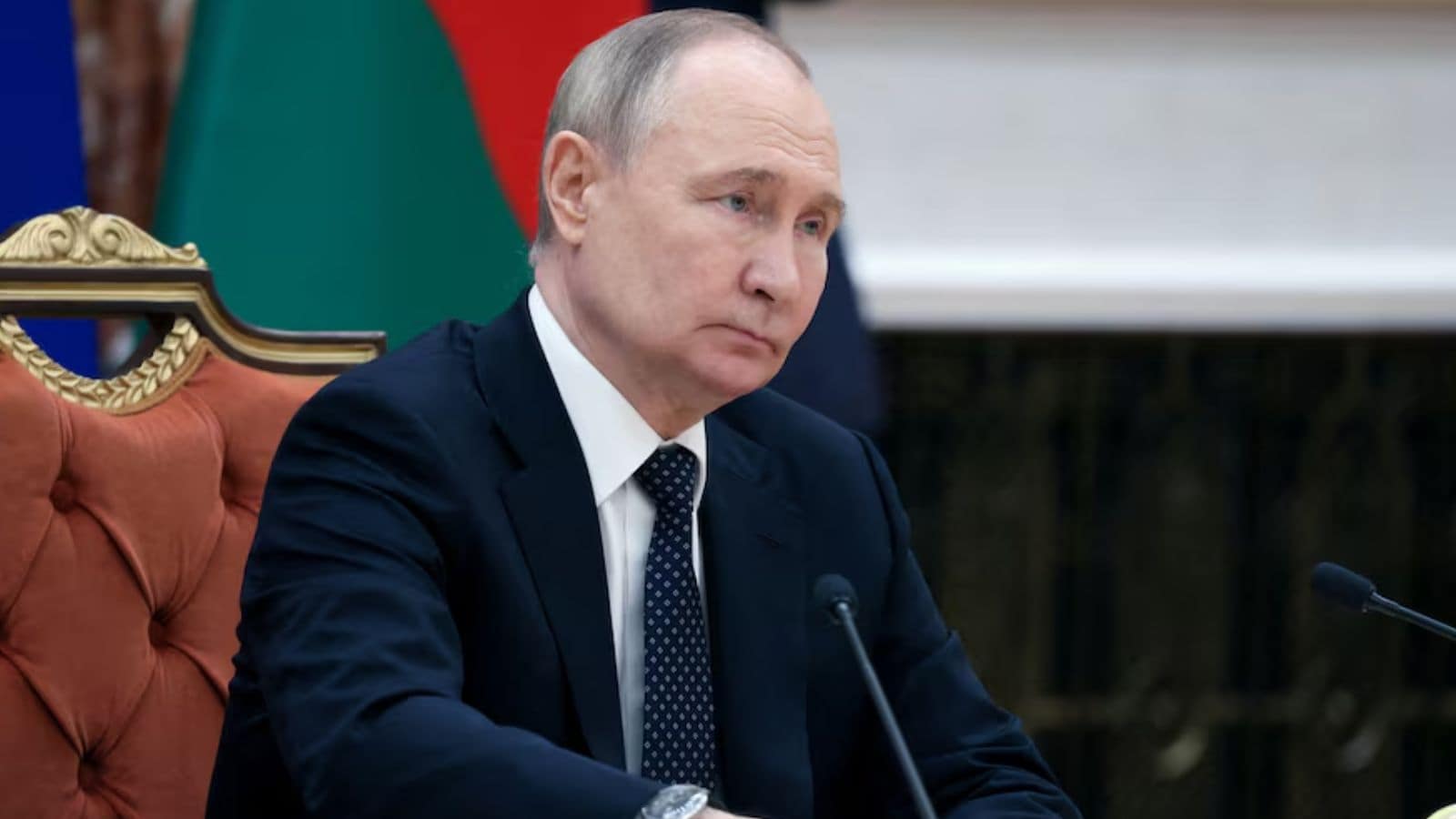
Western analysts love a clean narrative. When the ballots were tallied from the recent State Duma elections, yielding a record constitutional supermajority for United Russia, the immediate consensus across major foreign policy desks was swift and predictable. Commentators lined up to argue that Vladimir Putin had secured an unmitigated triumph, locking down a blank check to accelerate wartime mobilization, crush remaining dissent, and project total dominance over the domestic political apparatus.
This view is lazy, surface-level, and fundamentally wrong.
Anyone who has spent time studying the mechanics of authoritarian statecraft understands a core truth: absolute electoral victories do not project strength; they expose systemic vulnerability. When a regime manufactures a landslide of over fifty-seven percent for its ruling party while barring credible opposition, it is not demonstrating popular mandate. It is severing its own nervous system. By eliminating friction, the Kremlin has stripped itself of the vital telemetry required to gauge true public sentiment, elite anxiety, and institutional strain.
The conventional interpretation treats Russian elections as a direct barometer of autocratic efficiency. That is a critical category error. To understand why this sweeping parliamentary majority represents a dangerous trap rather than a strategic windfall, we must dismantle the core assumptions driving contemporary political commentary.
The Illusion of Total Control
The prevailing wisdom asserts that capturing three hundred and fifty-five seats in the Duma gives the executive branch frictionless authority to pass any law or decree without pushback. On paper, this is true. In practice, a legislature devoid of opposition ceases to function as a political body. It becomes an expensive, performative echo chamber.
When every single vote is predictable, the institution loses its utility as an internal pressure valve. Historically, controlled pluralism inside Russian parliamentary politics allowed minor systemic parties—such as the Communists or the nationalist factions—to channel localized grievances, regional frustrations, and sector-specific anger. They acted as shock absorbers. By giving disgruntled voters a sanctioned outlet to register protest votes without threatening the core architecture of power, the regime maintained a clear window into where societal fatigue was pooling.
By squeezing those safety valves shut and forcing a hyper-conformist supermajority, the Kremlin has blinded itself. Real political intelligence does not come from state television ratings or inflated ballot box counts; it comes from observing where the opposition manages to pierce the armor despite the rules. When you silence every dissenting voice, you do not eradicate discontent. You simply drive it underground, where it festers without statistical tracking or political mediation.
Consider the data emerging from alternative voting channels and independent polling prior to the complete lockdown of the ballot. Remote electronic voting systems and early voting blocs revealed sharp divergences in real political behavior, showing that urban centers, entrepreneurs, and private-sector workers harbor deep skepticism toward the ruling party's trajectory. When those voices are scrubbed from the legislative equation through bureaucratic disqualifications and administrative filtering, the government trades reality for comfort.
The Veteran Burden Inside the New Parliament
One of the most touted novelties of this election cycle was the entry of dozens of military veterans from the front lines in Ukraine into the State Duma, hailed by state spokesmen as the arrival of a brand-new political elite. Analysts have framed this as a brilliant co-optation strategy, binding the military apparatus directly to the ruling party's legislative machinery.
This is a profound miscalculation. Bringing hundreds of combat-hardened veterans into a civilian political legislature creates an unmanageable internal lobby. These individuals do not share the refined sensibilities of traditional technocrats, career bureaucrats, or opportunistic party functionaries. They carry firsthand trauma, specific grievances, and massive expectations regarding privilege, resource allocation, and social status.
By embedding this constituency directly into the halls of power, the regime has imported an unpredictable wild card into a system engineered for top-down obedience. Veterans accustomed to direct chains of command and immediate operational solutions make terrible parliamentary actors. They demand tangible rewards, preferential administrative appointments, and absolute validation of their wartime sacrifices. When economic constraints inevitably tighten—driven by ballooning defense expenditures and inflationary pressure—these new deputies will not quietly absorb budget cuts. They will mobilize their networks, weaponize their moral authority, and apply intense pressure on the executive branch.
Instead of solidifying loyal support, the Kremlin has invited its most volatile critics into the inner sanctum. A rubber-stamp parliament is easy to manage when its members are docile careerists trading compliance for budget allocations. It becomes a ticking clock when its benches are crowded with armed forces veterans who view compromise as treason.
The Public Mandate Myth
Another pillar of the standard commentary is that a high official turnout figure of nearly sixty percent validates the war in Ukraine and proves that the population stands squarely behind the Kremlin's long-term strategic horizon.
This assertion ignores the coercive structural reality of modern electoral administration in a mobilization state. When voting is stretched across multiple days, heavily monitored within public-sector workplaces, and tied directly to administrative employment incentives, turnout numbers cease to measure enthusiasm. They measure compliance.
Independent sociological data from organizations tracking Russian public opinion consistently reveals a population defined not by fanaticism, but by anxious adaptation. The prevailing psychological state across broad swathes of society is fatigue mixed with a desperate desire for a return to normalcy. Supporting the ruling party in a controlled ballot is an act of protective conformity, not ideological conversion.
Treating this compliance as an active, enthusiastic mandate for deeper escalation is a fatal strategic error for the regime itself. If the leadership genuinely believes that fifty-seven percent of the party-list vote translates into an insatiable appetite for prolonged hardship, soaring inflation, and future waves of conscription, it will push society past its breaking point.
Autocratic stability relies on keeping the social contract intact: the population stays out of politics, and the state stays out of their daily lives. The wartime mobilization of society strains this contract to its limits. By misinterpreting forced electoral participation as a blank check for permanent sacrifice, the leadership risks converting passive resignation into active resistance.
The Cost of Information Isolation
In any complex governance structure, feedback loops are everything. When leadership surrounds itself with compliant subordinates who validate its every instinct through theatrical electoral triumphs, decision-making degrades rapidly.
We saw this dynamic play out in the lead-up to previous historic miscalculations, where advisors feared delivering unpleasant truths to the top. An electoral system that produces Stalinist-style majorities in the twenty-first century is an institutional monument to sycophancy. Regional governors, party bosses, and administrative officials know that their jobs, budgets, and personal safety depend on delivering immaculate statistics to Moscow. Consequently, they massage the data, suppress bad news, and manufacture local victories out of thin air.
When the center relies on fabricated feedback, its policy responses become detached from physical reality. If economic indicators flash warning signs regarding labor shortages, manufacturing bottlenecks, or consumer price spikes, a regime insulated by its own propaganda apparatus will dismiss them as temporary noise.
This is the hidden danger of the recent parliamentary sweep. It reinforces the worst instincts of insular decision-making. Why course-correct when the ballot box says everything is flawless? Why adjust diplomatic posture, economic management, or military strategy when the political machine produces a record-breaking majority?
The answer is simple: reality does not care about electoral commissions. Economic gravity, demographic deficits, and international friction operate independently of State Duma seat counts.
The Unspoken Fragility
The conventional narrative wants you to believe that the Russian political system is an unyielding monolith, adapting effortlessly to external pressure and internal consolidation. The opposite is true. Monoliths do not bend; they shatter.
Flexible systems survive crises because they incorporate diverse interests, absorb shocks through institutional friction, and allow pressure to escape before it reaches critical mass. By methodically crushing every independent political actor, purging moderate voices, turning the parliament into a military alumni club, and substituting manufactured unanimity for genuine political debate, the regime has engineered a brittle apparatus.
The leadership may celebrate its legislative supermajority as a crowning achievement, but it has won a hollow victory. It has traded institutional resilience for theatrical compliance, accurate data for comforting fiction, and manageable internal dissent for volatile, unplacated veterans.
When the next systemic shock hits—whether through financial strain, supply chain fractures, or localized security failures—the ruling party will look out across its three hundred and fifty-five empty-suited deputies and discover that not a single one of them has the political weight, the credibility, or the independence to help break the fall.
That is the true legacy of the latest electoral sweep. It is not a platform for future expansion. It is a cage built entirely out of unearned confidence.