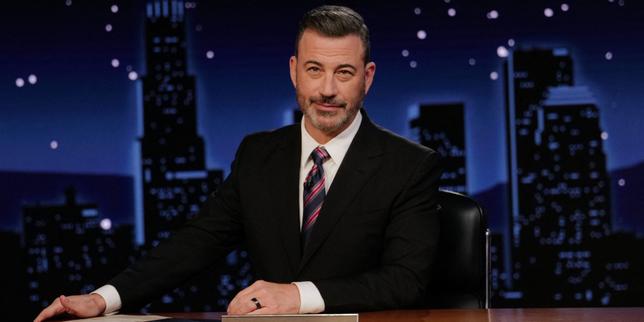
The blue light of the television screen used to be a campfire. You sat in front of it to wind down, to watch a man in a sharp suit tell jokes that poked fun at the powerful without drawing blood. It was a ritual of decompression. But lately, that campfire has started to feel like a frontline. When the Trumps demand that Jimmy Kimmel be fired, they aren't just filing a HR complaint against a comedian. They are trying to evict a tenant from the most valuable real estate in the country: the American subconscious.
Conflict is the oxygen of the modern political machine. Without a villain, the hero has nothing to do. For Donald Trump and his inner circle, Kimmel has transitioned from a mere entertainer into a primary antagonist. This isn't about one bad monologue or a singular "mean tweet" read aloud on air. It is about the power of the platform.
The Audience in the Middle
Picture a hypothetical viewer named Sarah. She lives in a suburb in Ohio. She doesn’t spend her day on political forums. She works, she cooks, and at 11:35 PM, she wants to laugh so she can forget the price of eggs for twenty minutes. When she turns on ABC, she encounters a version of reality where the former President is the punchline of every setup.
To the Trump campaign, Sarah is the prize. If Kimmel can convince Sarah that the MAGA movement is ridiculous, he has done more damage than any political PAC could ever dream of. This is why the rhetoric from the Trump camp has shifted from casual annoyance to a sustained campaign for his termination. They see the monologue as a nightly campaign ad funded by Disney.
The data supports the intensity of this friction. Late-night television has shed millions of viewers over the last decade, yet its cultural "clip" value has exploded. A three-minute segment of Kimmel mocking a court appearance or a campaign rally reaches far beyond the live broadcast. It travels through TikTok feeds, Facebook groups, and morning news cycles. It becomes the "truth" for people who never even saw the show.
The Mechanics of the Grudge
The animosity isn’t one-sided, but it is deeply personal. Donald Trump’s obsession with television ratings is well-documented; he views the medium as his home turf. To have a host on a major network use that same medium to dismantle his image is, in his eyes, a betrayal of the format itself.
The specific calls for Kimmel’s firing often center on the idea of "equal time" or "partisan bias." But the legal reality is messier. The FCC’s Equal Time Rule applies to candidates for public office, not to the satirical commentary of a comedian. However, the Trumps aren't making a legal argument. They are making a cultural one. They are signaling to their base that the institutions of entertainment are rigged against them.
Think about the sheer repetition of the attacks. It’s a rhythmic drumming. By calling for a firing, you create a "where there’s smoke, there’s fire" atmosphere. Even if Kimmel stays on the air, the seed is planted: This man is an operative, not an artist.
The Ghost of Late Night Past
There was a time when Johnny Carson reigned supreme by being a cipher. You didn't know who he voted for. He stayed in the center because the center was where the money was. But the center has collapsed.
In the current media ecosystem, neutrality is seen as a lack of conviction. Kimmel found his footing—and his most loyal audience—when he stopped trying to please everyone. His emotional plea regarding his son’s healthcare years ago was the turning point. He stopped being the guy who did "The Man Show" and became a moral voice for a specific segment of the population.
This transformation made him a target. You cannot be a moral voice without also being a lightning rod. When you take a stand, you provide a fixed point for your enemies to aim at.
The Invisible Stakes of the Joke
Why does it matter if a comedian gets fired? If you strip away the celebrity names, you are left with a question of who gets to define the narrative of the day.
If the Trumps succeed in making Kimmel "unemployable" or too "toxic" for advertisers, it sends a chill through every writers' room in Los Angeles. It’s a battle over the boundaries of satire. If a comedian can be ousted because the subject of their jokes finds them offensive or "unfair," then the joke itself becomes a regulated commodity.
We are watching a live-action experiment in brand endurance. Disney, the parent company of ABC, finds itself in a precarious vice. On one side, they have a host who brings in consistent ratings and high digital engagement. On the other, they have a political movement that has shown a willingness to boycott and legislate against companies they deem "woke."
The Sound of the Room
When you watch the show now, there is an edge to it. The laughter from the studio audience feels different—it’s the laughter of the converted. It’s a tribal roar. Kimmel knows his audience, and he plays to them with the precision of a surgeon.
The Trumps know their audience, too. They know that every time they post a "TRUTH" attacking Kimmel, their supporters feel seen. They feel like someone is fighting back against the coastal elites who laugh at them from behind mahogany desks.
This isn't a debate about policy. It's a debate about respect. It's a debate about who is allowed to be the narrator of the American story.
The Cost of the Conflict
The real tragedy isn't the potential loss of a job for a multi-millionaire host. The real tragedy is the loss of the shared space.
When entertainment becomes entirely segmented by political loyalty, we lose the ability to laugh at ourselves. We become brittle. We start to see every joke as a weapon and every monologue as a declaration of war.
Kimmel’s monologues are often sharp, occasionally mean, and frequently viral. The Trump family’s rebuttals are loud, aggressive, and strategically designed to dominate the news cycle. Both sides are getting exactly what they want: attention.
But what about the person on the couch? What about Sarah in Ohio?
She is left in a world where even her 11:30 PM escape is a minefield. She has to decide if laughing at a joke makes her a traitor to her party or if turning the channel makes her a coward. The pressure is constant. The blue light doesn't feel like a campfire anymore. It feels like a spotlight in an interrogation room.
The battle for Jimmy Kimmel’s job is just a proxy for a much larger war. It’s a war for the right to speak, the right to mock, and the right to define what is true. As the rhetoric ramps up, the jokes get shorter and the demands for "accountability" get louder.
We are moving toward a future where we don't just choose our news; we choose our laughter. And once you can only laugh with people who agree with you, the joke isn't funny anymore. It’s just an echo.
The screen stays on. The monologue begins. The cycle repeats. In the end, the loudest voices will keep shouting, and the rest of us will keep staring at the screen, wondering when the campfire went out.