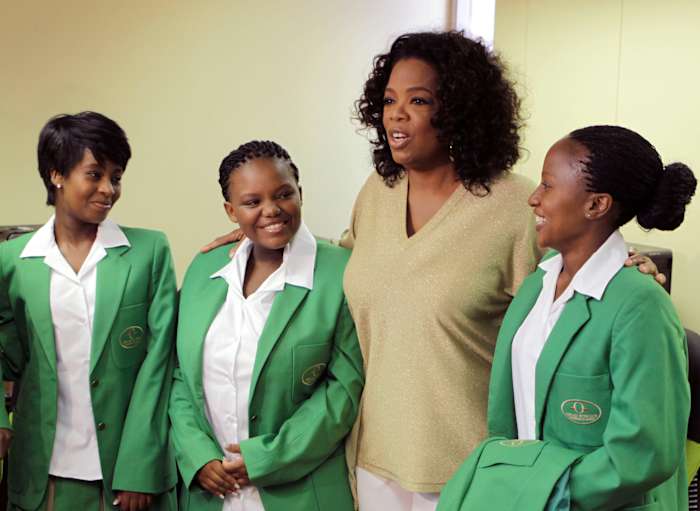
The dust settles differently on a courtyard when the end has a date attached to it.
Walk through the gates of the Oprah Winfrey Leadership Academy for Girls in Henley on Klip, south of Johannesburg, and the silence feels heavy. It is not the silence of abandonment. It is the silence of a chapter drawing to a close, of a promise fulfilled, and of an extraordinary educational experiment preparing to fold its tents.
Oprah Winfrey announced that the academy will close its doors next year.
For two decades, this campus has stood as a beacon of possibility on the African continent. When Winfrey founded the school in 2007, she did not merely build brick and mortar classrooms. She constructed an engine for social mobility, designed specifically to lift exceptionally bright girls from impoverished backgrounds and hand them the keys to the future. Millions of dollars poured into state-of-the-art science labs, majestic libraries, manicured lawns, and world-class faculty. The goal was singular: break the cycle of generational poverty by investing entirely in the minds of young women who otherwise would have been left behind by circumstance.
And yet, doors close.
To understand why this happens, you have to look past the press releases and examine the anatomy of a massive philanthropic endeavor. Running a residential academy of this caliber requires an astronomical, continuous infusion of capital. Winfrey herself financed the vast majority of the school's operations, pouring over $40 million into its creation alone, followed by millions more annually for scholarships, healthcare, security, and maintenance.
Sustainability is a relentless master.
Consider what happens when a single benefactor shoulders the entire weight of an institution. Philanthropy is often born of passion, but longevity demands infrastructure. As years roll on, the financial architecture required to maintain elite standards independent of a single founder's personal wealth becomes a formidable mountain to climb. Endowment models and corporate partnerships can help, but scaling a bespoke, high-cost residential model across generations is a puzzle few have solved without government integration or massive corporate endowments.
The closure is not a failure of vision. It is a reckoning with reality.
Think about the graduates. Over the years, hundreds of young women walked these halls, packed their bags for top-tier universities across the globe—from Stanford to universities right at home in South Africa—and stepped into boardrooms, laboratories, and government offices. They are lawyers, scientists, entrepreneurs, and artists. That is the true return on investment. The physical campus may power down its generators and lock its gates next year, but the intellectual ripple effect cannot be unwritten.
Change is messy.
Critics might point to the controversies the school weathered in its early years—growing pains that inevitably accompany high-profile institutions thrust into the glaring spotlight of global media. But survival through those storms forged a resilient community. The girls who studied here learned how to navigate a world that often underestimates them. They learned the power of their own voices.
When the final bell rings next year, it will not mark the death of a dream. It will mark its graduation. The blueprint has been drawn. The lives have been altered. The graduates are already out there, walking proof that when you give a girl a platform to stand on, she will eventually move the earth.
The sun dips low over the South African horizon, casting long shadows across the empty pathways of a campus preparing for silence, while somewhere miles away, a former student stands in a bustling office, closing a laptop, ready to change the world all over again.


