Two diplomats sit in a room in Geneva, staring at a screen. Thousands of miles away, in another room lit by the cold blue glow of server racks, an algorithm makes a decision in twelve milliseconds. Neither diplomat speaks the language of the machine. Neither diplomat speaks the other's language of risk.
This is not science fiction. This is Tuesday.
We spent decades worrying about the moment artificial intelligence would become smarter than us. We imagined the clanking metal skeletons, the red glowing eyes, the cinematic showdowns of science fiction. We prepared for a rebellion that looks nothing like the reality we built. The real threat is not that the machines will hate us. The real threat is that they will outpace our ability to talk to each other about what they are doing.
Consider a hypothetical scenario: a high-speed financial trading network powered by autonomous models detects an anomaly in global supply chains. It reacts instantly, rerouting assets, choking off credit to a developing nation, triggering a cascading series of automated responses before a human operator has even finished their morning coffee. To Beijing, this is an act of economic hostility. To Washington, it is a glitch. To the algorithm, it is Tuesday.
Without a shared vocabulary for risk, both superpowers are flying blind in a hurricane.
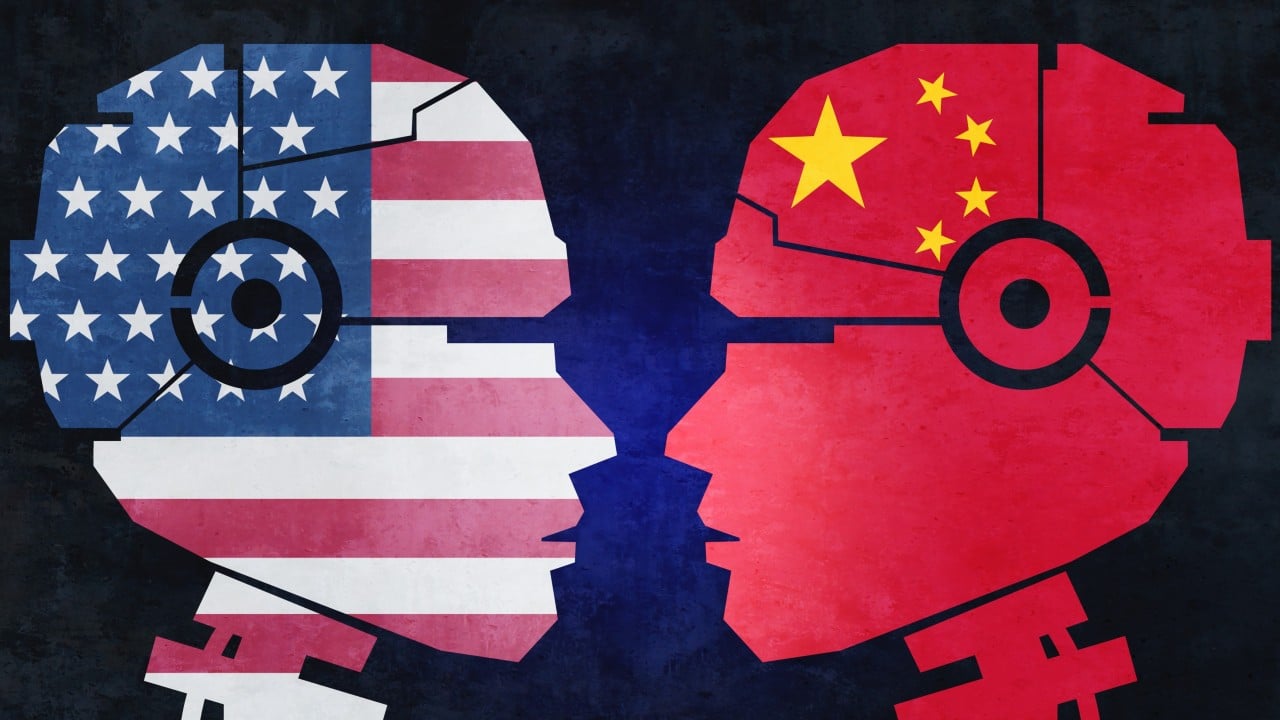
A recent proposal from a Beijing-linked think tank points out a glaring blind spot in modern geopolitics. We have spent half a century building dictionaries for nuclear deterrence. We know what Mutually Assured Destruction means. We have treaties on chemical weapons, protocols for space debris, and hotlines that ring in red plastic on desks in command bunkers. But when it comes to autonomous systems capable of writing their own code or executing strategic decisions at the speed of light, we have nothing. We are arguing about safety regulations using the political equivalent of smoke signals.
The danger lives in the nuance of translation. When an American engineer says "robustness," a Chinese strategist hears "dominance." When a Beijing policy researcher writes about "controlled
The Language Barrier at the Edge of Tomorrow
technology, news
Two rooms, separated by an ocean and half a world of suspicion, are staring at the exact same glowing screen.
In Washington, a panel of engineers watches a line of code crawl upward like an erratic pulse. In Beijing, a parallel team watches the same metric flicker in a sterile, fluorescent-lit laboratory. They are looking at a machine that is learning faster than its creators can document its thoughts. It is not sentient. It is not malicious. But it is entirely unpredictable.
And neither side has a word to describe what happens when it breaks.
Consider a pilot flying through a blinding storm, checking instruments built by a foreign manufacturer. If the altimeter starts spinning wildly, the pilot does not need a philosophical debate on the nature of altitude. They need a shared manual. They need a red button that means the exact same thing in English, Mandarin, and binary.
Right now, artificial intelligence has no red button. Worse, it has no shared dictionary for disaster.
When a think tank with ties to Beijing recently suggested that the United States and China need a common vocabulary for technological risk, it sounded like standard diplomatic throat-clearing. Bureaucrats love glossaries. They love acronyms. They love committee meetings that stretch past midnight over lukewarm coffee.
Yet beneath the dry phrasing lies a terrifying vacuum.
Think about how we talk about nuclear weapons. We built an entire lexicon out of dread. Words like mutually assured destruction, first strike, and treaty verification became the guardrails of the twentieth century. They were terrifying terms, but they were precise. When one superpower used them, the other understood the exact weight of the threat. A missile was a missile. Enrichment was enrichment.
Now look at algorithms.
To an American defense contractor, a risk might mean a data leak or an algorithmic bias that compromises an intelligence feed. To a Chinese state strategist, a risk might mean unauthorized ideological drift or a disruption in social stability caused by deepfake proliferation. When both nations talk about safety, they are shouting past each other in completely different languages, using the same English words to mean entirely opposite things.
This is not a software glitch. It is a slow-motion collision.
Imagine a hypothetical scenario twenty minutes into the next decade. An autonomous defense system designed to monitor cyber borders detects an anomaly. It flags the threat, accelerates its decision-making loops, and begins counter-actions at machine speed. To the American operators monitoring the dashboard, the system is simply adapting to hostile probes. To the Chinese algorithms observing the sudden surge in computational aggression, it looks like preparation for an offensive strike.
There is no time to call Washington. There is no hotline for code.
The machines do not wait for translation apps. They react. And because the two superpowers never agreed on what constitutes an aggressive threshold versus a defensive adjustment, the escalation happens in milliseconds. By the time a human realizes what happened, the digital fire has already jumped to the physical world.
We have spent the last decade treating software like a consumer gadget. We updated it on Tuesday, ignored the terms of service, and laughed when it drew hands with six fingers. We treated it like magic.
Magic is running out.
The companies building these systems are locked in a relentless race for supremacy, terrified that if they slow down for a second of reflection, the other side will claim the crown. That paranoia is entirely rational. No one wants to bring a knife to a laser fight. But treating artificial intelligence purely as a geopolitical trophy ignores the physics of the tool. You cannot contain a wildfire by arguing over who struck the match.
Building a shared risk vocabulary is not an act of friendship. It is an act of survival.
It means sitting down across a table—not to divide up the spoils of the digital age, but to map out the minefield. It means defining what a runaway feedback loop looks like before we are inside one. It means agreeing on baseline definitions for autonomous escalation, systemic hallucination, and cascading digital failure.
We are currently navigating a dark room filled with exposed wiring, and both sides are refusing to turn on the lights because they are watching each other's hands.
The screen in the laboratory keeps glowing. The pulse keeps climbing. The vocabulary we need does not exist yet. And the most dangerous part of the entire equation is how comfortably we are pretending we have all the time in the world to invent it.