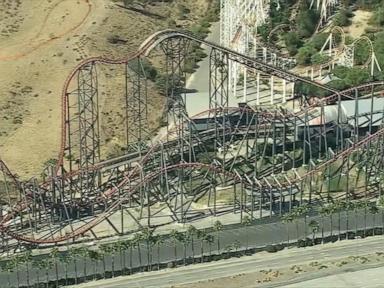
The convergence of catastrophic brain injury litigation and the permanent retirement of high-profile amusement park infrastructure exposes the critical breaking point where aggressive kinetic engineering collides with biomechanical thresholds. When amusement park operators face an influx of severe personal injury claims—culminating in multi-plaintiff litigation representing over a hundred claimants and multiple wrongful-death settlements—the underlying asset ceases to be a functional entertainment product and transforms into an unsustainable operational liability. Deconstructing the mechanics behind these failures requires an examination of acceleration vectors, headrest geometry, and the legal doctrines that govern common carrier liability.
Biomechanical Stressors and Acceleration Thresholds
Traumatic brain injuries reported on extreme rides stem primarily from rapid changes in rotational and linear acceleration. Unlike traditional roller coasters that rely on predictable vertical drops and lateral banking, modern fourth-dimension and multi-axis designs introduce unpredictable forces that act simultaneously across multiple axes.
When a passenger's head is unrestrained or improperly indexed against a rigid headrest during a high-speed directional transition, the brain undergoes rapid acceleration and deceleration inside the skull. This phenomenon creates distinct physiological mechanisms of injury:
- Rotational Shear Stress: Rapid twisting forces generate differential velocities across brain tissue layers, shearing axons and causing diffuse axonal injury without requiring direct impact to the skull.
- Coup-Contrecoup Impact: Sudden deceleration causes the brain to slam against the anterior interior of the skull and immediately rebound against the posterior wall, resulting in localized contusions and intracranial hemorrhaging.
- Resonant Frequency Amplification: Specific structural elements, such as rigid over-the-shoulder restraints combined with hard lateral padding, can induce a mechanical resonance where repetitive snapping motions amplify rather than dampen kinetic energy.
The intersection of passenger anthropometry and ride dynamics creates a variable risk profile. Riders with different neck musculature, height, and mass experience varying degrees of head acceleration under identical operational parameters. When cumulative G-forces exceed physiological safety margins, the structural integrity of human neural tissue fails.
Legal Exposure and the Common Carrier Doctrine
The legal viability of amusement park operations hinges on how courts classify the duty of care owed to patrons. In many jurisdictions, standard recreational activities fall under a primary assumption of risk doctrine, where participants accept the inherent dangers associated with the activity. However, jurisprudence in high-liability states establishes an elevated standard for amusement park operators.
Under specific state supreme court interpretations, operators of roller coasters can be legally classified as common carriers for reward. This classification imposes a duty to use the utmost care and diligence for passenger safety, effectively stripping away standard liability waivers when an injury results from engineering negligence or structural design defects rather than inherent recreational risks.
| Legal Dimension | Standard Recreational Activity | Common Carrier Classification |
|---|---|---|
| Duty of Care | Ordinary care; non-increase of inherent risk | Utmost care and diligence |
| Waiver Efficacy | Generally complete protection against inherent hazards | Void against design defects and operational negligence |
| Burden of Proof | Plaintiff proves recklessness or gross deviation | Plaintiff proves failure to maintain utmost safety standards |
This legal bifurcation explains why structural failures or unexpected mechanical aggressions lead to rapid corporate capitulation. When litigation moves past minor soft-tissue complaints into permanent neurological damage and vegetative states, the financial exposure of maintaining a compromised asset far outweighs its residual revenue generation.
The Operational Cost Function of Asset Retirement
For corporate entities managing large-scale entertainment infrastructure, keeping a high-risk asset operational involves an escalating cost function defined by three variables: litigation exposure, insurance underwriting premiums, and brand equity degradation.
Total Operational Cost = Litigation Payouts + Insurance Premiums + Brand Equity Erosion
When public safety incidents accumulate, insurance underwriters reprice risk profiles upward across the entire enterprise portfolio. Concurrently, public perception shifts from viewing the park as a destination for leisure to an environment of unmanaged physical hazard. Retiring the ride is the only mathematical mechanism to halt the exponential growth of this cost function.
Permanent closures of flagship attractions demonstrate that risk mitigation in the amusement sector is shifting from passive legal defense to active asset elimination. Engineering teams must now design telemetry systems that monitor real-time head acceleration vectors and restrict operational velocity before physiological damage thresholds are breached. Future capital allocation will favor predictability and biological compatibility over extreme kinetic novelty.