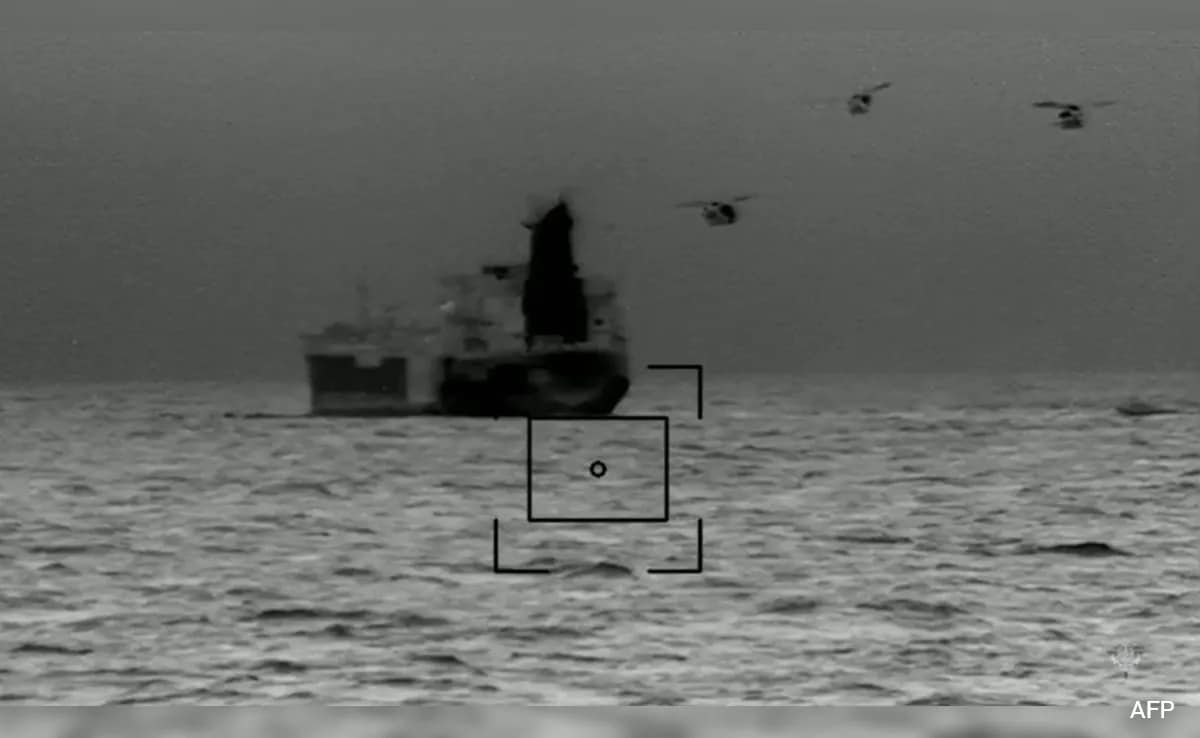
The global energy market maintains a fragile equilibrium predicated on the continued operation of a single T-shaped pier in the northern Persian Gulf. Kharg Island, responsible for approximately 90% of Iran’s crude oil exports, represents the most significant single-point-of-failure in the Middle Eastern energy infrastructure. For any administration seeking to apply "maximum pressure," the island is not merely a geographic coordinate; it is a tactical lever capable of neutralizing Iran’s primary source of hard currency. Understanding the strategic value of Kharg requires moving beyond geopolitical rhetoric and into the engineering and economic realities of its loading terminals.
The Infrastructure Bottleneck
Iran’s oil export capacity is heavily centralized due to the unique bathymetry of the Persian Gulf. While the country has attempted to diversify its export points—most notably through the Goreh-Jask pipeline project—the technical superiority and deep-water berths of Kharg Island remain irreplaceable in the short to medium term. If you enjoyed this post, you might want to read: this related article.
The facility’s operational architecture is divided into two primary components:
- The T-Jetty: Located on the eastern side, this pier is designed for tankers up to 275,000 deadweight tonnage (DWT). It handles the bulk of the "regular" export volume.
- The Sea Island: Situated on the western side, this facility is engineered to accommodate Ultra Large Crude Carriers (ULCCs) of up to 500,000 DWT.
This concentration creates a binary risk profile. Unlike a distributed network of pipelines or smaller ports, the destruction or blockade of Kharg does not result in a "throttling" of exports; it results in a near-total cessation. The engineering reality is that the pumping stations and manifolds on the island are specialized high-pressure systems. Replacing them under a heavy sanctions regime or active conflict is a multi-year endeavor, not a matter of weeks. For another perspective on this event, check out the recent update from Reuters Business.
The Cost Function of Iranian Crude
To quantify the impact of a Kharg Island disruption, one must analyze the Iranian "Cost of Survival" function. Iran’s budget is calibrated against a specific Brent crude price and a minimum daily export volume, currently estimated to be in the range of 1.2 to 1.5 million barrels per day (mb/d).
The economic fallout of losing Kharg follows a specific causal chain:
- Immediate Liquidity Collapse: Iran’s access to the Chinese "shadow" banking system is predicated on the delivery of physical barrels. If the barrels stop moving, the credit lines that facilitate the import of essential goods freeze instantly.
- Currency Hyper-Devaluation: The Rial’s value is inversely correlated with the perceived stability of oil revenue. A kinetic or symbolic threat to Kharg triggers immediate capital flight, regardless of whether a single drop of oil is actually spilled.
- Storage Saturation: Iran possesses significant onshore and offshore storage (floating storage). However, once Kharg is offline, the internal pipeline pressure from the Gachsaran and Ahvaz fields has nowhere to go. Capping an active oil well is a technically risky and expensive process; failing to do so can lead to permanent reservoir damage.
Strategic Asymmetry and the Trump Doctrine
The "Secret Weapon" narrative surrounding Kharg Island hinges on the doctrine of asymmetric escalation. In a traditional conflict, a superpower might target command and control centers. In an economic conflict, the target is the highest-margin asset. Kharg is the highest-margin asset in the Iranian portfolio.
The second Trump administration’s likely approach differs from historical precedent by focusing on the "insurance and shipping" bottleneck. While physical strikes on the island are an option of last resort, the more surgical play involves the "Ghost Fleet." Most Iranian oil travels via aging tankers that lack Western insurance (P&I clubs). By targeting the specific ship-to-ship (STS) transfer zones near Kharg, the US can effectively blockade the island without firing a shot on Iranian soil.
This creates a dilemma for Tehran. To protect Kharg, they must commit significant naval resources to the northern Gulf, leaving the Strait of Hormuz more vulnerable or less monitored. The US achieves strategic overextension of Iranian assets by simply signaling an interest in a 20-square-kilometer island.
The Risk of Global Price Contagion
The primary constraint on leveraging Kharg as a strategic weapon is the elasticity of global oil prices. The removal of 1.5 mb/d from the market should, in a vacuum, cause a price spike. However, several mitigating factors currently exist:
- OPEC+ Spare Capacity: Saudi Arabia and the UAE maintain sufficient idle capacity to offset a total Iranian outage within 30 to 60 days.
- US Domestic Production: The US remains the world's largest producer, providing a psychological and physical buffer against supply shocks.
- China’s Strategic Reserve: As the primary buyer of Iranian crude, China’s reaction is the ultimate variable. If China perceives a Kharg disruption as a direct attack on its energy security, it may release reserves to stabilize prices while increasing diplomatic pressure on Washington.
The technical term for this is "Risk Internalization." The US is betting that the global economy can internalize the loss of Iranian barrels more easily than Iran can internalize the loss of its total export revenue.
Operational Limitations of the Jask Alternative
Iran has invested heavily in the Jask terminal, located outside the Strait of Hormuz, specifically to mitigate the Kharg vulnerability. However, the Jask terminal currently lacks the sophisticated loading arms and the massive storage capacity of Kharg.
The transition from Kharg to Jask is not a "hot swap." The crude from Iran’s southwestern fields is heavy and requires specific heating and pumping intervals over long distances. Jask remains a secondary, lower-volume outlet that cannot sustain the Iranian economy at its current scale. From a consulting perspective, Jask is a redundant system that is currently under-provisioned and cannot handle the peak load required to replace Kharg.
The Quantitative Endstate
The strategic play is not the destruction of Kharg Island, but the credible threat of its obsolescence. By combining enhanced satellite monitoring of the "Ghost Fleet" with targeted sanctions on the sub-suppliers of the Kharg pumping stations, the US can induce a state of "Functional Paralysis."
The final strategic move for a "Maximum Pressure 2.0" campaign is the implementation of a maritime exclusion zone around the island's coordinates. This avoids the international condemnation of a kinetic strike while achieving the same economic outcome: the zeroing of Iranian oil revenue. Iran’s ability to project power in the region is directly fueled by the caloric value of the oil passing through Kharg. Sever the fuel line, and the regional proxies lose their operational momentum within two fiscal quarters.
The focus must remain on the manifolds, the loading arms, and the deep-water berths. This is where the geopolitical meets the mechanical.
Would you like me to develop a detailed comparative analysis of the Goreh-Jask pipeline's throughput capacity versus Kharg Island's historical peak export data?