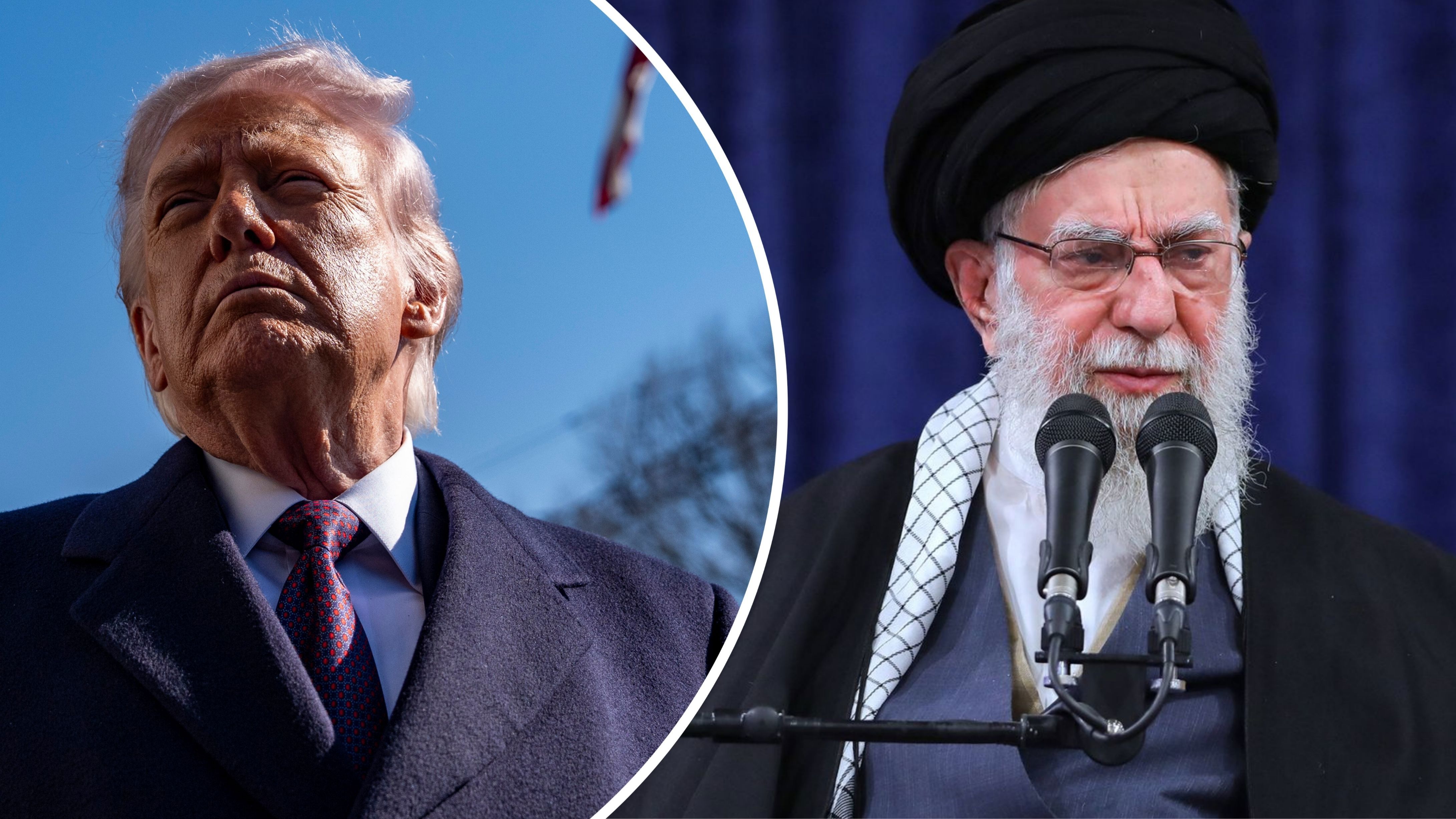
Trump just spiked the football on the 40-yard line. By declaring Ali Khamenei one of the "most evil people in history" upon his passing, the administration is leaning into a tired, binary morality play that completely ignores the structural reality of the Middle East. It feels good for a soundbite. It plays well in the Midwest. It is also a strategic disaster that demonstrates a fundamental misunderstanding of how the Islamic Republic actually functions.
The consensus is currently drowning in the idea that a "Great Man" has fallen and therefore the system will crumble. This is a fairy tale. Totalitarian regimes do not collapse because a geriatric figurehead stops breathing; they consolidate. If you think Khamenei’s exit leads to a "Persian Spring," you haven’t been paying attention to the last forty years of institutional hardening within the Islamic Revolutionary Guard Corps (IRGC).
The Myth of the Essential Dictator
Western media loves a villain. It’s easier to sell a war or a sanction regime if you can pin everything on one guy in a turban. But Khamenei wasn’t a whim-driven autocrat like Gaddafi or Saddam. He was the ultimate bureaucrat of the divine. He sat at the center of a complex, sprawling web of clerical committees, military industrial complexes, and shadow economies.
When you remove the center of a web, the spiders don't just go home. They fight for the silk.
The "evil" label is a moral judgment masquerading as a strategy. By framing this as a victory for "good," we lose sight of the fact that Khamenei was actually a stabilizing force for the regime’s internal factions. He spent decades balancing the pragmatic technocrats against the radical hardliners. With him gone, that balance is obliterated. We aren't entering an era of peace; we are entering an era of unpredictable, fragmented aggression.
The IRGC Is No Longer Under Adult Supervision
For years, the IRGC has been the real muscle in Iran. They control the ports, the telecommunications, the construction firms, and the missiles. Khamenei served as their religious veneer—a way to justify their kleptocracy through "Velayat-e Faqih" (Guardianship of the Jurist).
Now, the veneer is gone. Imagine a multi-billion dollar mafia with a nuclear program that no longer has to check in with a grandfatherly cleric before it pulls the trigger. The IRGC doesn't want democracy. They don't want "freedom." They want to protect their balance sheets. Without Khamenei’s restraining influence—which, yes, existed in the form of strategic patience—the IRGC is likely to lean into external escalation to justify internal crackdowns.
If you thought Iran was difficult to manage with a single point of contact, wait until you have to negotiate with six different generals who all hate each other and are trying to prove who is the most "revolutionary."
The Succession Trap
The "People Also Ask" crowd is currently obsessed with who the next Supreme Leader will be. They’re asking the wrong question. The real question is: Does the office of the Supreme Leader even matter anymore?
We are likely witnessing the transition of Iran from a clerical theocracy to a military autocracy. The Assembly of Experts might pick a name—perhaps Mojtaba Khamenei, the son, or a quiet loyalist—but that person will be a puppet. The IRGC has spent the last decade ensuring that no cleric can ever challenge their operational control again.
By cheering for Khamenei’s death, the U.S. is effectively celebrating the rise of a purely military junta on the Persian Gulf. Military juntas don't care about fatwas against nuclear weapons. They care about survival.
The Sanctions Delusion
The Trump administration’s rhetoric suggests that with the "evil" leader gone, more "Maximum Pressure" will finally break the camel's back. This is a fundamental misunderstanding of the Iranian black market.
I have seen how these systems work on the ground. When you sanction a country into the dirt, you don't empower the middle-class protesters in Tehran; you empower the smugglers. The IRGC runs the smuggling routes. Every time a new sanction is leveled, the price of goods goes up, and the IRGC’s profit margins expand. They have a vested interest in the West’s hostility.
Khamenei’s death provides the perfect "rally around the flag" moment. It allows the regime to paint any internal dissent as a CIA-backed plot during a time of national mourning. We just gave the most radical elements of the Iranian state a blank check for repression.
Why the "Evil" Narrative Fails
Calling Khamenei "evil" is a lazy substitute for a coherent foreign policy. It’s a 20th-century reaction to a 21st-century problem. In the age of cyber warfare, proxy militias like Hezbollah and the Houthis, and decentralized terror cells, the death of a 85-year-old man in Tehran is almost irrelevant to the operational capability of the "Axis of Resistance."
- Hezbollah has its own funding streams.
- The Houthis are increasingly autonomous.
- The PMF in Iraq are integrated into the Iraqi state.
Khamenei didn’t micromanage these groups. He provided the ideological brand. The brand survives the man. In fact, in the Middle East, martyrs are often more powerful than living leaders. We just transitioned Khamenei from a frail old man into an eternal symbol of resistance against "The Great Satan."
The Tech Gap and the Shadow War
While we focus on the politics, the real shift is happening in the digital and technical spheres. Iran’s drone program and its offensive cyber capabilities were built to function without top-down approval for every strike. The "suicide drone" doctrine is a perfect metaphor for the post-Khamenei era: cheap, autonomous, and designed to cause maximum headache with zero accountability.
The West is celebrating a political win while losing the technical war. We are playing chess; they are playing a game of attrition using low-cost tech to bleed high-cost Western assets. Khamenei’s death doesn't stop a single centrifuge. It doesn't de-program a single drone. It likely accelerates the timeline for a nuclear breakout because the "security" factions now feel they have no theological reason to wait.
Stop Looking for a Hero
The most dangerous misconception in the current discourse is that there is a "moderate" waiting in the wings. There isn't. Anyone moderate enough to actually change Iran’s trajectory was purged years ago. The people who are left are either true believers or cynical opportunists. Both groups are more dangerous than the man who just died.
We need to stop treating international relations like a Marvel movie where the world is saved once the villain is defeated. The world is a system of incentives. The incentives for the Iranian regime to remain a regional spoiler haven't changed. If anything, they've intensified.
Trump’s declaration might win him a news cycle, but it has signaled to the Iranian leadership that there is no path back to the negotiating table. When you label a leader "one of the most evil in history," you aren't leaving room for diplomacy. You are signaling that the only acceptable outcome is total regime collapse. And history shows us that when regimes like this collapse, they don't turn into Switzerland. They turn into Syria. Or Libya.
The vacuum left by Khamenei will be filled with gunpowder, not roses. If the goal was to make the Middle East more stable, this isn't a victory—it’s the start of a much more violent chapter.
Buy more oil futures. Secure the straits. Stop cheering for a void you aren't prepared to fill.