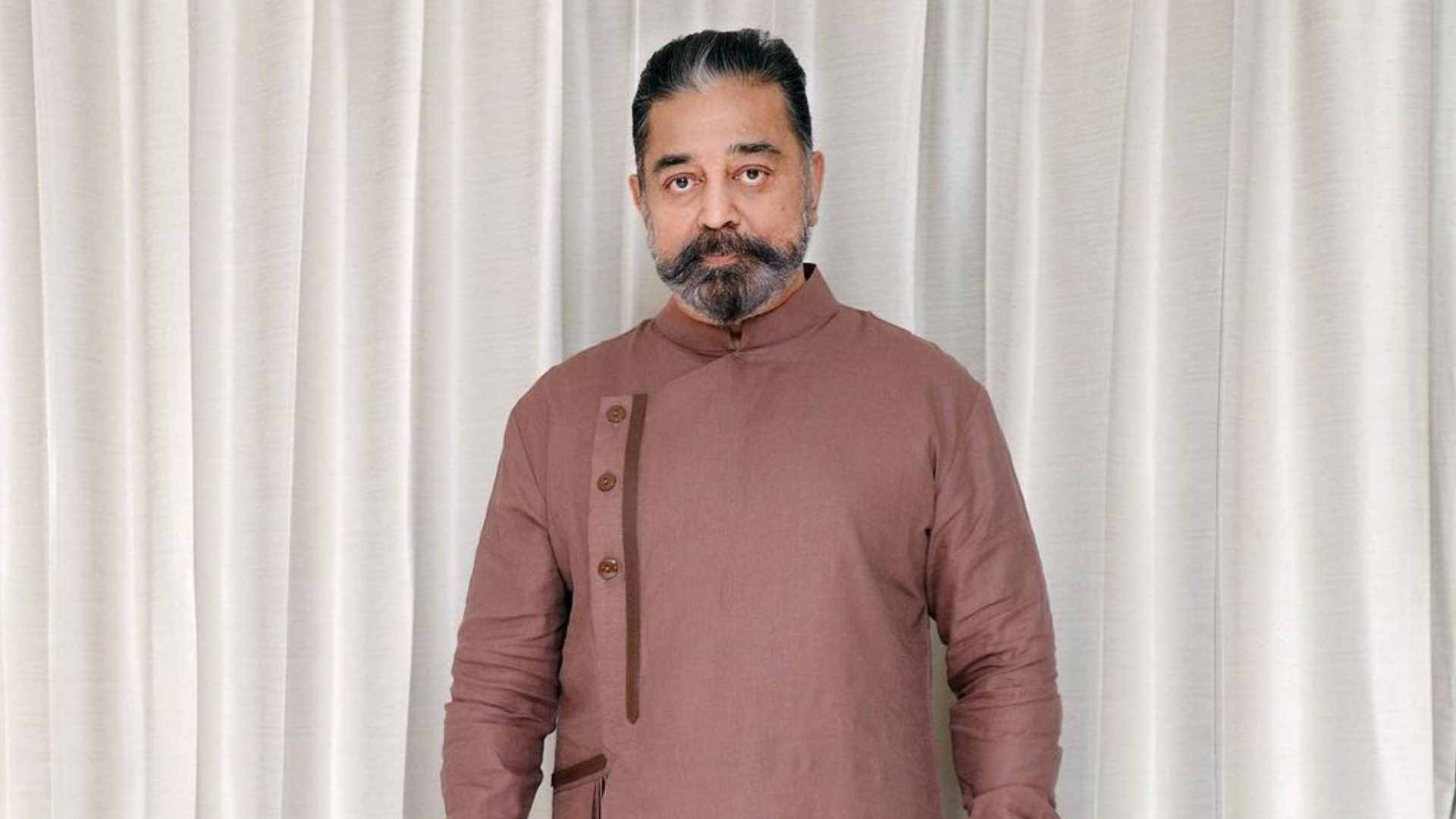
The concept of a "30-day waiver" sounds like a generous extension from a superior to a subordinate. When the United States issued this timeline to India regarding its continued purchase of Russian oil, it didn't just trigger a bureaucratic response from New Delhi. It ignited a firestorm from one of India’s most influential cultural and political voices. Kamal Haasan, the veteran actor turned leader of Makkal Needhi Maiam (MNM), stepped into the geopolitical fray with a bluntness that caught Washington off guard. His message was simple. India does not take orders.
This isn't merely a celebrity venting on social media. It is a manifestation of a deepening shift in Indian public sentiment. For decades, the global order operated on the assumption that non-alignment was a relic of the Cold War. The expectation was that as India grew, it would naturally fold into the Western security architecture. Haasan’s intervention proves that the DNA of Indian sovereignty remains stubbornly independent. He articulated what many in the Indian establishment feel but often couch in diplomatic "legalese." By telling the U.S. to mind its own business, Haasan tapped into a vein of national pride that transcends partisan politics.
The Friction of Energy Sovereignty
The mechanics of the 30-day waiver are rooted in the CAATSA (Countering America's Adversaries Through Sanctions Act) framework. The U.S. uses these waivers as a carrot-and-stick mechanism to steer global trade away from its rivals. However, the energy reality in India is unforgiving. India imports over 80% of its crude oil requirements. When global prices spiked following the conflict in Ukraine, Russia offered deep discounts. For a developing economy with a massive population to feed and power, ignoring those discounts isn't a political choice—it’s an economic impossibility.
Haasan’s critique hits at the hypocrisy inherent in these diplomatic "permissions." European nations, despite their vocal condemnation of Moscow, continued to import Russian gas through pipelines for months while lecturing the Global South on "moral" purchasing. Haasan recognized this double standard immediately. He framed the U.S. demand not as a security necessity, but as an infringement on the right of a sovereign nation to protect its own citizens from inflation and energy poverty.
The actor-politician is no stranger to complex narratives. In his films, he often plays characters who challenge rigid systems. Here, he is playing himself, and the system is the unipolar world order. When he says "We don’t take orders," he is reminding the West that the India of 2026 is not the India of 1991. The leverage has shifted.
Why Washington Miscalculated the Blowback
Washington often views India through the lens of the "Indo-Pacific Strategy." They see a partner against a rising China. While that partnership is real, it is not a traditional alliance. It is a transactional relationship based on shared interests, not shared dictates. By issuing a time-bound waiver, the U.S. treated India like a junior partner that needed a hall pass.
Haasan’s reaction was the inevitable result of this miscalculation. In the halls of power in Chennai and Delhi, the word "waiver" feels patronizing. It implies that India’s trade is illegal by default and only made legal by American benevolence.
The Economic Reality of the Russian Discount
To understand the weight of Haasan's words, you have to look at the numbers. At the height of the discount period, India was saving billions of dollars by opting for Russian Urals over Brent crude. These savings directly impact:
- Fiscal Deficits: Lowering the cost of imports keeps the government's budget under control.
- Fuel Subsidies: It prevents a massive hike at the petrol pump, which is the fastest way to lose an election in India.
- Industrial Input Costs: Cheap energy keeps Indian manufacturing competitive.
When a foreign power asks a country to abandon these benefits, they are asking for domestic instability. Haasan’s "mind your own business" was a defensive play for the Indian consumer. He understood that if the government succumbed to the 30-day deadline, the man on the street in Tamil Nadu or Uttar Pradesh would be the one paying the price.
A Cultural Icon as a Geopolitical Anchor
In India, the line between cinema and politics is famously thin. From MGR to NTR, actors have shaped the destiny of states. Kamal Haasan, however, brings a different flavor to this tradition. He is an intellectual heavyweight who understands the nuances of international law and history. His rhetoric isn't just populist; it’s grounded in a specific vision of Indian "Atmanirbhar" or self-reliance.
By speaking out on the oil waiver, Haasan forced the conversation out of the dry editorial pages and into the mainstream consciousness. He made it a matter of "Self-Respect," a term with deep historical roots in South Indian politics. This makes it much harder for the U.S. State Department to manage the narrative. It’s one thing to negotiate with a diplomat behind closed doors; it’s another to combat the influence of a man who is a household name to a billion people.
The irony is that Haasan is generally seen as a liberal, progressive voice. He isn't a hardline nationalist in the traditional sense. This makes his defiance even more significant. It signals a consensus across the Indian political spectrum. Whether you are on the left, right, or center, the idea of being told where to buy your oil is becoming a non-starter.
The Myth of the 30-Day Window
The U.S. often uses these short windows to create a sense of urgency, hoping to force a pivot in purchasing strategy. But oil infrastructure doesn't move that fast. Refineries are tuned to specific grades of crude. Contracts are signed months in advance. Insurance and shipping routes for Russian oil have already been rerouted through "shadow fleets" and non-dollar payment systems.
A 30-day waiver is a bureaucratic fiction. It exists so that American politicians can tell their constituents they are being "tough" on those who trade with Russia, while allowing the global oil supply to remain stable enough to prevent a global recession. Haasan called the bluff. He pointed out the absurdity of a superpower trying to micro-manage the fuel tank of a three-trillion-dollar economy.
The Shift Toward Multipolarity
The broader context of this spat is the rise of the BRICS+ bloc and the gradual de-dollarization of trade. India and Russia have been exploring Rupee-Rouble trade mechanisms for some time. While these systems have faced hurdles, the intent is clear. India wants an economy that is "sanction-proof."
Haasan’s statement is a soundtrack to this transition. He isn't just talking about oil; he’s talking about the end of the era where one capital city decides the trade destiny of the world. This is the "hard-hitting" reality that Western analysts often miss. They focus on the specific commodity, while the actors on the ground are focusing on their dignity.
The Strategic Autonomy Doctrine
India’s foreign policy is defined by "Strategic Autonomy." It means having the freedom to be friends with everyone and beholden to no one.
- Buying S-400 missiles from Russia while conducting joint naval drills with the U.S.
- Joining the Quad while remaining a key member of the Shanghai Cooperation Organisation (SCO).
- Rejecting the 30-day oil waiver while courting American tech investment.
To a Western mind, this looks like "hedging" or "double-dealing." To Kamal Haasan and the Indian establishment, it is simply the pursuit of national interest.
The Response from the Streets
Public reaction to Haasan’s comments has been overwhelmingly positive, even among his political detractors. There is a sense of fatigue with being the "rising power" that is constantly given "advice" by the established powers. The sentiment on Indian social media echoed Haasan's sentiment: the era of the schoolmaster-student relationship is over.
If the U.S. continues to push these deadlines, they risk pushing India further toward alternative financial systems. Every time a waiver is issued with a threat attached, it incentivizes New Delhi to find a way to trade that doesn't involve the U.S. Treasury at all. This is the unintended consequence of aggressive diplomacy. It breeds a generation of leaders and citizens who view Western cooperation as a potential liability.
Beyond the Oil Barrels
This confrontation isn't just about the price per barrel. It’s about the definition of a partner. A partner negotiates; a master issues waivers. Kamal Haasan’s "mind your own business" was a reminder that the world’s largest democracy expects to be treated as an equal.
The 30-day clock will likely run out, and another waiver will likely be issued, or a compromise will be found in the quiet corners of the G20. But the words have been spoken, and they cannot be unsaid. The cultural barrier has been breached. When the stars of a nation begin to speak the language of hard geopolitics, it means the sentiment has reached the bedrock of the culture.
The U.S. needs to realize that India's refusal to comply isn't an act of hostility toward the West. It is an act of commitment to its own people. Kamal Haasan didn't just write a tweet or give a speech; he held up a mirror to a superpower that has forgotten how to speak to those who are no longer afraid of its shadow.
The "waiver" era is dying. In its place is a jagged, complicated, and fiercely independent world where energy is security and sovereignty is not for sale. If Washington wants to keep India in its orbit, it will have to stop issuing deadlines and start offering deals. Anything less will be met with the same cold, calculated defiance that Kamal Haasan just put on the world stage.
Watch the trade routes, not the press releases.