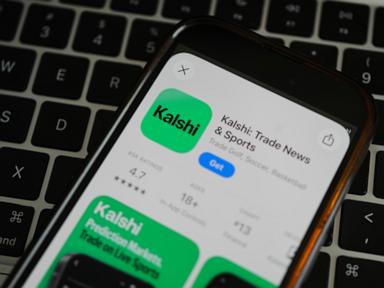
You can call it a prediction market all you want, but a federal judge says it is still gambling.
U.S. District Judge Robert J. Shelby handed down a massive decision that changes how online platforms operate across state lines. He ruled that Utah can legally enforce its strict anti-gambling statutes against Kalshi. Kalshi tried to argue that federal oversight by the Commodity Futures Trading Commission shields its sports futures and event contracts from local bans.
The court didn't buy it.
This ruling strikes at the core of how modern financial tech startups try to bypass traditional state restrictions. If you have been watching the explosive growth of event contract trading, this decision serves as a massive reality check.
The Core Conflict Between Federal Regulators and State Bans
Kalshi launched its lawsuit against Utah back in February. Lawmakers in the state had just expanded the legal definition of gambling to explicitly cover proposition bets. In response, Kalshi sued.
The company's entire defense rested on a clever legal theory. Because the CFTC registers Kalshi as a designated contract market, they argued federal rules preempt state authority. In plain English: they claimed Washington DC oversight trumps local Utah laws.
Judge Shelby dismantled that argument in his summary judgment. He pointed out that state-level regulation of gambling has a deep history dating back to the early 1800s. Congress never intended to wipe out centuries of state police power when it passed financial reforms.
"You can't rebrand illegal gambling as a federal commodity," Utah Attorney General Derek Brown said following the decision.
The state constitution in Utah bans all forms of gambling entirely. Driven largely by the cultural influence of The Church of Jesus Christ of Latter-day Saints, the state has zero tolerance for casinos, lotteries, or mobile sports betting books. Offering online gambling inside state borders is classified as a third-degree felony. Kalshi ignored these local realities, assuming federal registration acts like an invisible shield.
Why This Ruling Threatens the Entire Prediction Market Model
Prediction markets are having a massive moment. Users trade yes-or-no contracts on everything from political elections to who will win the Super Bowl or pop culture awards. Platforms insist they are distinct from traditional sportsbooks because users trade against each other instead of betting against a corporate house.
To the average user, the distinction feels blurry. To state regulators, it looks like semantics.
Judge Shelby's ruling emphasizes that federal oversight does not immunize a platform from local morality and criminal laws. If a contract mimics a sports bet, states can treat it like a sports bet.
This creates a messy map for compliance teams everywhere. Kalshi is already fighting fires in multiple jurisdictions. Washington state judges previously signaled that the platform likely violated local rules. Nevada regulators forced the company to pull back or face staggering daily fines. Meanwhile, other states are watching Utah's victory as a legal roadmap to block prediction platforms within their own borders.
Tribal gaming associations and state coalitions backed Utah in this fight. They view these new platforms as unlicensed competitors avoiding the heavy taxes and strict age verifications traditional gaming operators must follow.
What Happens Next for Traders and Platforms
The legal war is far from over, but the momentum has shifted heavily toward the states. Kalshi faces an uphill battle on appeal. If higher courts uphold Judge Shelby's reasoning, tech startups can no longer use federal financial licensing as a silver bullet to bypass state lines.
If you use these platforms, expect regional lockouts to accelerate. Platforms will likely start geofencing users more aggressively to avoid criminal liability. State regulators will keep testing the boundaries of what counts as a commodity versus a wager. Clever marketing will no longer outrun local enforcement.