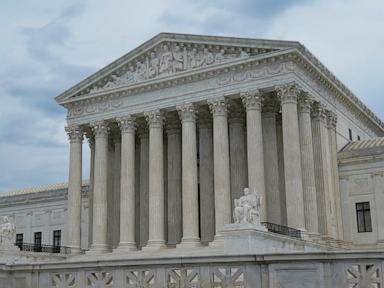
The collision between the Supreme Court’s annual October-to-June calendar and the American electoral cycle creates a structural bottleneck where legal timelines dictate political outcomes long before a final ruling is issued. When a high-profile political actor faces overlapping civil, criminal, and administrative challenges during an active campaign, the primary variable is rarely the ultimate constitutional merits of the case. Instead, the decisive factor is procedural velocity—specifically, how the Court manages its emergency docket, grants certiorari, and sequences oral arguments relative to statutory election deadlines.
Standard media coverage treats these docket collisions as isolated political spectacles, missing the underlying institutional mechanics that govern judicial behavior. By breaking down the Court’s docket management into operational variables—jurisdictional gatekeeping, temporal compression, and institutional legitimacy costs—we can map the exact cause-and-effect relationships that determine how judicial interventions reshape electoral reality.
The Structural Friction of Dual Calendars
To understand why Supreme Court reconvening dates generate acute political volatility, one must examine the mismatch between two rigid institutional schedules. The federal judiciary operates on an appellate timeline designed for deliberative, multi-year percolation. Conversely, the American electoral system operates on hard, non-negotiable statutory cliffs: primary ballot certification deadlines, early voting windows, Election Day, and the Electoral College safe-harbor dates.
When litigation involving a major political figure enters this intersection, three distinct friction points emerge:
- The Percolation Deficit: Under normal appellate procedure, the Supreme Court waits for circuit splits to develop, allowing lower courts to refine legal arguments over years. Election-adjacent litigation eliminates this buffer. Cases arrive via expedited appeals or emergency stay applications, forcing the Justices to rule on novel constitutional questions without the benefit of lower-court consensus.
- Asymmetric Delay Incentives: In standard commercial or administrative litigation, both parties generally seek clarity to price risk. In political litigation, delay itself is a terminal victory. If a defendant can stretch pre-trial motions, interlocutory appeals, and certiorari petitions past a November election date, the legal question often becomes moot or practically unenforceable, regardless of the underlying merits.
- The Shadow Docket Compression: Because full merits briefing and oral argument require a minimum of four to six months under standard Supreme Court rules, high-stakes election disputes frequently migrate to the emergency docket (commonly termed the "shadow docket"). Decisions made here occur on compressed timelines—sometimes within days—without full briefing or oral argument, yet they establish the operational rules under which an election is conducted.
This structural friction ensures that the Court cannot remain a passive observer. Even a decision to deny an expedited hearing or to remand a case to a lower court for further fact-finding functions as an affirmative intervention, effectively locking in the status quo for the duration of the election cycle.
Categorizing the Docket Exposure
When a wave of cases tied to a single political figure or administration converges on the Court simultaneously, legal analysts must categorize the exposure not by political narrative, but by the specific constitutional and statutory mechanisms at issue. Every case in such a wave falls into one of three distinct operational buckets, each carrying different timelines and institutional risks for the Court.
Bucket 1: Executive Immunity and Structural Separation of Powers
Cases testing the boundaries of executive privilege, presidential immunity from criminal or civil liability, and the scope of Article II authority represent the highest-order constitutional questions on the docket.
- The Mechanism: These disputes turn on whether the Constitution implicitly shields an officeholder from judicial or legislative accountability to preserve the vigor of the executive branch.
- The Procedural Reality: Because these questions implicate the fundamental architecture of the federal government, the Court almost invariably resists resolving them on the emergency docket. They require full merits briefing, oral argument, and deeply reasoned majority opinions.
- The Electoral Consequence: The time required to write a durable constitutional rule—often spanning from winter arguments to a late-June opinion—naturally consumes the primary and general election calendar. When the Court subsequently remands the case to a trial court to apply its newly minted multi-factor test (such as distinguishing between official and unofficial acts), the resulting evidentiary hearings push any final trial resolution well past the electoral deadline.
Bucket 2: Ballot Access, Election Administration, and the Purcell Principle
The second category involves direct challenges to state-level election administration, voter eligibility, ballot access qualifications (such as Fourteenth Amendment Section 3 challenges), and state court interpretations of federal election statutes.
- The Mechanism: These cases pit state sovereignty under the Elections Clause against federal constitutional guarantees and uniform national standards.
- The Procedural Reality: Unlike immunity cases, ballot access and election rule disputes cannot be remanded for post-election fact-finding without rendering the entire judicial process irrelevant. The Court is forced into rapid adjudication. Here, the dominant operational doctrine is the Purcell principle—the judicial presumption that federal courts should not alter state election rules in the period immediately preceding an election, to avoid voter confusion and administrative chaos.
- The Electoral Consequence: Purcell creates a powerful bias toward maintaining whatever status quo exists at the moment the Supreme Court intervenes. If a state official or lower court alters a rule six months before an election, the Supreme Court may stay that alteration simply due to proximity to the vote, effectively deciding the operational outcome without ever ruling on the substantive legality of the rule change.
Bucket 3: Statutory Interpretation and Administrative Enforcement
The third bucket encompasses prosecutions, regulatory actions, and civil enforcement suits brought under existing federal statutes—such as obstruction laws, campaign finance regulations, or administrative agency rules—where the defendant argues the statute was misapplied or is unconstitutionally vague.
- The Mechanism: These are exercises in textualism and statutory construction rather than pure constitutional interpretation. The Court examines whether Congress clearly authorized the specific enforcement mechanism being used against the political actor.
- The Procedural Reality: The modern Supreme Court applies rigorous textualist scrutiny to statutes used in novel ways, frequently invoking doctrines like the rule of lenity (in criminal contexts) or the major questions doctrine (in administrative contexts) to narrow the reach of federal prosecutors and regulators.
- The Electoral Consequence: Narrowing the scope of a federal statute does not merely affect the high-profile defendant; it forces lower courts to dismiss or re-evaluate dozens of parallel prosecutions or regulatory actions. This creates an immediate downstream bottleneck across the entire federal district court system, halting pending trials while prosecutors recalibrate indictments to meet the Court's narrowed statutory definition.
The Cost Function of Judicial Intervention
In economic terms, the Supreme Court operates under a strict legitimacy budget. Unlike the executive branch (which commands enforcement power) or the legislative branch (which controls fiscal appropriations), the judiciary relies entirely on public and institutional compliance with its rulings. Every intervention in an active electoral cycle imposes a measurable cost on this legitimacy capital.
When evaluating whether to grant certiorari or issue an emergency stay, the Justices implicitly weigh a three-variable cost function:
- The Cost of Action (Partisan Perception Risk): Stepping into an active political dispute exposes the Court to accusations of partisan alignment, regardless of the legal soundness of the opinion. If the Court rules in a way that removes a candidate from a ballot, or conversely, shields a candidate from prosecution weeks before an election, a substantial segment of the electorate will view the institution as a political actor rather than a neutral arbiter.
- The Cost of Inaction (Chaos and Fragmentation Risk): Refusing to intervene carries its own severe penalties. If the Court declines to resolve a dispute over ballot eligibility or federal statutory reach, fifty different state courts and thirteen federal circuit courts may issue conflicting rulings. A patchwork legal landscape—where a candidate is eligible in one state and disqualified in another, or where federal law applies unevenly across jurisdictions—threatens the basic coherence of a national election.
- The Precedential Lock-In Cost: Rules crafted in the heat of an election cycle do not disappear once the votes are counted. A broad immunity standard or an expansive reading of executive power designed to resolve a specific dispute permanently alters the constitutional baseline for all future administrations. The Court must calculate whether the short-term stabilization gained by a sweeping ruling outweighs the long-term distortion of separation-of-powers doctrine.
To minimize total system cost, the Court consistently defaults to minimalist, consensus-seeking dispositions whenever possible. Rather than issuing sweeping 5–4 ideological rulings that maximize partisan friction, the Justices look for narrow procedural off-ramps—such as lack of standing, ripeness defects, or narrow statutory readings—that allow them to build 7–2 or 9–0 coalitions. Unanimity or near-unanimity acts as an institutional shield, signaling that the outcome is driven by shared legal methodology rather than political preference.
Operational Realities of the Litigation Pipeline
Understanding how these cases move through the system requires stripping away political commentary and looking at the mechanical steps of the appellate pipeline. When a high-profile case is appealed to the Supreme Court during an election year, the outcome is largely dictated by three sequential procedural gates.
Gate 1: The Stay Application and the Four-Factor Test
Before the Court ever decides whether to hear a case on the merits, the losing party in the lower court will almost always file an emergency application for a stay to freeze the lower court's ruling. To grant a stay, the applicant must demonstrate:
- A reasonable probability that four Justices will vote to grant certiorari.
- A fair prospect that a majority of the Court will vote to reverse the decision below.
- A likelihood that irreparable harm will result from the denial of a stay.
- That the balance of equities (the relative harms to both parties and the public interest) favors freezing the status quo.
In election-year litigation, the "irreparable harm" prong becomes the decisive battleground. A candidate argues that forcing them to stand trial during a campaign, or removing them from a ballot, inflicts permanent, unrecoverable injury to their campaign and the voters' rights. Prosecutors or plaintiffs counter that delaying accountability past an election inflicts irreparable harm on the rule of law and the public's right to an informed vote. The Court’s ruling on this initial stay application—often issued within days—frequently signals the ultimate trajectory of the case.
Gate 2: Certiorari Grant and Briefing Compression
If the Court grants certiorari, it controls the calendar through its briefing schedule. Under standard Rule 25 timelines, the petitioner has 45 days to file an opening brief, the respondent has 30 days to reply, and the petitioner has 30 days for a final reply—totaling 105 days before oral argument even occurs.
When the Court intends to resolve a matter before an election, it compresses this timeline aggressively, ordering simultaneous or expedited briefing within 10 to 21 days and scheduling special sitting dates outside its normal argument calendar. Conversely, if the Court sets a standard briefing schedule in late spring, it is making a conscious, deliberate decision that the case will not be resolved until the following term—effectively removing the dispute from the active electoral equation.
Gate 3: The Scope of the Remand
When the Court finally issues an opinion in a complex political case, it rarely enters a final judgment that ends the litigation. Instead, it vacates the lower court's ruling and remands the case for further proceedings consistent with its new legal standard.
This remand phase is where political timelines routinely collapse. A remand sends the case back to the federal district court, which must then:
- Schedule new briefing on how the Supreme Court’s standard applies to the specific facts.
- Hold evidentiary hearings to separate permissible evidence or conduct from impermissible conduct.
- Issue new pre-trial rulings, which are themselves subject to a fresh round of interlocutory appeals back up to the circuit court and potentially back to the Supreme Court.
Even without deliberate stalling tactics by defense counsel, the sheer mechanical friction of a remand takes months to execute. By articulating a complex new constitutional test rather than a bright-line rule, the Supreme Court guarantees that the lower courts will be occupied with threshold legal determinations long after ballots have been cast.
Limitations of Predictive Legal Analysis
Attempting to forecast the exact electoral impact of a Supreme Court term carries inherent analytical limits. Observers frequently over-index on the ideological composition of the bench while underestimating institutional dynamics that regularly scramble predictable voting blocs:
- Doctrinal Cross-Pressures: Originalist and textualist methodologies frequently cut against partisan expectations. A strict textualist reading of a federal criminal statute or an administrative rule may benefit a conservative political figure in one case while simultaneously stripping a future conservative administration of regulatory authority in another.
- The Unpredictability of Factual Records: Emergency appeals arrive at the Court with incomplete, rapidly evolving factual records. As cases move into full merits briefing, newly surfaced facts or concessions made by counsel during oral argument frequently force the Justices to narrow their holdings or dismiss the writ of certiorari as improvidently granted (a "DIG"), leaving the lower court ruling intact without setting national precedent.
- Institutional Self-Preservation: The Justices are acutely aware of external threats to the Court's authority, including legislative proposals for jurisdiction stripping, term limits, or court expansion. When institutional pressure peaks, the Court historically pivots toward judicial restraint, avoiding maximalist rulings that could trigger a constitutional crisis with the coordinate branches.
Strategic Execution for Institutional Observers
To accurately track and anticipate the market, policy, and political impacts of a Supreme Court term dominated by election-adjacent litigation, analysts must abandon narrative speculation and monitor specific procedural indicators:
- Track Briefing Schedules Over Oral Arguments: Ignore the rhetoric surrounding the grant of certiorari; look exclusively at the briefing deadlines set by the Clerk of the Court. Any briefing schedule that extends past mid-April guarantees that an opinion will not drop until late June, leaving zero runway for pre-election lower-court trials.
- Monitor Interim Stay Orders for Merits Signals: Treat orders on emergency stay applications as leading indicators. When the Court grants a stay without dissent—or with only minimal recorded dissent—it has already made a preliminary determination that the lower court exceeded its authority, signaling a high probability of eventual reversal.
- Evaluate Opinions for Bright-Line Rules vs. Multi-Factor Tests: When an opinion is released, immediately assess its operational clarity. If the Court establishes a bright-line rule, lower courts can execute it within weeks. If the Court establishes a multi-factor balancing test requiring case-by-case evidentiary hearings, write off any possibility of a final resolution within the current calendar year.
- Watch the Concurrences for Coalition Fragility: In 9–0 or 7–2 decisions, read the concurring opinions carefully. When Justices join the judgment but write separately to narrow the rationale, they are signaling the exact limits of their coalition—and mapping the precise boundaries where future, narrower challenges will succeed.