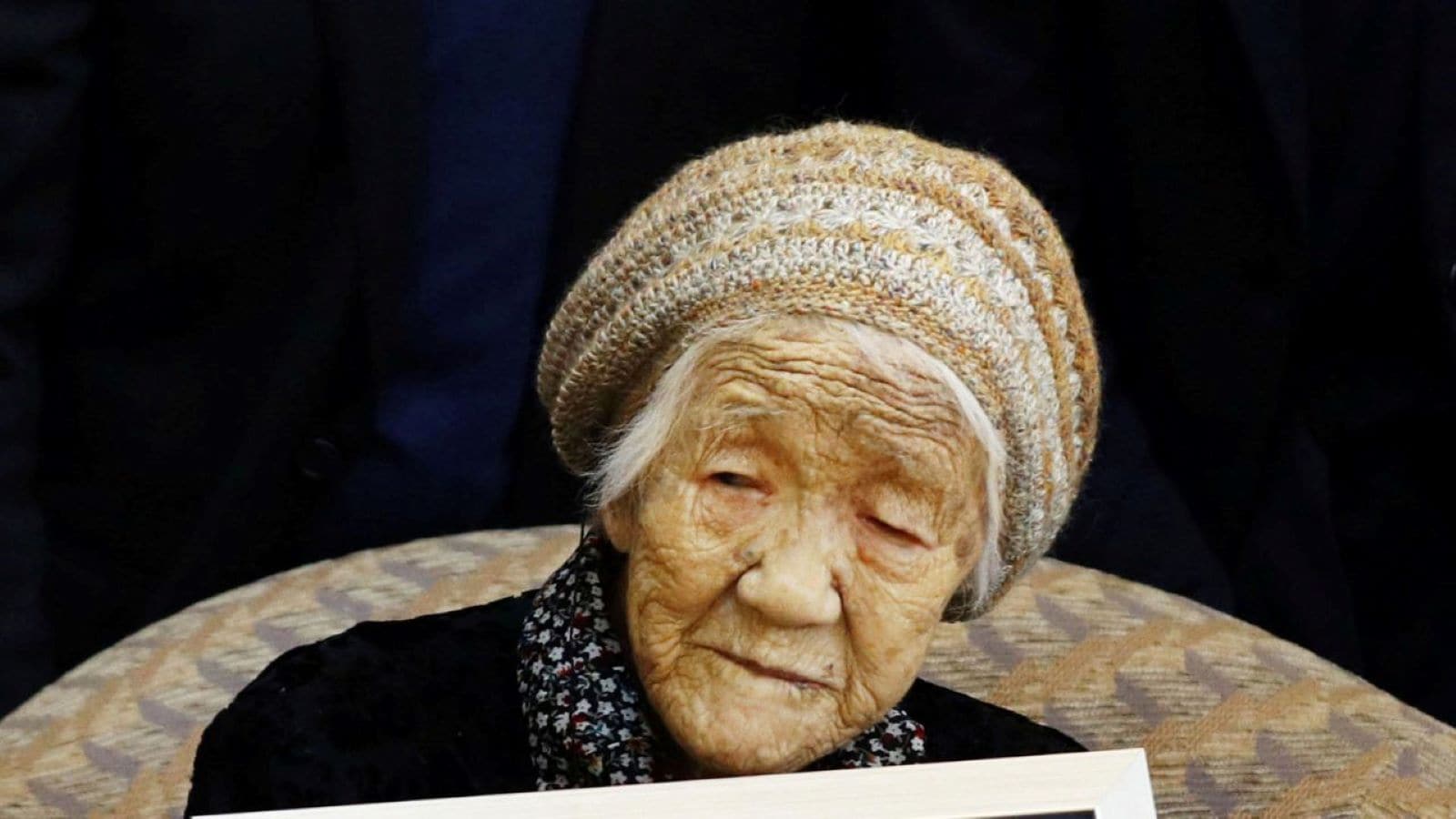
Every time Tokyo drops another census update boasting that over 100,000 residents have cleared the century mark, the global press corps treats it like a championship ring. Headlines foam at the mouth about green tea, ikigai, and coastal diets. It makes for a comforting fable. It also happens to be an economic disaster masquerading as a medical milestone.
Let us strip away the romantic myth of the tranquil Japanese centenarian living off sweet potatoes and sea breeze. What you are actually looking at is a frozen society running out of oxygen. When a population ages at this velocity, long life stops being an individual triumph of biology and hard work. It becomes a macro-economic anchor pulling the entire state down into the silt.
We need to stop pretending that crossing age one hundred en masse is a victory lap for human progress. It is a warning siren.
The Lazy Consensus on Blue Zones
Pop journalism loves a clean narrative. If people live a long time in Okinawa, the secret must be behavioral. Eat your purple sweet potatoes. Walk around the block. Maintain a positive outlook.
This is comforting because it puts the burden of longevity on the individual. It suggests that if you just buy the right groceries and practice the right lifestyle rituals, you too can outrun mortality.
It is also largely bunk when applied to macro demographics.
The obsession with localized dietary habits ignores the heavier machinery of public health investment, post-war economic stabilization, and one of the most aggressive universal healthcare infrastructures on the planet. More importantly, it completely glosses over the math. Living to one hundred requires massive capital allocation. Every year a population adds to its median age, the cost curve for institutional care, pharmaceutical dependency, and pension liabilities goes vertical.
When demographers cheer for a six-figure count of centenarians, they are cheering for an unprecedented strain on working-age taxpayers who are already shrinking in number. The media sells you a postcard of a smiling great-grandmother holding a certificate from the prime minister. They forget to show you the corporate balance sheets of municipal governments struggling to fund basic infrastructure because eighty percent of regional budgets are swallowed by elder care obligations.
The Brutal Math of Shrinking Pyramids
Let us look at the structural mechanics that the longevity cheerleaders conveniently omit.
Japan's birth rate has hovered far below the replacement level of 2.1 for decades. You cannot maintain a stable society when the top of the demographic pyramid widens into a monolith while the base narrows to a razor-thin edge.
[ Traditional Population Pyramid ]     [ Japan's Inverted Pyramid ]
           /\                                      /\
          /  \                                    /  \
         /    \                                  /    \
        /______\                                /______\
        (Workers)                               (Elders)
Look at what happens when the ratio of workers to retirees flips. Every active earner is no longer just supporting their own household and contributing to standard growth. They are subsidizing an enormous cohort of non-productive citizens whose medical and physical needs scale exponentially with every additional month of life extension.
Medical technology has become terrifyingly good at keeping biological systems running long after functional independence has flatlined. We can preserve a heartbeat, manage blood pressure through multiple interventions, and treat acute organ failures that would have been fatal fifty years ago. But preserving a heartbeat is not the same as preserving economic or social contribution.
When you trap capital in the maintenance of an aging baseline rather than investing in productivity, automation, or child-rearing incentives, you starve the future to subsidize the present. That is not a miracle. That is a slow-motion economic trap.
The Myth of Graceful Aging at Scale
There is an unspoken cruelty to the modern obsession with maximizing lifespan without matching healthspan.
In public health economics, we talk endlessly about compression of morbidity—the ideal scenario where an individual remains healthy and active right up until a very brief, sharp decline at the end of life. Japan’s 100,000 centenarians are frequently presented as living proof that this compression has been achieved on a mass scale.
The clinical reality on the ground in Tokyo and regional prefectures tells a very different story.
I have watched healthcare systems buckle under the weight of patients who require round-the-clock nursing care, management of severe neurodegenerative conditions, and endless palliative interventions. Walk into any major hospital ward or specialized elder-care facility in Honshu. You will not find spry centenarians doing morning yoga. You will find an overstressed nursing staff managing bedridden patients whose existence depends entirely on mechanical assistance and institutional subsidies.
By framing this sheer volume of advanced age as a cultural achievement, we obscure the physical toll it takes on families. The burden of caregiving falls disproportionately on middle-aged women, forcing them out of the workforce, deepening the gender wage gap, and accelerating the country's labor shortage. The romantic haze surrounding longevity propaganda hides the exhaustion of an entire generation of middle-aged caregivers.
What Other Nations Get Wrong About the Aging Wave
Western policymakers look at Japan not with analytical skepticism, but with a bizarre sort of aspirational envy. They see high life expectancy as the ultimate KPI of a successful civilization.
This is a dangerous misread.
Countries like the United States, Germany, and South Korea are racing toward the exact same demographic cliff, using Japan’s trajectory as a roadmap rather than a cautionary tale. They mimic the healthcare expansions and pension structures without accounting for the birth-rate collapse that makes those structures mathematically impossible to sustain over the long haul.
You cannot borrow your way out of a demographic deficit by simply wishing for higher life expectancy. Longevity without population replenishment is just a very slow way to empty a country.
If we want to address the real crisis of aging societies, we have to stop treating old age as an unalloyed good that exists in a vacuum. We have to look at the trade-offs. Every dollar spent on keeping an eighty-year-old alive for one more year through intensive medical intervention is a dollar not spent on education, infrastructure, or family creation for the generation that has to pay the bill.
The next time you read a breathless report about a new record number of centenarians in East Asia, do not picture a vibrant elder sipping green tea under a cherry blossom tree.
Picture a ledger that does not balance, a workforce stretched to the breaking point, and a society mistaking the prolongation of biological time for the preservation of a future.