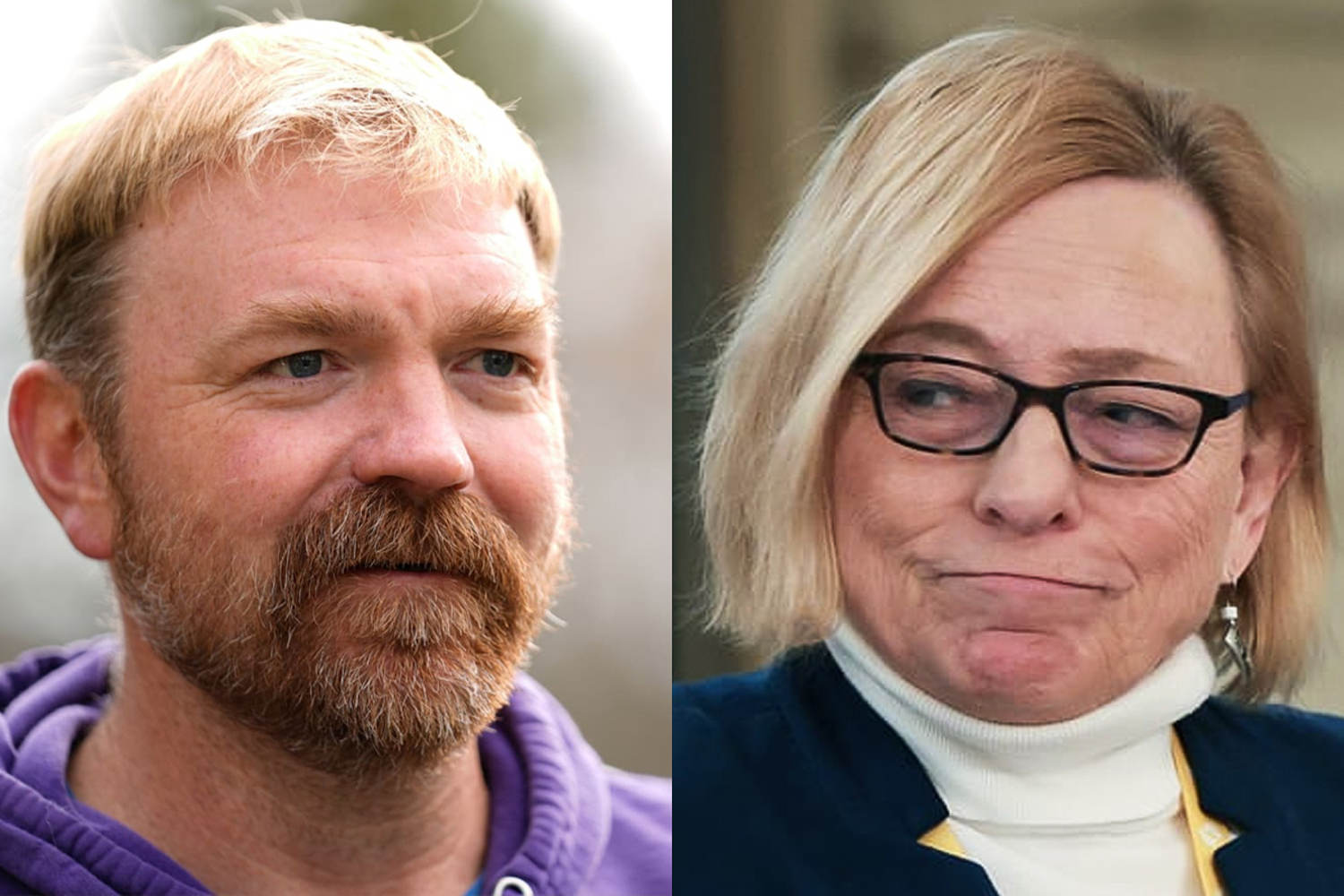
Governor Janet Mills is finding out the hard way that being the first female governor of Maine doesn’t guarantee the female vote. You’d think a two-term incumbent with a solid track record would have this in the bag. Instead, she’s locked in a bruising primary battle with Graham Platner, an oyster farmer and Marine veteran who’s currently cleaning up in the polls.
The numbers from the latest Emerson College survey are fairly jarring for the Mills camp. Platner leads the Governor 55% to 28% among Democratic primary voters. While he’s absolutely crushing it with men—a 41-point margin—he also holds an 18-point lead among women. For a candidate like Mills, whose political identity is tied to being a trailblazer for women in the state, that’s a massive red flag.
The strategy of digging up the past
Mills isn't sitting back and watching her Senate dreams evaporate. Her campaign has shifted into high gear with a series of aggressive attack ads focused on Platner’s digital history. We’re talking about Reddit comments from over a decade ago. One specific ad features a female Army veteran who survived a sexual assault, calling Platner "disqualifying" for 2013 comments where he suggested women shouldn't get so intoxicated that they have "sex with someone they don't mean to."
It's a classic "vetting" play. Mills is betting that when Maine women see the unfiltered, younger version of Graham Platner, they’ll run back to the steady, predictable leadership they know. She’s essentially asking: do you really want a guy with this kind of baggage representing you in D.C.?
But here’s the problem. Platner isn't running as a polished politician. He’s running as an anti-establishment outsider. He’s already apologized, calling the posts the "worst thing I said on the internet... 14 years ago." In a world where people are increasingly tired of "career politicians," the "he said something dumb on Reddit" attack might not have the teeth it used to.
Why the oyster farmer is winning the ground war
If you look at the fundraising, it’s even weirder. Platner raised about $7.8 million last year. Mills? Just $2.6 million. That’s a three-to-one advantage for a guy who spends his mornings on a boat in Sullivan.
Platner has been relentless on the trail, hitting nearly 50 town halls across the state. He’s talking about a "blue-collar revolution" and has picked up endorsements from the progressive heavyweights—Bernie Sanders and Elizabeth Warren. He’s tapping into a specific kind of Maine populism that transcends gender lines.
Mills, meanwhile, is seen by many as the "establishment" pick. She has the backing of Chuck Schumer and the D.C. donor class, but that can be a double-edged sword in a state that prides itself on independence. Many women in the Maine Democratic primary aren't just looking for a female candidate; they’re looking for a progressive one who doesn't feel like a product of the party machine.
The Susan Collins factor
The irony here is that both of these candidates actually poll better against the Republican incumbent, Susan Collins, than Collins does against them.
- Platner vs. Collins: Platner leads 48% to 41%.
- Mills vs. Collins: Mills leads 46% to 43%.
Collins is currently sitting at a 57% unfavorable rating. She’s underwater with almost every demographic except older, conservative men. For Democrats, the 2026 race is their best shot in a generation to flip this seat. But the "nasty" primary (as the Washington Post recently called it) might be doing the GOP’s work for them.
If Mills succeeds in making Platner "disqualifying" in the eyes of women, but he wins the primary anyway, she might have just handed Collins the ammunition she needs for the general election. If Platner wins the primary with a base that's angry at the Democratic establishment, those voters might stay home in November if Mills is the nominee. It's a high-stakes game of political chicken.
The generational divide is the real story
While the gender gap is getting the headlines, the age gap is the real story. Mills is 78. Platner is 41.
Among voters under 35, Platner is essentially a rock star, leading Mills by margins as high as 62% to 21% in some subsets. Even among women, younger voters are gravitating toward the oyster farmer's message of radical change over the Governor's message of "proven leadership."
Mills has tried to lean into her experience, often joking that she doesn't have any tattoos (a jab at Platner’s controversial ink history). But in 2026, "I'm the safe choice" isn't the winning slogan it used to be. Maine voters, especially women who are feeling the squeeze of housing costs and healthcare, seem to be looking for a fighter rather than a manager.
Don't expect the mudslinging to stop. With the primary scheduled for June 9, 2026, the Mills campaign is likely to double down on the character attacks. They have to. If they can’t reclaim the lead among female voters in the next two months, the Governor’s long political career might be heading toward a very quiet retirement.
If you’re following this race, keep a close eye on the next round of independent polling in late April. If Platner’s lead holds despite the barrage of attack ads, it’s a sign that the "cancel culture" playbook has finally lost its power in the Maine woods. You should also verify your voter registration status now if you plan to participate in the June primary, as Maine's semi-open primary rules have specific deadlines for party affiliation changes.