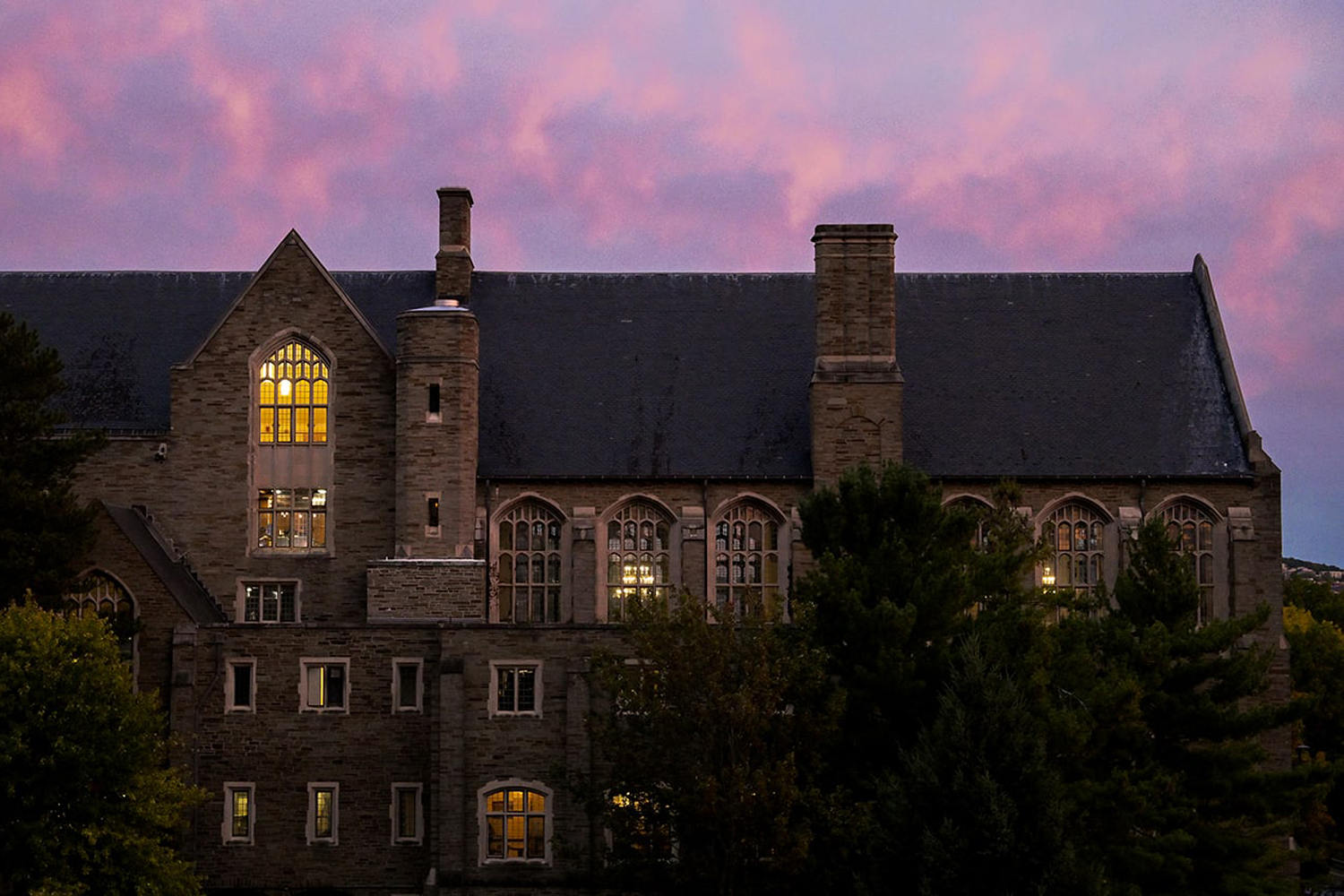
Silence has a very specific weight inside a university hearing room.
It smells like stale coffee, floor wax, and old wool. You sit at a long laminate table, your hands folded tightly over a folder of printed emails, staring at a brass nameplate that reads Office of Institutional Equity and Title IX. Across from you, administrators speak in a dialect designed entirely to dull sharp edges. They do not say "assault." They say "an alleged incident of non-consensual contact." They do not say "trauma." They say "emotional distress." They do not say "we failed you." They say "the procedural framework was followed to the letter." Building on this topic, you can find more in: Why Crime Headlines About the Murder of Carrie Mullane Hide the Real Failure.
I know that room. Anyone who has spent enough years inside higher education—whether as a student navigating a crisis, a researcher watching colleagues quietly disappear from department rosters, or an advocate sitting beside a trembling nineteen-year-old at 9:00 AM on a Tuesday—knows the chilling efficiency of academic bureaucracy. Institutions are built to outlive everyone inside them. Their primary instinct, when threatened by scandal, is not justice. It is insulation.
Until, occasionally, the people who actually make the institution breathe decide they have had enough. Analysts at BBC News have also weighed in on this matter.
That is what happened on the wind-swept hills of Ithaca, New York, when the faculty of Cornell University took an extraordinary, historic step. They passed a vote of no confidence in the university's leadership over its handling of a sexual assault case. On paper, a "vote of no confidence" sounds like dry parliamentary procedure. In reality, inside the cautious, consensus-driven culture of an Ivy League campus, it is the equivalent of pulling the fire alarm in the middle of a board meeting.
The Anatomy of a Breaking Point
To understand why tenured professors—people who generally prefer quiet laboratories, archival research, and polite committee debates—would openly revolt against their own administration, you have to look beneath the press releases.
Every campus crisis follows a depressingly familiar script. Consider a hypothetical scenario, built from the documented patterns of dozens of Title IX disputes across American universities over the past decade. Call her Maya. Maya is a sophomore, double-majoring in biology and comparative literature. She reports an assault by a peer—perhaps someone well-connected, an athlete, or a graduate student whose grant funding keeps a lab humming.
At first, the machinery whirs with practiced sympathy. Maya is handed a pamphlet. She is offered counseling appointments booked three weeks out. Then comes the investigation. Months stretch into semesters. While Maya changes her walking routes across the quad to avoid seeing her assailant outside the library, the administration conducts interviews, drafts preliminary reports, and consults outside legal counsel.
When the decision finally arrives, it often hinges on a technicality—a narrow interpretation of consent, an evidentiary standard shifted quietly behind closed doors, or a sanction so light it feels like an administrative wink. A one-semester suspension deferred until after graduation. A mandatory reflection essay. A quiet transfer.
And when Maya, exhausted and hollowed out, asks why the system promised protection and delivered impunity, the institution hides behind federal privacy laws. We cannot comment on specific student disciplinary matters. The door clicks shut. The semester rolls on. Prospective students continue to tour the manicured lawns.
In Ithaca, the gap between Cornell’s stated values and its administrative reality finally stretched too wide to bridge. Reports surrounding the university’s handling of sexual assault allegations—specifically failures in timely response, transparency, and accountability—sparked outrage that rippled far beyond student activists. Professors began asking a terrifying question: If the administration cannot protect the physical safety and basic dignity of students in the hallways outside our classrooms, what exactly are we teaching for?
What "No Confidence" Actually Means
Let us strip away the academic jargon. What does a faculty vote of no confidence actually do?
Legally? Almost nothing. Unlike a parliamentary system where a prime minister must immediately resign, a university president and senior administrators do not automatically lose their jobs when the faculty senate votes against them. The board of trustees holds the actual power to hire and fire.
Symbolically and culturally? It is devastating.
Think of a major research university as a complex suspension bridge. The administration and trustees are the concrete anchorages on either side—they hold the money, the endowments, the real estate, and the legal authority. The faculty are the steel cables carrying the actual weight of the bridge. Every lecture, every breakthrough in the chemistry lab, every Pulitzer-winning book, every reason a student pays eighty thousand dollars a year to attend flows through those cables.
When the faculty passes a vote of no confidence, those cables are announcing that the anchorages are rotting.
It tells prospective faculty members: Think twice before bringing your lab here. It tells alumni donors: Your money is funding dysfunction. It tells the board of trustees: You have lost the moral consent of the governed.
Historically, faculty senates rarely deploy this weapon. Over the last twenty years, fewer than a few dozen no-confidence votes have occurred at major American universities—and almost always over catastrophic financial mismanagement, brazen political interference, or severe breaches of shared governance. When professors mobilize over a Title IX and sexual assault handling failure, it signals something deeper than a policy disagreement. It signals a moral fracture.
The Invisible Taxes Paid by Survivors
While administrators debate compliance metrics and risk management, the human cost of institutional failure compounds quietly in the dark.
Psychologists and campus advocates call it "institutional betrayal." It is a clinical term for a visceral, gut-punch experience: when the very institution you trusted to protect you becomes the instrument of your secondary trauma.
You can see institutional betrayal in the way a student’s posture changes over an academic year. In September, they sit in the front row, eager, arguing passionately about constitutional law or organic synthesis. By February, after six months of Title IX hearings, cross-examinations, and administrative stonewalling, they sit in the back corner by the exit. Their eyes are rimmed with exhaustion. Their grades slip—not from a lack of intellect, but because navigating an adversarial administrative process is a full-time, unpaid job.
I have watched brilliant young researchers drop out of PhD programs because their advisor was protected by a department chair who didn't want to lose federal grant money. I have seen undergraduate survivors transfer to state schools hundreds of miles away just to breathe air unpolluted by the campus where nobody believed them.
The administration calculates risk in terms of litigation. What happens if the accused sues us for due process violations? What happens if our federal funding is audited? What happens to our U.S. News ranking if crime statistics spike?
Notice who is missing from that equation.
When a university treats sexual assault primarily as a public relations liability or a legal exposure problem, it inevitably prioritizes containment over care. Deadlines slip. Complainants are kept in the dark about appeal timelines. Sanctions are watered down to avoid courtroom battles with wealthy families. Every single one of those micro-decisions makes sense to a risk-management lawyer sitting in a corner office. Together, they form an architecture of abandonment.
The Turning Point in the Lecture Hall
Why did Cornell’s faculty step into the fray now? Because the wall between administrative failure and classroom reality is an illusion.
Professors are the ones who notice when a star student stops turning in problem sets. They are the ones sitting in office hours when a sophomore breaks down crying, confessing that she cannot focus on her midterm because her assailant is sitting three rows behind her in a 300-person lecture hall, and the Title IX office told her to "just switch sections."
Imagine being a professor in that moment. You are told by the university handbook to uphold academic integrity, mentor young minds, and model ethical leadership. Yet when you look up the chain of command, you see an apparatus that leaves your students stranded.
The revolt at Cornell did not happen overnight. It grew out of faculty senate debates, open letters, late-night phone calls between department chairs, and the growing realization that polite requests for "task forces" and "listening sessions" were merely stalling tactics. Universities are world champions at forming committees to study problems until the students who raised them graduate and move away.
By forcing a formal vote of no confidence, the faculty refused to let the clock run out. They took a private institutional embarrassment and etched it permanently into the historical record.
The Architecture of Accountability
If a no-confidence vote is a diagnosis rather than a cure, what does real repair actually look like?
Skepticism is warranted here. We have seen universities apologize, hire high-priced consultants, rewrite their Title IX manuals, and still fail the very next student who walks through the door. True accountability requires dismantling the incentives that create institutional betrayal in the first place.
First, independence. A Title IX office cannot be truly objective if its director reports directly to the same general counsel whose primary job is to shield the university from financial liability. Protecting students and protecting the endowment are fundamentally different mandates. When those two roles share a boss, the endowment wins every time.
Second, radical transparency around outcomes. Privacy laws like FERPA exist to protect student records, not to serve as an all-purpose shield for administrative incompetence. Universities can and must publish clear, anonymized annual data: how many reports were filed, how long investigations actually took against promised timelines, what findings were reached, and what sanctions were enforced. Light is the only known disinfectant for bureaucratic drift.
Third, shared power. The reason faculty senates resort to dramatic votes of no confidence is that modern university governance has steadily stripped professors and students of real decision-making authority, concentrating power in bloated administrative tiers. Rebuilding trust means giving faculty and student representatives binding oversight—not just advisory seats—over campus safety policies and disciplinary procedures.
Beyond the Gates of Ithaca
It would be easy to view the turmoil at Cornell as an isolated Ivy League drama, a distant skirmish among elites in upstate New York. That would be a mistake.
Universities are bellwethers for how powerful institutions handle abuse of power. Whether it is a tech giant burying harassment claims under non-disclosure agreements, a hospital system protecting a high-billing surgeon, or a religious organization transferring a problematic leader to another parish, the playbook is identical. Protect the brand. Delay the reckoning. Exhaust the whistleblower.
When a community inside one of those fortresses stands up and says no more, it fractures the inevitability of that playbook. It reminds every administrator sitting behind a mahogany desk that legitimacy is not granted by a corporate charter or a multi-billion-dollar endowment. It is earned daily through the protection of the vulnerable.
Late in the evening, after the senate floor clears and the votes are tallied, a university campus looks deceptively peaceful. Streetlamps cast warm pools of amber light across brick pathways. Inside dormitories, desk lamps glow behind drawn curtains as students highlight textbooks and write papers for morning deadlines. Nothing on the surface looks broken. Yet inside the administrative buildings, the silence feels different now—no longer the heavy, suffocating quiet of a locked hearing room, but the tense stillness right before a foundation shifts.