Art heist stories usually end in shadowy mystery. This one ended in a suburban house after a five-month manhunt.
Italian authorities announced a massive breakthrough in August 2026. They recovered three priceless stolen works by Paul Cézanne, Auguste Renoir, and Henri Matisse. These masterpieces weren't hidden in some international syndicate's high-tech vault. They turned up right where a local crew of suspects stashed them.
If you followed the initial break-in at the Fondazione Magnani-Rocca museum near Parma, you know how clean and terrifyingly fast it was. The recovery brings closure to a brazen crime that rattled Italy's cultural institutions. But the details behind the operation reveal just how vulnerable high-profile collections remain.
Inside the Magnani-Rocca Museum Raid
The theft happened overnight between March 22 and March 23, 2026. Four masked individuals targeted the picturesque villa in Traversetolo, housing the prestigious collection amassed by art historian Luigi Magnani.
Security footage released by the Carabinieri shows just how efficient the operation was. Two intruders smashed through a window, sprinted directly to the target gallery, yanked the canvases off the walls, and passed them to an accomplice waiting outside.
The entire heist took less than sixty seconds.
The thieves knew exactly what they wanted. They walked past heavy hitters by other legendary artists to grab three specific French modernist treasures:
- Tasse et plat de cerises by Paul Cézanne, painted between 1885 and 1887.
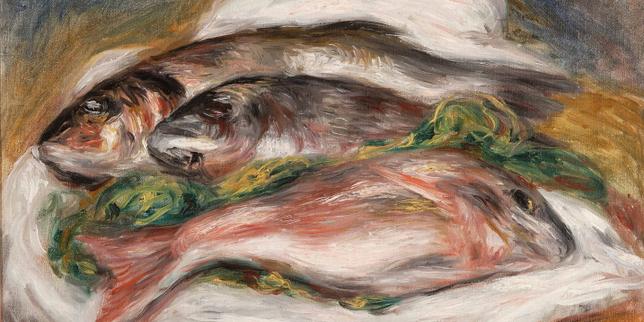
- Les Poissons by Pierre-Auguste Renoir, a striking late-period piece from 1917.
- L’odalisque sur la terrasse by Henri Matisse, completed in 1922.
A fourth painting, Renoir's Paysage de Cagnes, was also grabbed during the chaos. However, the panicked crew dropped or abandoned it during their escape through the museum's parkland.
The Staggering Financial and Cultural Stakes
Art theft isn't like stealing electronics. You can't just fence a Cézanne on the black market without a buyer lined up beforehand, which rarely happens outside of Hollywood fiction. Most stolen masterpieces are held for ransom, used as collateral in criminal underworld loans, or simply recovered because the thieves realize they are stuck with unsellable goods.
The recovered trio carries immense value. Italian police and cultural heritage squads valued the Cézanne and the Renoir alone at roughly nine million euros. The Cézanne (Tasse et plat de cerises) accounted for the lion's share at around six million euros, while Renoir's Les Poissons sat close to three million. Matisse's L’odalisque sur la terrasse was valued more modestly by authorities at around twenty thousand euros, though its historical value to the collection is priceless.
The Fondazione Magnani-Rocca is famous for holding works by heavyweights like Dürer, Van Dyck, Goya, and Monet. Losing three pillars of its French collection dealt a massive psychological blow to museum curators across Europe. Security audits followed immediately. Experts questioned how a regional Italian museum could fall victim to such a swift smash-and-grab.
How the Carabinieri Cracked the Case
The investigation fell to the Carabinieri's specialized art squad, the Comando Carabinieri Tutela Patrimonio Culturale. This military police unit is dedicated entirely to tracking down stolen heritage. They operate with a level of persistence that regular local police departments rarely match.
For five months, investigators combed through security footage, tracked mobile tower pings, and analyzed regional informants. Parma police chief Andrea Pagliaro confirmed that the net tightened around a ring of nine suspects, primarily linked to a Moldovan gang.
Instead of an international smuggling route, the trail led straight to a domestic residence tied to one of the suspects. Raids across the Parma region yielded the three missing canvases.
The paintings underwent immediate authentication by conservation experts. Miraculously, preliminary checks indicate the canvases survived the five-month ordeal without catastrophic damage, though conservationists are running detailed checks to assess humidity and handling impacts.
Protecting Vulnerable Cultural Heritage
Museum security remains a massive headache for curators balancing public access with asset protection. You want people to experience art up close, not behind three layers of bulletproof glass in a sterile bunker. Yet incidents like the Traversetolo break-in prove that basic perimeter vulnerabilities still plague regional European museums.
When gangs treat provincial galleries as soft targets, institutions must adapt. Expect tighter biometric access controls, faster alarm response grids, and upgraded perimeter sensors across historic villas functioning as museums.
If you run a gallery or manage a public collection, review your vulnerability points today. Check your perimeter glass ratings, test your off-site alarm redundancy, and make sure your internal motion sensors can differentiate between stray drafts and human intruders before a crew of professionals targets your walls.