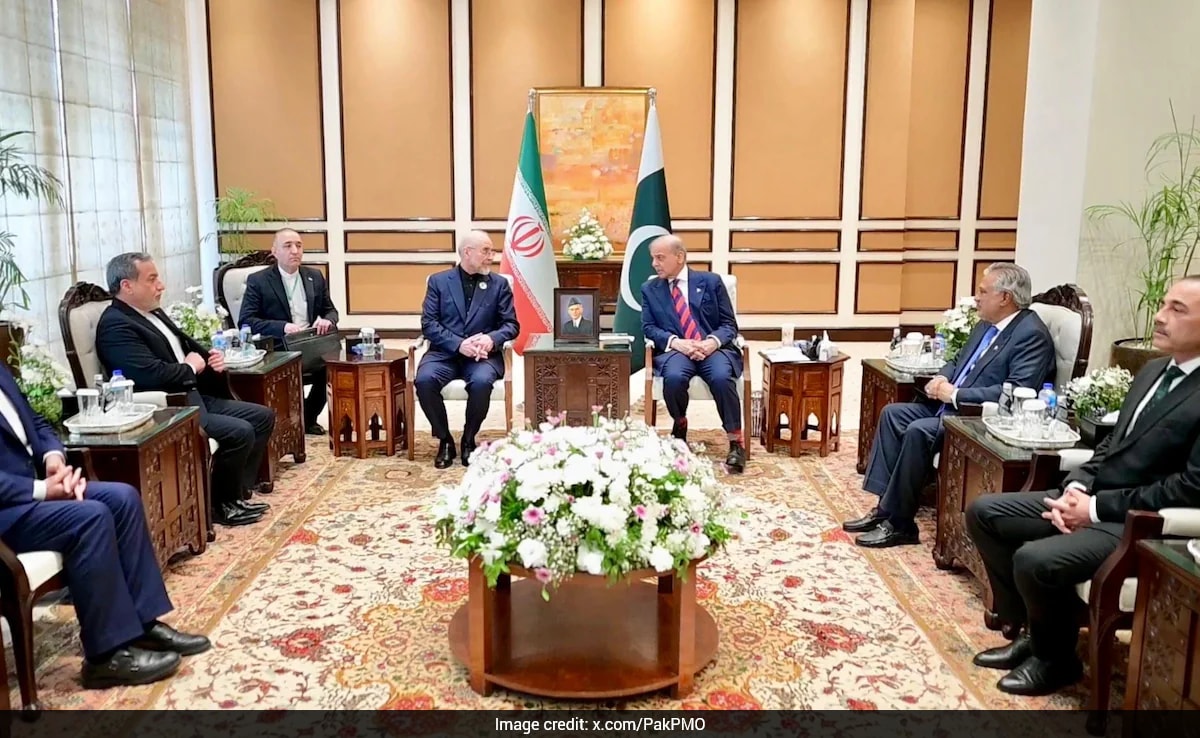
The collapse of the marathon peace talks in Islamabad this week did more than just restart the clock on a global energy crisis. It exposed a brutal reality that the world’s self-appointed mediators have tried to ignore for decades. Pakistan’s attempt to bridge the chasm between a vengeful Washington and a battered Tehran was not a failure of effort, but a failure of leverage. When Vice President JD Vance walked away from twenty-one hours of negotiations, he didn't just leave behind a frustrated Pakistani government; he left behind the illusion that "middle powers" can still referee the disputes of the nuclear age.
Islamabad’s failure is a masterclass in the limits of diplomatic goodwill. For weeks, Prime Minister Shehbaz Sharif and Chief of Army Staff General Asim Munir gambled their domestic stability on the hope that proximity equals influence. They believed that because Pakistan shares a nine-hundred-kilometer border with Iran and a long-standing military partnership with the United States, it could dictate the terms of a ceasefire. It was a grave miscalculation. Washington arrived in Islamabad demanding a total dismantling of Iran’s nuclear capabilities and the immediate surrender of the Strait of Hormuz. Tehran, reeling from the loss of its Supreme Leader and the devastation of its infrastructure, countered with demands for war reparations and a permanent end to Israeli operations in Lebanon.
The gap was not a crack. It was a canyon.
The Geography of Despair
Pakistan did not enter this arena out of pure altruism. The domestic situation in Karachi and Lahore is nearing a breaking point. Since the war began in late February, fuel prices in Pakistan have surged to a staggering 458 rupees per liter. The economy is bleeding out. Operation Muhafiz-ul-Bahr, the Pakistan Navy’s desperate attempt to escort merchant ships through the Persian Gulf, is a drain on resources the country does not have.
More dangerously, the war has ignited a sectarian powder keg. With twenty percent of Pakistan’s population being Shia, the death of Ayatollah Khamenei triggered protests that quickly turned into riots. The government is terrified. If Iran collapses or fragments, the spillover into Pakistan’s Balochistan province—already a hotbed for the Baloch Liberation Army—could be terminal. For Islamabad, peace isn't a diplomatic goal; it is a survival strategy.
The problem is that neither the Trump administration nor the Iranian interim council views Pakistan as a peer. They view it as a venue. To the White House, Islamabad is a convenient, neutral ground where they can issue ultimatums without the optics of a direct summit in a Western capital. To the Iranians, Pakistan is a shield—a way to buy time while they attempt to regroup their proxy networks in Lebanon and Yemen.
The Technical Mismatch
There is a fundamental misunderstanding of what modern "peace" looks like. Washington is operating on a 15-point plan that treats Iran like a defeated power from the 1940s. They want the reopening of the Strait of Hormuz as a "confidence-building measure." This is like asking a man to put down his gun before you’ve agreed not to shoot him. For Tehran, the Strait is the only piece of hardware they have left that actually scares the global markets.
Iran’s 10-point counter-proposal focused heavily on technical sovereignty:
- Recognition of their right to high-level uranium enrichment.
- The immediate lifting of secondary sanctions.
- A freeze on Israeli drone technology deployments in the region.
Pakistan lacked the technical and economic weight to bridge these points. You cannot mediate a nuclear dispute with just "shared history" and "cultural ties." You need the ability to provide security guarantees or financial offsets. Pakistan, currently surviving on IMF life support and Chinese loans, can offer neither. When the Iranian delegation led by Mohammad Bagher Qalibaf insisted that a ceasefire must include Lebanon, the U.S. delegation simply looked at their watches.
The China Shadow
While Pakistan took the stage, the real director was likely watching from Beijing. China has backed Pakistan’s five-point proposal, which calls for "normal navigation" in the Strait. Why? Because the war has given China a massive advantage in the clean tech and energy sector. As oil prices spike, the global shift toward Chinese-made electric vehicles and batteries accelerates.
China is playing a long game where a low-simmering conflict in the Middle East actually serves its strategic interests by weakening U.S. influence and making Gulf monarchies more dependent on Beijing’s "stability" narrative. Pakistan, by acting as the face of these failed talks, takes the reputational hit while China remains the "sober" alternative to American interventionism.
The Nuclear Anxiety
There is a deeper, unspoken fear driving Islamabad’s desperation. For the first time, a nuclear-armed state (Pakistan) is watching another nation’s nuclear program be systematically dismantled via conventional air superiority and targeted assassinations. The Pakistani military establishment is looking at the ruins of Tehran and wondering if they are next.
If the U.S. can successfully neutralize Iran's "strategic depth" without a full-scale ground invasion, the precedent for Pakistan is terrifying. This is why General Munir was so active in the lead-up to these talks. He wasn't just trying to save Iran; he was trying to preserve the sanctity of the "nuclear deterrent" as a concept. If the Islamabad talks proved anything, it is that the deterrent only works if your opponent believes the cost of calling your bluff is too high. Right now, Washington believes it can pay the price.
The Deadlock of the Two-Week Truce
The current ceasefire, a fragile two-week window secured by Prime Minister Sharif’s personal pleas to Donald Trump, expires on April 22. It is a stay of execution, nothing more. The "Islamabad Breakdown" has left both sides more entrenched than they were in February. Iran has seen that the West will not blink, and the U.S. has seen that Iran would rather watch its cities burn than surrender its proxies.
Pakistan’s "peace push" reached its limit because it relied on the belief that everyone wants to avoid a larger war. They don't. Some parties believe the war has already begun and the only way out is through. Islamabad tried to sell a 45-day truce plan to people who are thinking in terms of centuries.
The next few days will likely see a surge in naval activity. If the Strait of Hormuz does not reopen by the 20-day mark proposed in the Pakistani plan, the U.S. will likely move to "enforce" navigation. This isn't diplomacy; it's physics. When two objects moving at high speed collide, the person standing in the middle is the first one to be crushed.
Pakistan needs to stop trying to be the world's mediator and start worrying about its own internal cohesion. The streets of Karachi are louder than the boardrooms of Islamabad, and the sound you hear isn't the hope for peace—it's the roar of a population that can no longer afford to live in a region at war. The Islamabad talks didn't fail because of a lack of effort. They failed because the mediators brought a handshake to a knife fight.
Secure the borders. Stabilize the grid. The era of the middle-power peacebroker is over.