The rhythm is a low, rhythmic thrum—the heartbeat of a continent made of steel and birch forests. It is the sound of the Trans-Siberian Railway, a six-day stretch of metal that binds Moscow to the Pacific. But lately, the air inside the third-class platskart carriages has changed. It no longer smells merely of smoked sausage, damp wool, and tea from the samovar. It smells of tobacco, cheap cologne, and the heavy, unspoken weight of men who have seen things that do not belong in a civilian world.
These men are the returnees. They are soldiers coming home from the front lines in Ukraine, spilling out of the trenches and into the narrow bunks of a train that moves too slowly for a mind in a hurry to forget.
Across from you sits a man whose skin is the color of old parchment. He is thirty-two, but his eyes belong to a grandfather who has lived through a famine. He wears a mismatched tracksuit, but his boots are military-issue, caked with a mud that doesn't quite look like the soil of central Russia. He cracks a window. The freezing Siberian air rushes in, but it doesn't seem to touch him. He is still back there, in the tree lines of Donbas, where the world is reduced to the sound of a drone’s buzz and the sudden, violent end of a conversation.
The Geography of Silence
The Trans-Siberian has always been a place of forced intimacy. In the open-plan carriages, there are no doors. Privacy is a myth sustained only by looking at your feet or staring out the window at the endless blur of white. When a soldier boards at a station like Samara or Yekaterinburg, the energy in the car shifts. The chatter of grandmothers and students dies down. People look, then quickly look away.
It is a specific kind of tension. It isn't necessarily hostility, nor is it purely respect. It is a profound, vibrating discomfort.
These men are often loud. They drink vodka from plastic cups, not because they are celebrating, but because the silence of the train is a vacuum that needs to be filled. If it isn't filled with noise, it fills with the screams of friends left behind in the tall grass. They talk in fragments. They speak of "the meat," a grim shorthand for the infantry assaults that define their daily existence. They speak of the pay—the 200,000 rubles that seemed like a fortune back in their decaying villages but now feels like a blood-price for a life they no longer recognize as their own.
Consider the logistics of the soul. A man spends six months in a hole in the ground, fearing the sky. Then, he is placed on a train for four days. He is expected to decompress, to transition from a predator or prey back into a father, a son, or a neighbor. But the train is too fast for the psyche and too slow for the heart.
The Question That No One Asks
The title of the original chronicles posed a haunting question: "Do you have any regrets about having to kill?"
In the flickering light of the carriage, that question is never asked directly. It is too sharp. Instead, the answers come out in the way a soldier grips his glass until his knuckles turn white. It comes out when a young man with a shrapnel scar across his jaw talks about how "the Ukrainians are just like us," only to pivot a second later into a rehearsed line about Nazis or defense of the motherland.
The cognitive dissonance is a physical presence.
One soldier, let's call him Mikhail, describes the first time he saw a drone drop a grenade. He describes it with a detached, clinical fascination. He talks about the "birds" as if he’s a birdwatcher, not a target. But when he mentions his daughter’s upcoming birthday, his voice breaks. The transition from the "bird" that kills to the doll he needs to buy in Vladivostok is a bridge too far. He can't walk across it. So, he drinks more.
The train moves through the Ural Mountains, crossing the invisible line between Europe and Asia. Outside, the world is vast and indifferent. Inside, the soldiers are hyper-visible. Their presence is a reminder of a reality that many in the big cities would rather treat as a background noise. In Moscow, life is a curated stream of high-end cafes and technological convenience. On the Trans-Siberian, the war is a physical passenger. It takes up space. It smells of cigarettes. It has a loud, rattling cough.
The Invisible Stakes of the Return
What happens when thousands of men, forged in the most brutal artillery war of the 21st century, are funneled back into small, stagnant towns where the only employer is a shuttered factory or a struggling farm?
The stakes are not just political. They are cellular.
Psychologists call it moral injury. It’s different from PTSD. It isn't just about being afraid; it’s about the shattering of one's internal moral compass. When a soldier returns on the Trans-Siberian, he isn't just bringing home medals or money. He is bringing home a ghost. He is bringing home a version of himself that was forced to do the unthinkable to survive.
In the villages of Buryatia or the outskirts of Chita, these men are arriving to a hero’s welcome that feels hollow. The money they send home buys new cars and pays off predatory loans, but it cannot buy back the quiet in the house. The "invisible stakes" are the future of a generation of Russian men who are being taught that violence is the only currency that retains its value when the ruble fluctuates.
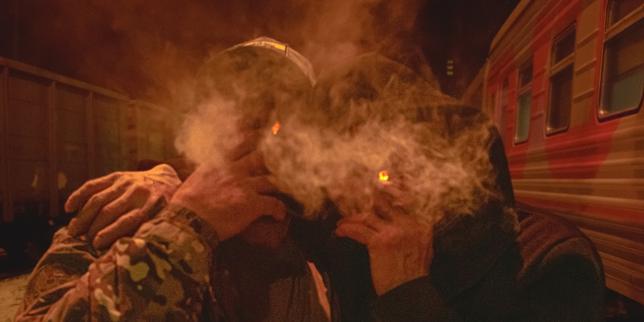
The train stops at a station in the middle of the night. The platform is bathed in a sickly yellow light. A few soldiers get off to smoke. They stand in a circle, their breath blooming in the cold air like small clouds of smoke. They don't talk. They just stand there, looking at the dark forest. They are home, or close to it, but they look like they are standing on the edge of a cliff.
The Friction of Peace
There is a specific kind of friction that occurs when the "war world" rubs against the "peace world."
On the train, a civilian might complain about the tea being cold or the Wi-Fi not working. A soldier hears this and a flicker of something—disdain, perhaps, or envy—crosses his face. To him, the civilian world is soft, oblivious, and slightly insulting. To the civilian, the soldier is a source of anxiety, a wild card who might snap if the train brakes too hard.
This friction is the story of Russia today. It is a country partitioned not by geography, but by experience.
One man, a contract soldier who has served three tours, explains that he can't stand the sound of slamming doors anymore. Every time a heavy metal door between carriages bangs shut, he flinches. He tries to hide it by adjusting his hat, but everyone sees. We all see. We are all witnesses to his ruin, and yet we are all participants in the silence that keeps the train moving.
The journey continues. Irkutsk. Ulan-Ude. The tracks skirt the edge of Lake Baikal, the deepest water on Earth. The beauty is staggering, but inside the carriage, the focus is narrow. It is a world of small gestures. A soldier shares a loaf of bread with a stranger. A woman offers a soldier a piece of candy. These are the tiny, desperate attempts to bridge the chasm.
But then the drinking starts again. The stories become more jagged. The "regrets" that were hidden behind bravado start to leak out in the form of anger. They curse the officers. They curse the equipment. They curse the "them" that sent them there, though they are careful not to name names.
The Longest Road Home
As the train approaches the end of the line, the atmosphere changes again. The bravado fades into a somber, fearful anticipation. The men start to shave in the cramped, shaking bathrooms. They put on clean shirts. They look in the mirror and try to find the person who left a year ago.
He isn't there.
The man who gets off the train in Khabarovsk is a stranger to the man who boarded a bus to the recruitment office. He is older in a way that years can’t explain. He carries his duffel bag like a shield.
The Trans-Siberian is a conveyor belt of human history. It has carried prisoners to gulags, settlers to the frontier, and now, it carries the broken fragments of an army back to a society that isn't ready for them. The facts of the war—the front lines, the casualty counts, the geopolitical shifts—are abstract. They are numbers on a screen.
The truth is the smell of the platskart car. The truth is the man flinching at a slamming door. The truth is the silence that follows the question of what it feels like to kill.
The train doesn't stop. It just reaches the end of the track. The men step out onto the platform, blending into the crowd of commuters and travelers. For a moment, you can still see them—the way they walk, slightly hunched, as if expecting the sky to fall. Then, they are gone, swallowed by the gray light of the Pacific coast, taking their war home with them, one quiet, haunted step at a time.
The iron vein continues to thrum, carrying the next load of men toward the front, and the cycle of ghosts begins anew.