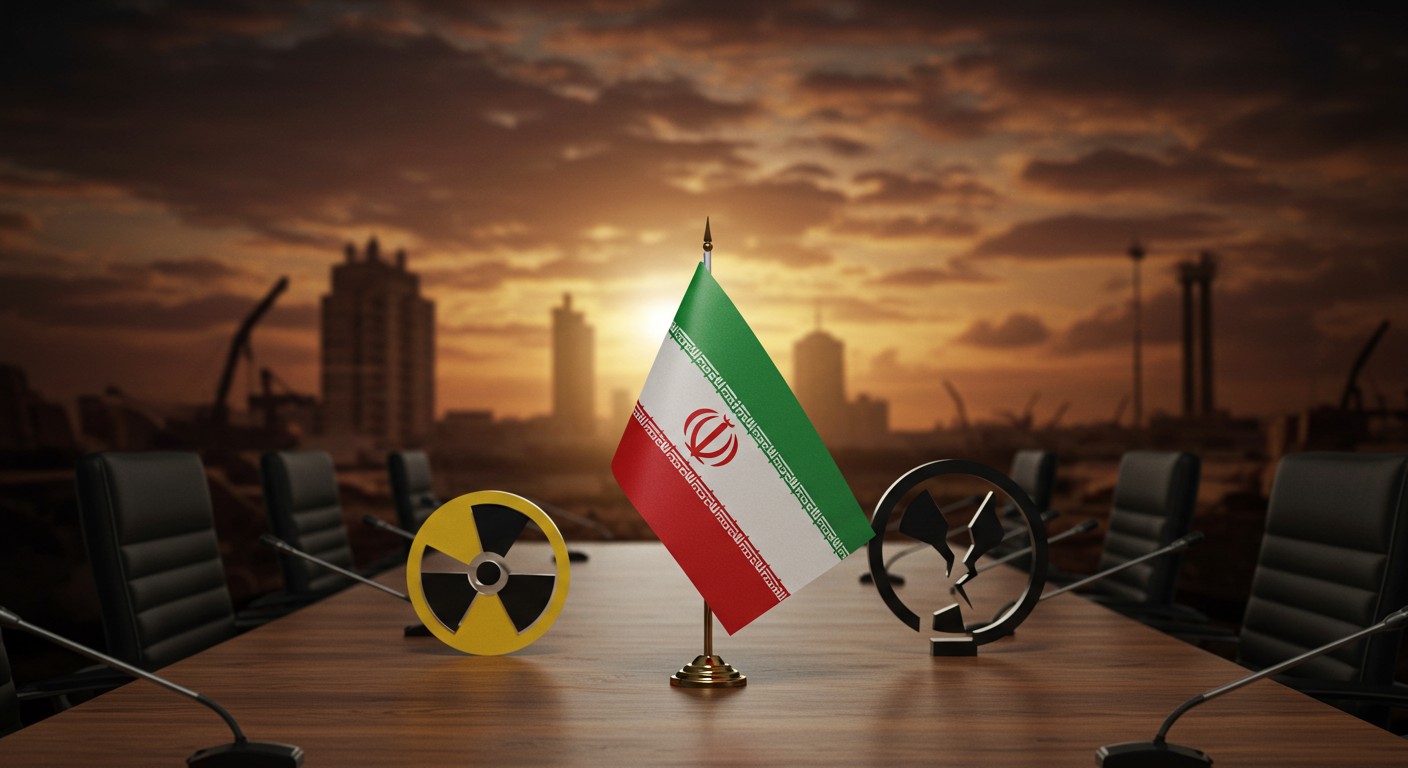
Abbas Araghchi just left Islamabad with a "workable framework" to end the war with the US, but don't hold your breath for a signing ceremony. It's a classic move in a conflict that's already dragged on for eight weeks and flipped the Middle East upside down. Iran's Foreign Minister spent Saturday pitching this plan to Pakistan's Prime Minister Shehbaz Sharif and military bigwigs, hoping to find a way out of a fight that started back on February 28.
Honestly, the timing is messy. While Araghchi is praising Pakistan’s "brotherly efforts" as a mediator, Donald Trump is busy posting on social media about how he’s cancelling his own team's flights to the region. The gap between "workable framework" and actual peace feels like a canyon right now.
The Islamabad handoff
Pakistan has been the middleman for weeks, trying to keep both sides from blowing up the entire region. Araghchi’s visit wasn't just a courtesy call; he brought a literal list of demands and a structured roadmap to stop the bleeding. He’s calling it a "principled position" to permanently end the war. Basically, Iran wants a deal that stops the US naval blockade and gets American forces to back off, but they’re still refusing to talk to the US face-to-face.
They're using Pakistan as a human post office. Araghchi hands the paper to Islamabad, and Islamabad is supposed to convince Washington it's worth reading. It sounds organized on paper, but in practice, it’s proving to be incredibly slow. The first round of talks two weeks ago went for 21 straight hours and achieved exactly zero.
Trump holds the cards
The biggest hurdle isn't the framework itself—it’s the guy in the White House. Just as Araghchi was talking about diplomacy, Trump hopped on Fox News and Truth Social to shut down a planned trip by Steve Witkoff and Jared Kushner. His logic? He thinks Iran is falling apart from the inside. He claimed there’s "tremendous infighting" in Tehran and that nobody knows who’s in charge.
Trump's stance is pretty blunt: "We have all the cards." He’s not interested in sending his team on an 18-hour flight to sit around and talk. He wants Iran to pick up the phone and call him directly. By skipping the Pakistan meeting, the US is essentially saying they don't value the "framework" Araghchi just delivered. They’re betting that the naval blockade, which has choked off Iran’s oil exports to Asia, will eventually force a total surrender instead of a negotiated peace.
Sticking points that wont go away
Even if everyone sat down tomorrow, the issues are massive. You've got three main things that keep the war room lights on:
- The Strait of Hormuz: It's a global energy chokepoint, and both sides have been seizing ships like it's a game of tag.
- The Blockade: US ships are sitting outside Iranian ports, and Tehran says they won't agree to anything until those ships leave.
- Uranium Enrichment: The US wants a permanent cap; Iran sees it as a sovereign right they won't trade away under pressure.
Araghchi is now heading to Oman and Russia to see if he can get more backing for his plan. Oman has always been a quiet backchannel, and Russia is obviously a key ally for Tehran. But if the US stays in "call us when you're ready to give up" mode, these diplomatic tours are just frequent flyer mile builders.
What actually happens next
The "framework" is currently sitting in Islamabad, and the ball is technically in Washington's court, but don't expect a quick return. The April 8 ceasefire was extended, yet the tension hasn't dropped. If you're looking for signs of what’s coming, watch the oil prices. Brent crude is bouncing around $104 a barrel because the market doesn't believe this framework has legs yet.
If you want to understand if this deal is real, watch for two things. First, see if the US eases the naval blockade even a tiny bit—that's the only signal Tehran will take seriously. Second, watch for any movement from Pakistan’s army chief, Asim Munir. If he can’t get the US back to the table in Islamabad, this Iranian framework is going to end up in a desk drawer.
Keep an eye on the Oman visit next. If Araghchi gets a different vibe there, he might tweak the demands he just left in Pakistan. For now, it’s a stalemate with a lot of fancy diplomatic labels attached to it.
:max_bytes(150000):strip_icc()/ar-American-Cheese-taste-test-horizon-4x3-54cc339550cd44b9a818c17bdfd5428d.jpg)