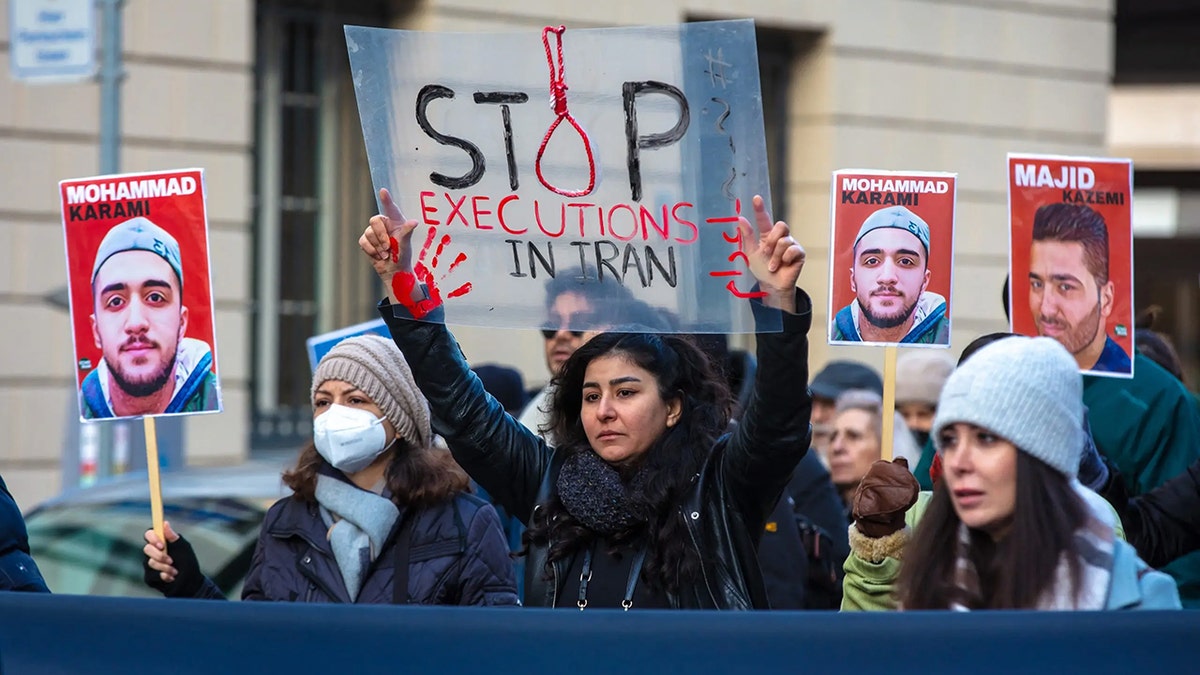
The news coming out of Isfahan isn't just another headline about a distant legal system. It's a calculated political maneuver. When the Iranian government executed Majid Kazemi, Saleh Mirhashemi, and Saeed Yaghoubi, it wasn't simply "carrying out a sentence." It was sending a message to every citizen who thought about taking to the streets.
You've probably seen the official reports. They'll tell you these three men were "convicted of killing police" during the 2022-2023 unrest sparked by the death of Mahsa Amini. But if you look at the "House of Isfahan" case, the cracks in the narrative aren't just visible—they're gaping holes. I've tracked these cases for years, and what happened in Isfahan follows a chillingly predictable pattern of state-sanctioned violence disguised as "qisas" or retribution.
The Mirage of a Fair Trial
Let's be real about what a trial looks like in Iran's Revolutionary Courts. We aren't talking about a jury of peers or a vigorous defense. We're talking about proceedings that often last minutes. In this specific case, the "evidence" was almost entirely based on confessions.
Now, "confession" sounds like a solid piece of evidence until you hear the audio smuggled out of Dastgerd Prison. Majid Kazemi wasn't admitting to a crime; he was begging for his family's safety. He described being suspended upside down and being forced to watch a video of his own brother being tortured. Interrogators allegedly subjected him to mock executions 15 times. Think about that for a second. Standing on a chair with a noose around your neck, waiting for the drop, only to be pulled down and told to "try again tomorrow." That's not a legal process. It's psychological warfare.
Breaking Down the House of Isfahan Case
The state claims these men opened fire on security forces in November 2022, killing two Basij militia members and a police officer. But here's what the official story misses:
- Zero Forensic Proof: There was no ballistics report linking the specific weapons to the defendants.
- Conflicting Testimonies: The prosecution's witnesses were often other detainees who later claimed they were also tortured to give those names.
- The "Moharebeh" Charge: They weren't just charged with murder. They were charged with Moharebeh—"enmity against God." This is a catch-all charge used to fast-track executions for anyone deemed a threat to the Islamic Republic's stability.
It's basically a legal loophole that allows the state to bypass the usual requirements for a murder conviction. By framing a protest as an "attack on God," the government removes the need for a private complainant. The state becomes the victim, the judge, and the executioner.
Why 2026 is Seeing an Execution Surge
If you think this was an isolated incident from the 2022 protests, you're missing the bigger picture. In 2025 alone, Iran carried out over 1,600 executions. By early 2026, that number has already surged toward record-breaking levels.
The regime is currently facing a "perfect storm" of internal dissent and external pressure. With the recent military escalations and the ongoing economic collapse, the authorities are using the gallows to maintain a lid on a pressure cooker. It’s a strategy of "execution as deterrence." They want you to think twice before you pick up a protest sign or post a critical tweet.
The Human Cost Behind the Numbers
Behind every name like Saleh Mirhashemi or Saeed Yaghoubi is a family that was told their loved ones would be pardoned. Just days before the hanging, families were reportedly told by officials that the evidence was weak and release was imminent. This kind of "hope-torture" is a hallmark of the system. It keeps families quiet until it’s too late to protest.
Then there's the aftermath. The state didn't just kill these men; they arrested their brothers and harassed their grieving mothers. They buried them in separate, guarded locations to prevent their graves from becoming shrines for new protests.
The Role of the International Community
Don't buy into the idea that global outcry doesn't matter. While the executions still happened, the massive vigils outside Dastgerd Prison and the diplomatic pressure from the EU and UN delayed the process for months. Every day delayed was a day these men stayed alive.
However, "condemning in the strongest terms" clearly isn't enough anymore. The Iranian judiciary has shown it’s willing to trade human lives for political stability regardless of how many UN Rapporteurs write letters.
The reality is that as long as the Revolutionary Courts operate without transparency, these "legal" killings will continue. If you want to actually stay informed on this, don't just look at the state-run Mizan News. Look at the reports from groups like Iran Human Rights (IHRNGO) and Amnesty International, who are actually interviewing the families and verifying the torture claims.
Keep an eye on the upcoming UN Human Rights Council sessions. There’s a push to hold specific judges accountable under "universal jurisdiction" for their roles in these sham trials. It’s a slow process, but it’s the only thing that actually puts a face and a name to the people pulling the lever.
If you’re following these developments, the next step is to look for the lists of current death row inmates in Isfahan and Karaj. There are dozens more just like Majid, Saleh, and Saeed, waiting for a dawn that never comes. Awareness is the only shield they have left.