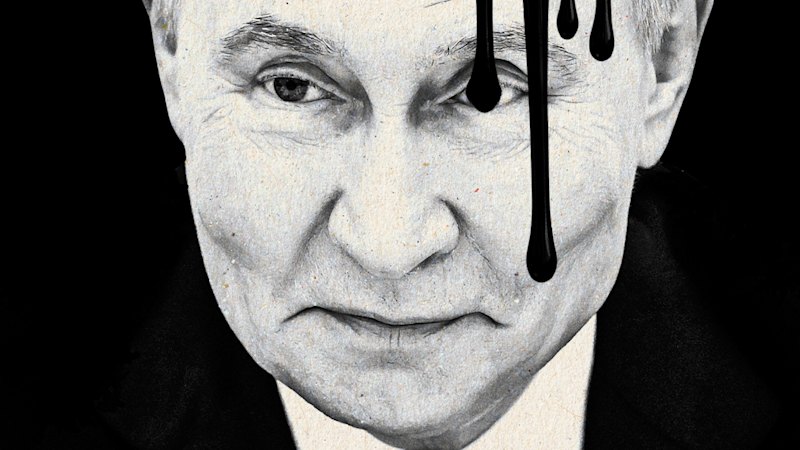
Vladimir Putin is currently the luckiest man in global politics. While the Middle East burns and the Iran war sends shockwaves through global markets, the Kremlin is watching its bank balance move in the only direction it cares about: straight up. For over two years, Western sanctions tried to choke the Russian economy, forcing Moscow to sell its crude at embarrassing discounts. Those days are gone.
The math is brutal and simple. Russia is now raking in roughly $760 million every single day from oil and gas exports. Before this conflict kicked off, that number was hovering around $400 million. We're talking about a near doubling of revenue in a matter of weeks. The "oily lifeline" isn't just a metaphor; it’s a massive injection of hard currency that’s effectively neutralized the impact of the G7 price cap.
The Death of the Russian Discount
For a long time, the world treated Russian Urals crude like a toxic asset. To get anyone to touch it, Moscow had to offer discounts as deep as $30 per barrel compared to the global Brent benchmark. That spread was the primary tool the West used to limit Putin’s ability to fund his own regional ambitions.
The Iran war changed the gravity of the market. With the Strait of Hormuz effectively a no-go zone, the world lost access to about 20% of its daily oil supply. When 15 million barrels of oil suddenly go missing from the global ledger, nobody cares about the "moral" implications of buying from Russia anymore. They just want the fuel.
- Urals prices have skyrocketed: In early 2026, Russian crude was struggling. Today, it's trading at or even above the Brent benchmark in some private Asian deals.
- The Sanctions Waiver Factor: In a desperate bid to keep global gas prices from hitting $200, Washington has been forced to look the other way. Temporary waivers have allowed millions of barrels of Russian oil—previously stuck at sea—to flow into Indian and Chinese refineries.
- A Windfall of Epic Proportions: The Kyiv School of Economics (KSE) estimates that Russia could net an extra $84 billion to $161 billion this year alone depending on how long the fighting lasts.
Why India and China are Doubling Down
You've probably heard that India and China are "neutral" in the Middle East. From an energy perspective, they’re anything but. They're opportunistic.
India, which had recently scaled back its Russian purchases due to banking hurdles and sanction fears, has done a complete 180. Indian refiners are now aggressively outbidding rivals for Russian cargoes. They’ve realized that Russian oil, delivered via the "shadow fleet" through the Northern Sea Route or around Africa, is far more reliable than anything trying to navigate the Persian Gulf right now.
China is playing an even more sophisticated game. While they still rely on Middle Eastern oil, they’ve used the chaos to negotiate long-term, yuan-denominated deals with Moscow. This doesn't just help Putin’s cash flow; it builds a financial infrastructure that is completely immune to the US dollar. Every barrel of oil sold in yuan is a win for the Kremlin's long-term survival strategy.
The Shadow Fleet Comes Out of the Cold
Remember the "shadow fleet"? Those aging, under-insured tankers that Russia used to sneak oil past Western monitors? They used to be a desperate workaround. Now, they’re the most valuable logistics network on the planet.
As mainstream shipping companies refuse to enter the volatile waters near Iran, Russia’s rogue fleet is happily chugging along. Since these ships operate outside Western jurisdiction and insurance circles, they don't care about the price cap or the "red zones" defined by London insurers.
Moscow has essentially created a parallel energy economy. The Iran war didn't just provide a price hike; it validated the billions Putin spent building this ghost infrastructure. It’s now the only game in town for buyers who can’t risk their shipments being caught in a drone strike or seized in the Gulf.
Reality Check on the Kremlin's Budget
Don't mistake this for total economic health. Russia still has massive internal problems. Their fiscal deficit in early 2026 was gaping, and inflation is a constant ghost in the room. However, the oil windfall is a "get out of jail free" card for the medium term.
The extra $100 billion-plus in revenue means Putin can:
- Fund the military indefinitely: The "special military operation" costs are no longer a strain on the sovereign wealth fund.
- Buy social peace: He can afford the subsidies and wage hikes needed to keep the domestic population from grumbling about the war's duration.
- Modernize domestic tech: With cash to burn, Russia can pay premium "black market" prices for the Western components their industry still craves.
If the Iran conflict persists for six months, Russia could actually move from a deficit to a budget surplus. That’s a nightmare scenario for Western diplomats who thought they had Moscow on the ropes.
What Happens Next
If you're looking for a sign that energy prices will settle, don't hold your breath. The market remains "long on risk and short on barrels."
For the average person, this means higher prices at the pump and continued inflation. For Putin, it’s a total strategic reset. He no longer has to beg for buyers; he’s the one setting the terms.
Keep a close eye on the volume of Russian oil moving through the Northern Sea Route. As the Middle East remains a powder keg, this Arctic passage is becoming the world's most important energy corridor.
Next Steps for Observers:
- Monitor the Urals-Brent Spread: If the discount stays below $5, Russia is effectively operating as a "clean" market participant again.
- Watch the Yuan: Any increase in oil-for-yuan trades between Moscow and New Delhi would signal a permanent shift away from Western financial leverage.
- Track the Shadow Fleet Seizures: Watch if NATO countries move from "monitoring" to "active interdiction" of these vessels. That’s the only way to stop the cash flow now.