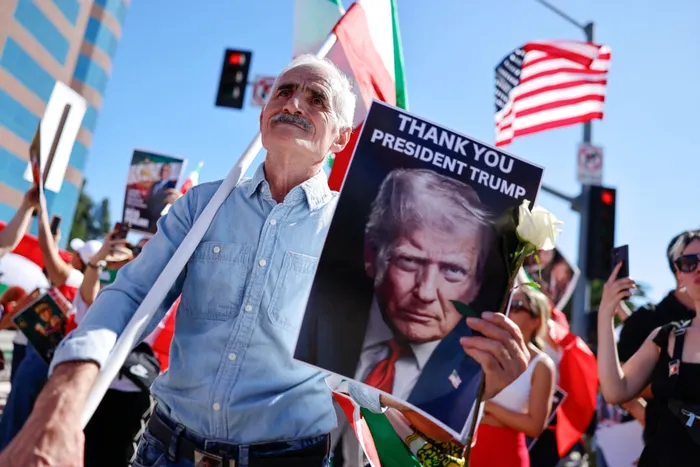
The death of Ali Khamenei isn't just a headline. It's the oxygen a suffocating nation has been waiting for since 1979. For decades, the Islamic Republic felt like a permanent fixture of the Middle East, a stone wall that wouldn't budge. But today, that wall is crumbling in real-time. Iranian-born activist and former Canadian lawmaker Goldie Ghamari says we’re witnessing the "biggest uprising" in the country's history. It’s a bold claim, but if you look at the streets of Tehran and the desperation of the regime's remaining inner circle, she might be right.
I've watched these cycles of protest before—2009, 2019, 2022. Each time, the world said this was "the one," and each time, the IRGC’s boots crushed the spark. But 2026 is different. The "Lion of Iran" hasn't just woken up; it’s hungry. The combination of a decapitated leadership, a collapsing economy, and a Gen Z population that has zero fear of the morality police has created a perfect storm.
The vacuum left by Khamenei
When the news broke that Khamenei was killed in a joint U.S.-Israeli strike, the reaction wasn't just shock—it was a split-screen of history. On one side, state-run media showed orchestrated mourning. On the other, videos of Iranians in Shiraz and Mashhad secretly sharing tea and setting off fireworks. Ghamari, who has been a vocal critic of the regime since her days as a Progressive Conservative MPP in Ontario, says this is the "modern-day equivalent of Hitler" finally being removed from the equation.
It's easy to dismiss exiled activists as overly optimistic. But the numbers don't lie. Human rights groups like HRANA estimate over 7,000 deaths since the January protests began. If a regime is killing that many of its own people, it's not because they're strong. It's because they're terrified.
The current power vacuum is being filled by a shaky council—President Masoud Pezeshkian, Ayatollah Alireza Arafi, and the head of the judiciary. But let’s be real. These guys aren't the solution. They're placeholders for a dying system.
Why the 2026 uprising feels different
The biggest difference today isn't the weapons or the external support—it's the psychology. For forty years, the regime's biggest asset was the feeling that they were inevitable. They weren't.
- The Internet is the new frontline: Despite the near-total blackouts, Iranians are using mesh networks and smuggled Starlink terminals to stay connected.
- Economic death spiral: Inflation has decimated the middle class. When people have nothing left to lose, they become very dangerous to a dictator.
- The "Woman, Life, Freedom" momentum: This isn't a new movement. It’s the final chapter of a story that began with Mahsa Amini in 2022.
A secular future or more of the same
Ghamari and other diaspora leaders are calling for a secular democracy. They want the Lion and Sun flag flying over Tehran, not the clerical insignia. There's a real belief that ten percent of the Iranian population living abroad—doctors, engineers, lawyers—is ready to fly back and rebuild.
"Iranians are more determined than ever to overthrow the Islamic Republic. They're waiting for the signal." — Goldie Ghamari
This "signal" is likely to come from Reza Pahlavi, the son of the deposed Shah. While he’s a polarizing figure for some, he’s become the default face of the unified opposition. He’s already calling on the security forces to defect. If the IRGC’s rank-and-file starts going home instead of shooting, the game is over.
The misinformation war
You've probably seen the reports of strikes on schools or massive casualties in southern Iran. Be careful with those. Ghamari notes that many of these reports come from state-linked channels. It’s an old trick. When a regime is on the ropes, they stage tragedies to blame the "Great Satan" or the "Zionist Entity" to win back public sympathy.
Honestly, it’s not working anymore. The people on the ground in Arak and Karaj aren't buying the propaganda. They’ve seen their friends killed by their own government's Basij paramilitaries. No amount of state-sponsored mourning can erase that trauma.
What you can actually do to help
Watching a revolution from your couch feels helpless. But the Iranian diaspora and activists have a few specific steps for those of us watching from the outside.
- Amplify the "X" (formerly Twitter) accounts of those inside: The regime hates it when their crimes go viral.
- Lobby for the IRGC to be designated as terrorists: Canada finally did it in 2024, but many European nations are still dragging their feet.
- Support VPN providers: Donating to groups that provide free, high-speed VPNs to Iranians is the single most effective way to break the regime's information firewall.
This isn't just about another Middle Eastern conflict. It's about a 2,500-year-old civilization trying to claw its way out of the 7th century and into the 21st. The 2026 uprising is messy, violent, and unpredictable, but for the first time in nearly fifty years, freedom isn't just a dream—it's a plan.