Don't buy the hype. When the US Treasury Department issued a temporary 60-day general license waiving sanctions on Iranian crude oil, headers across the globe blared that a massive geopolitical shift was underway. Media outlets started breathlessly calculating how quickly Indian refineries could swap out expensive barrels for discounted Iranian crude.
It looks great on paper. Iran gets a brief economic lifeline, the US gets a temporary diplomatic pause in Switzerland, and global markets get a bit of breathing room.
But if you are running a procurement desk at an Indian state refiner, you aren't booking tankers just yet. Honestly, you probably shouldn't book them at all. This 60-day window, running through August 21, 2026, is a classic diplomatic carrot that presents way too much risk for actual commercial implementation.
The Illusion of Eased Restrictions
The Office of Foreign Assets Control (OFAC) explicitly laid out the terms under General License X. For the next two months, buyers can technically settle transactions in US dollars, secure maritime insurance, and use standard freight services for Iranian-origin petroleum. Treasury Secretary Scott Bessent tied this move to Tehran promising free transit through the Strait of Hormuz and allowing International Atomic Energy Agency (IAEA) inspectors back into the country following the fallout of the 12-day war.
The problem is the clock. Sixty days is nothing in the oil business.
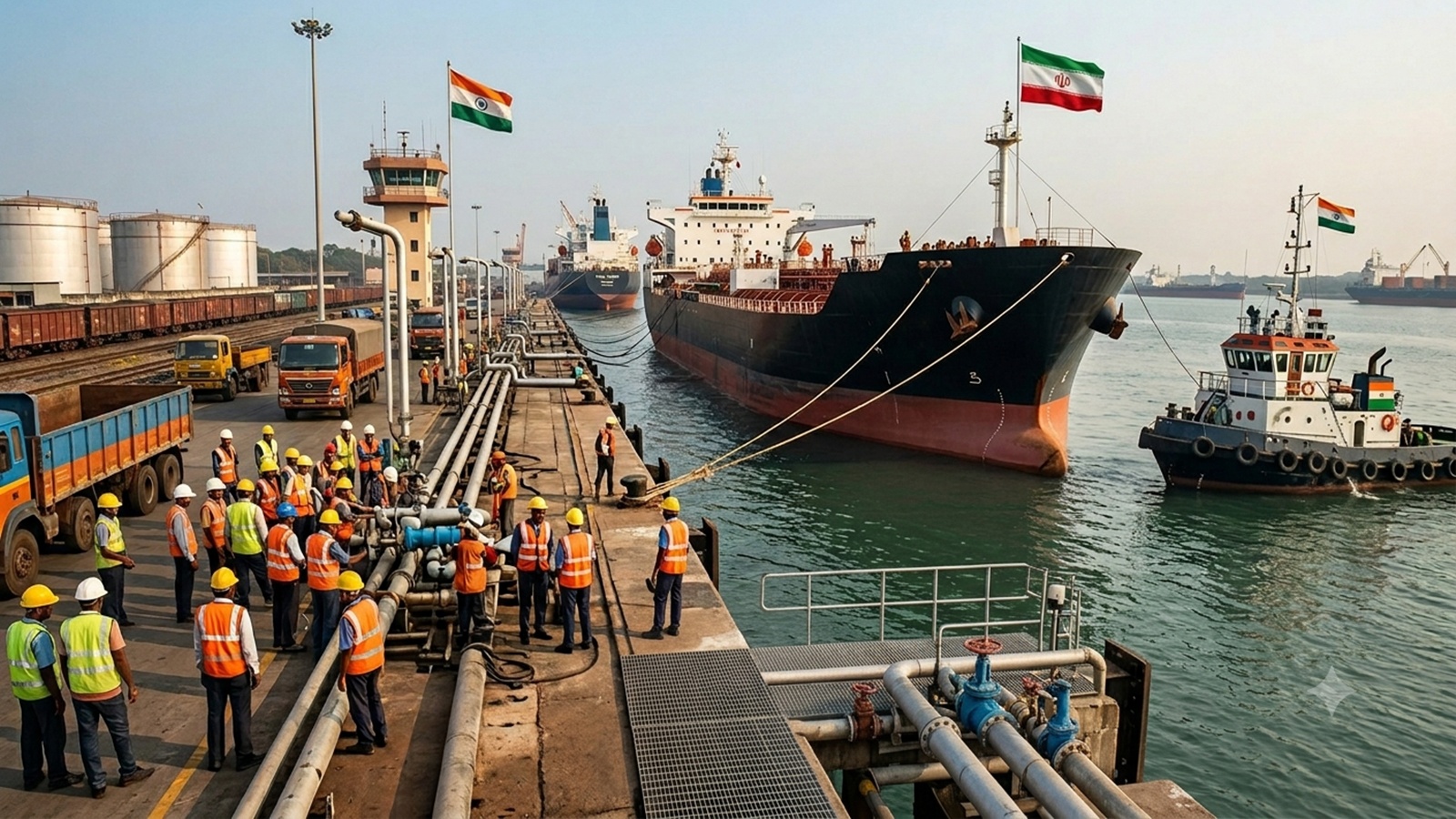
A standard crude transaction doesn't happen overnight. It takes weeks to negotiate contracts, secure credit lines, charter VLCCs (Very Large Crude Carriers), sail to the Persian Gulf, load the cargo, and voyage back to western India. If a refiner initiates a deal today, the oil might barely clear Indian port customs before the August 21 deadline hits.
If talks in Switzerland break down next week—a distinct possibility given the volatile history between Washington and Tehran—the US can terminate the waiver instantly. No one wants to hold a multi-million-dollar cargo of crude on the high seas when a snapback occurs, turning a legal shipment into an uninsurable, unsellable liability.
The Russian Shadow Over Indian Refineries
The biggest reason India won't immediately bite is that New Delhi already found its preferred supplier. Ever since western sanctions shifted global trade flows, India has been gorging on cheap Russian Urals.
Look at the real numbers from data intelligence firm Kpler. Indian imports of Russian crude recently hit a staggering 2.6 million barrels per day. That means Moscow currently commands roughly 54% of India’s entire crude import mix.
- Refinery Optimization: Indian plants have spent the last few years recalibrating their configurations specifically to maximize the yield from Russian grades.
- Deep Discounts: Despite complex compliance checks after previous waivers expired, Russian barrels remain highly competitive.
- Established Payment Channels: Indian refiners have spent years smoothing out non-dollar payment mechanisms and local insurance workarounds with Moscow.
Why disrupt a functioning supply chain that covers over half your national demand for a highly volatile 60-day experiment with Tehran?
Historically, Iran was a massive player for New Delhi. Back in 2009, Iranian crude made up about 14% of India's imports. Refineries like Mangalore Refinery and Petrochemicals Limited (MRPL) were explicitly designed to process the heavy, high-sulfur crude that Iran pumps. The technical compatibility is there. The political stomach is not.
Why Independent Chinese Refiners Win
While Indian corporate boards worry about reputational risk and Washington's mood swings, independent Chinese refiners—often called "teapots"—are playing a completely different game.
During the height of the maximum pressure campaign, these private refiners in Shandong province didn't care about US financial systems. They didn't use US dollars, they didn't rely on Western maritime insurance, and they bought sanctioned crude through the "shadow fleet" via complex ship-to-ship transfers.
[Sanctioned Crude] -> [Shadow Fleet / STS Transfer] -> [Private Teapot Refiners]
This temporary waiver actually complicates things for them. Now that the trade is briefly legal, state-backed international buyers could technically enter the market, which usually drives up the price of Iranian heavy crude and shrinks the steep discounts the teapots enjoy. Early market tracking from Argus Media shows that Chinese private buyers are holding back, waiting to see if prices adjust. They know how to operate in the dark; they don't necessarily need the US Treasury's permission.
Strategic Steps for Indian Procurement Desks
Instead of chasing fleeting Iranian discounts, Indian energy strategy needs to focus on concrete operational buffers.
First, lock in term contracts with reliable Middle Eastern partners like Saudi Arabia (Aramco) and Iraq (SOMO) to protect against any sudden flare-ups if the Swiss negotiations fall apart in August.
Second, use the brief drop in global Brent prices caused by this headline to aggressively fill India’s Strategic Petroleum Reserves (SPR) in Padur and Visakhapatnam. Buying commercial volumes for immediate refining is too risky right now, but acquiring cheap, non-sanctioned spot cargoes to build national inventories makes perfect sense.
Keep your eyes on the Swiss dialogue, but keep your capital tied to stable supply lines. The risks of running into a compliance wall far outweigh the rewards of a cheap, short-lived Iranian barrel.