The days of expensive jets owning the sky without a scratch are over. It's a hard truth. When a missile that costs less than a used Toyota takes down a drone worth millions, the military-industrial complex starts sweating. We aren't just talking about a lucky shot. We're looking at the Iranian 358 missile, a weapon that doesn't play by the rules of traditional dogfights. This isn't your standard surface-to-air missile that screams off a rail at Mach 3. It's something weirder. It’s slow. It loiters. It waits for you to make a mistake.
For years, the US and its allies relied on "exquisite" technology. We built the most complex, expensive, and high-performance machines on the planet. But Iran found a workaround. By using off-the-shelf components and a "good enough" engineering philosophy, they created the 358. Now, as tensions rise in the South China Sea, Beijing is watching very closely. They’re seeing how a relatively low-tech adversary can create a massive headache for a superpower. If you think this is just a Middle East problem, you’re missing the bigger picture.
Why the 358 missile is a nightmare for expensive drones
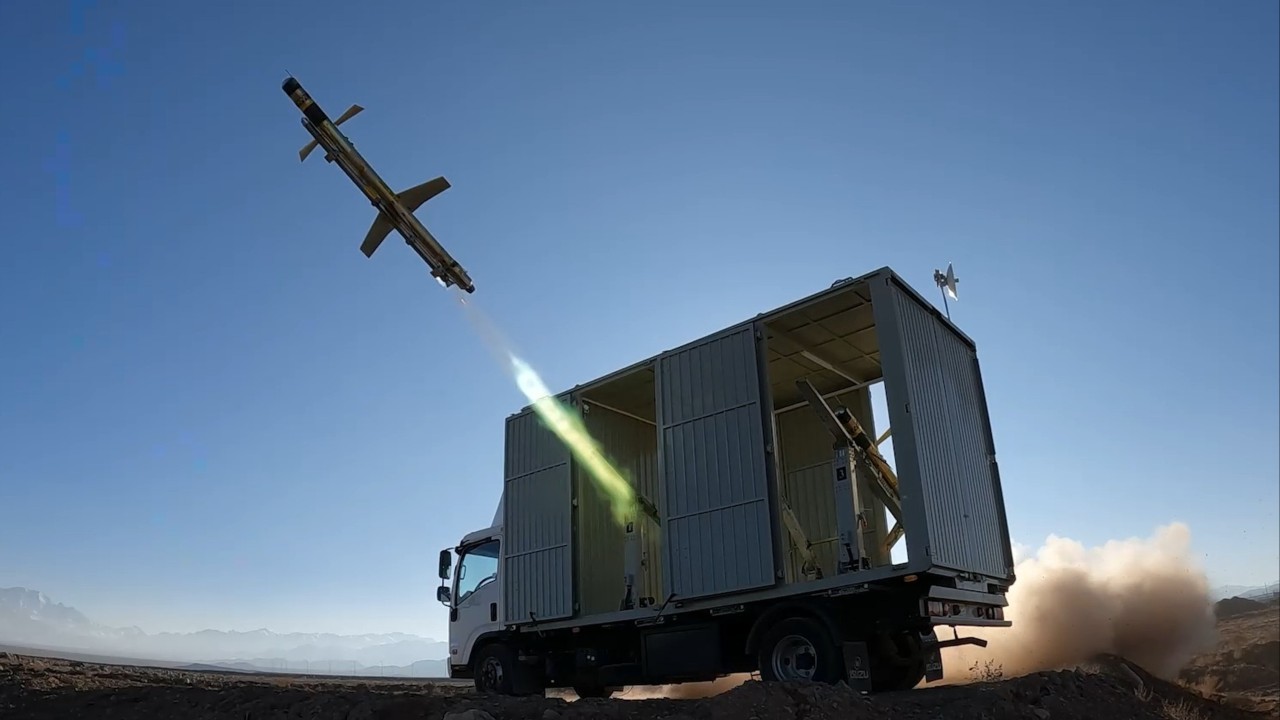
Most missiles follow a simple logic. You see a target, you lock on, and you fire. The missile goes as fast as possible to hit the target before it can move. The 358 flips that script. It’s basically a suicide drone cross-bred with a missile. It travels at subsonic speeds, which sounds like a weakness. It isn't.
Because it moves slowly, it can stay in the air for a long time. It can circle a specific area, waiting for a MQ-9 Reaper or a helicopter to wander into its patrol zone. Think of it like a minefield in the sky. You can’t just outrun it because you don't always know it's there until it's too late. The 358 uses an optical sensor to find its prey. That means it doesn't give off the radar signature that usually warns a pilot they’re being tracked. It’s quiet, it’s cheap, and it’s effective.
I've looked at the wreckage photos from Yemen and Iraq. These things are built with components you could find in a high-end hobby shop or an industrial supply catalog. We’re talking about inertial measurement units and small engines that don't require a state-level manufacturing plant. This is democratization of high-end denial. It’s ugly, but it works.
What China is learning from the Iranian playbook
Beijing isn't looking to copy the 358 bolt-for-bolt. They have their own world-class missile programs. What they’re interested in is the attrition math. If China can force the US to spend $2 million on an interceptor to stop a $20,000 loitering munition, China wins the long game. It’s about draining the wallet and the magazine.
The US Navy is already feeling the pinch in the Red Sea. We’re seeing destroyers use Standard Missiles—which cost several million dollars a pop—to knock down cheap Iranian-designed drones and 358s. That is an unsustainable ratio. In a high-intensity conflict over Taiwan, the US could run out of high-end interceptors in weeks. China knows this. They’re watching the 358 prove that "low-cost" doesn't mean "low-threat."
The 358 represents a shift toward "asymmetric" warfare that scales. Imagine hundreds of these things launched from fishing boats or hidden shipping containers. They don't need a massive radar array or a dedicated command vehicle. They just need a GPS coordinate and a hunter's instinct. China’s "Anti-Access/Area Denial" (A2/AD) strategy thrives on this concept. They want to make the cost of entry into their backyard too high for the US to pay.
The death of the air superiority myth
We grew up in an era where the US Air Force owned the sky. If we showed up, we controlled the air. The 358 missile is a giant "Keep Out" sign for that era. It challenges the assumption that you need a multi-billion dollar Integrated Air Defense System (IADS) to deny airspace.
Instead of a few giant, expensive "eyes" (radars) and "fists" (missile batteries), the 358 allows for a distributed network. You can hide these missiles in a basement. You can launch them from the back of a truck. This makes "Suppression of Enemy Air Defenses" (SEAD) nearly impossible. How do you bomb a target that has no permanent footprint? You can't.
The 358’s design is a mix of a rocket and a small turbojet. It uses a solid rocket booster to get into the air, then the small engine takes over for the loitering phase.
$$V_{subsonic} < Mach 1$$
This speed keeps the heat signature low. It makes it harder for infrared-guided defenses on ships or planes to get a solid lock. It’s basically the "stealth" of the poor man. It doesn't hide from radar using fancy shapes; it hides by being small, slow, and cold.
Why the US military is struggling to adapt
The Pentagon is built to buy big things. We like carriers. We like stealth fighters. We like complex systems that take 20 years to develop. We aren't great at "cheap and plenty." The 358 is the antithesis of our procurement culture.
There’s a massive gap in our defenses. We have the Patriot and the SM-6 for big ballistic threats. We have the Stinger for short-range stuff. But there’s a "middle" zone where the 358 lives. It’s too high for some systems and too "cheap" to waste a $4 million missile on. This "capability gap" is where our drones are dying.
If I'm a commander in the Pacific, I'm worried about "saturated" environments. If the enemy launches 500 loitering missiles, my Aegis cruisers might hit 450 of them. The 50 that get through will still sink my ships or wreck my flight decks. The 358 is the proof of concept for this nightmare scenario.
The real-world cost of getting this wrong
Look at the MQ-9 Reaper losses. These drones cost roughly $30 million. When a 358 brings one down, the return on investment for the attacker is astronomical. It’s not just the money. It’s the loss of the "eye in the sky" and the psychological blow of losing a high-tech asset to a "junk" missile.
Critics say the 358 is easy to jam. Maybe. But jamming isn't a magic wand. You have to be in the right place at the right time with the right frequency. And if the 358 is using an optical seeker for its final terminal phase, your radio frequency jamming won't do a thing. It’s looking at you with a camera. You can’t "jam" a picture.
How to actually counter the 358 threat
We need to stop using "silver bullets" for "lead fly" problems. The answer isn't more expensive missiles. It’s directed energy and guns.
- Lasers: We need shipboard and land-based lasers that can burn through these cheap seekers for the cost of a gallon of diesel.
- Electronic Warfare: More localized, smarter jamming that can disrupt the GPS or data links these missiles use to loiter.
- Cheap Interceptors: We need our own "358" to kill their "358." A low-cost, mass-produced interceptor that doesn't bankrupt the Treasury.
- Microwave Weapons: High-powered microwaves can fry the commercial-grade electronics inside these missiles instantly.
The 358 isn't a "wonder weapon." It’s a wake-up call. It proves that the barrier to entry for denying air superiority has dropped through the floor. Iran did it with a fraction of our budget. China can do it at a scale we can't even imagine.
We need to stop over-engineering every solution. Sometimes, a simple, "dumb" system that you can build by the thousands is better than one "smart" system you’re afraid to lose. The 358 is a lesson in humility. If we don't learn it, we’ll keep losing million-dollar assets to thousand-dollar threats.
The move right now is clear. We have to pivot away from the "exquisite" and toward the "expendable." We need to flood the zone with our own low-cost tech. If we stay stuck in the old way of thinking, we’re just building targets for the next generation of loitering missiles. The math doesn't lie. Either we change the cost curve, or we lose by default. It's time to get dirty and build things that are "good enough" to win. That’s the only way we stay in the game.