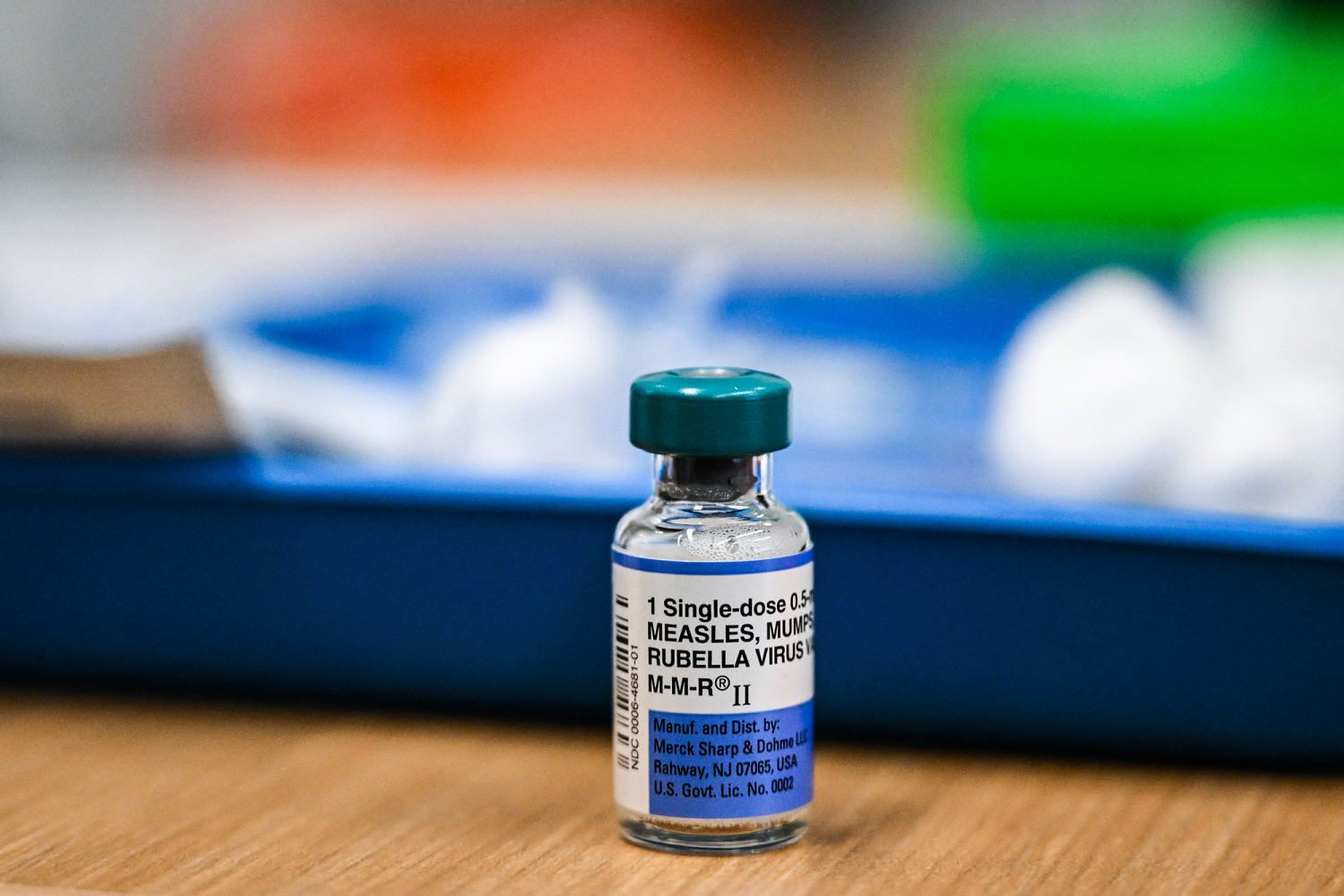
We like to think of immunity as a fortress, high-walled and impenetrable, built from the inside out by clean living and good genes. We forget that it is actually a shared neighborhood.
For decades, the public conversation around infectious disease has oscillated between panic and indifference. A headline flashes across a screen—numbers climbing, cases confirmed, counties affected—and then, just as quickly, the noise recedes. Statistics do not bleed. A tally of three deaths in a single year across a populous state sounds like a distant weather pattern, a localized storm that missed our particular roof. But numbers are merely the shorthand of tragedy. They are placeholders for breathing, walking human lives that vanished too soon.
Consider the recent quiet devastation in Pennsylvania. A life cut short by measles complications. Not a headline from a century-old history book, but a modern casualty in a state recording its third such loss in a single year. It is a jarring reminder of a simple, uncomfortable truth: a disease we thought we had banished to the attic of medical history has not packed its bags. It is waiting for the door to be left slightly ajar.
To understand why this happens, we have to look past the sterile language of public health reports and step into the messy reality of human biology and community friction.
Measles is not merely a bad rash accompanied by a fever. It is an aggressive, opportunistic historian of the human immune system.
Imagine walking through a vast library where every book represents a memory your immune system has fought hard to acquire—every flu you weathered, every childhood cold you beat, every vaccination that trained your white blood cells. Now imagine an intruder entering that library with a match.
When measles infects a body, it does something far more insidious than just making you miserable. It triggers what immunologists call immune amnesia. The virus specifically targets memory cells, effectively wiping the hard drive of your acquired immunity. Months after the fever breaks and the rash fades, the survivor is left defenseless against a world of everyday pathogens they had previously learned to fight. A simple strep throat or a routine bacterial infection can suddenly become lethal, not because the secondary infection is uniquely powerful, but because the immune system has forgotten how to read its own defensive manuals.
It travels on the air. It lingers in a waiting room long after the infected person has walked out the front glass doors. A single cough can suspend viral particles in a stagnant hallway for up to two hours, turning a grocery store aisle or a pediatrician's lobby into a silent lottery.
And yet, for a long time, we stopped being afraid of it.
That complacency is our most dangerous vulnerability. When a disease becomes rare, the fear of the disease is replaced by a fear of the prevention. Parents who never saw a child blinded, deafened, or killed by measles begin to weigh the abstract, whispered risks of a vaccine against the completely invisible threat of a virus that feels entirely hypothetical.
This is where the math of public health breaks down. Herd immunity is not an abstract political talking point; it is a physical bridge built by collective participation. When vaccination rates dip below a critical threshold—often around ninety-five percent for a pathogen as contagiously ferocious as measles—the bridge begins to fracture.
Think of a forest during a dry summer. A single stray spark does not threaten a damp, thriving thicket. The moisture content of the leaves dampens the flame before it can catch. But let that forest dry out, tree by tree, branch by branch, and a single spark becomes an unstoppable wall of fire.
The three lives lost in Pennsylvania this year were not statistical anomalies. They were sparks landing in dry timber.
Behind every one of those state health department bulletins is a family sitting in a quiet kitchen staring at an empty chair. There are hospital rooms illuminated by the pale blue glow of monitors. There are doctors running out of options because modern medicine, for all its astonishing wizardry, still cannot easily rewrite an immune system that has been systematically erased from the inside out.
We live in an era obsessed with personal autonomy, and rightly so. We want agency over our bodies, our health, and our futures. But public health operates on a different, more ancient frequency. It reminds us that our biological boundaries are porous. Your health is inextricably bound to the health of the stranger sitting next to you on the bus, the child in the row behind your daughter at school, the immunocompromised neighbor who cannot receive a vaccine no matter how deeply they might want to.
When we talk about vaccination rates, we are not talking about compliance. We are talking about neighborliness. We are talking about an unspoken contract that says: I will carry this shield not just for myself, but so that the person beside me doesn't have to carry the weight of my exposure.
The resurgence of measles in modern America is a symptom of a deeper cultural fracture—the erosion of shared trust in institutions, the democratization of misinformation where a loud rumor travels faster than a peer-reviewed paper, and the comforting illusion that technological progress is a one-way street.
We assume that once science conquers a monster, it stays locked in the dungeon forever. But history is littered with the ghosts of pathogens that returned because we forgot how they hunted.
There is no complex algorithm required to stop this trend. The solution is remarkably, frustratingly ordinary. It requires a needle, a small dose of biological memory delivered to the arm, and a collective willingness to trust the scaffolding that previous generations bled to build.
The next time a public health update scrolls across a screen, do not look at it as a distant data point. Look at it as a mirror. It is asking us a fundamental question about the kind of society we want to inhabit: Do we view ourselves as isolated individuals navigating a series of independent risks, or do we recognize that we are part of a single, breathing organism where the weakness of one eventually tests the strength of all?
The choice is ours. But the virus is not keeping score. It is simply looking for an open door.


