You are standing on a crowded platform at the Admiralty MTR station in Hong Kong during the Tuesday morning rush. The air smells faintly of ozone, damp concrete, and roasted chestnuts from a street vendor two escalators up. A man in a tailored charcoal suit stands three feet away, scrolling through his phone. He glances up, his eyes meeting yours for a fraction of a second before he turns toward the arriving train.
You didn’t notice the tiny, pinprick LED light nestled near the hinge of his thick-rimmed frames. Even if you had, you might have assumed it was a stray reflection from the fluorescent overhead tubes.
That man is a hypothetical character—let’s call him David—and his eyewear is entirely real. As artificial intelligence migrates from the glowing slabs in our pockets onto the bridges of our noses, the boundary between looking at someone and recording them has dissolved. Recently, that quiet dissolution forced executives from Meta into a closed-door meeting with Hong Kong’s Office of the Privacy Commissioner for Personal Data (PCPD). On the surface, it was a routine regulatory check-in. Beneath the polite diplomatic language, it was a collision between Silicon Valley’s relentless push for ambient computing and the fundamental human right to move through the world unrecorded.
The Architecture of Disappearance
To understand why a pair of glasses triggered an intervention from Hong Kong’s privacy watchdog, you have to look at how cameras used to work.
For over a century, photography required a deliberate, unmistakable physical posture. You held a box up to your face. You aimed a glass barrel at a subject. Even in the smartphone era, the social contract remained surprisingly intact. When someone wants to film you on a subway car, they have to raise a rectangular slab of glass and aluminum to chest or eye level. It is an overt act. You see it happen, you feel the shift in the room’s social gravity, and you have a split second to turn away, raise a hand, or object.
Smart glasses destroy that warning system.
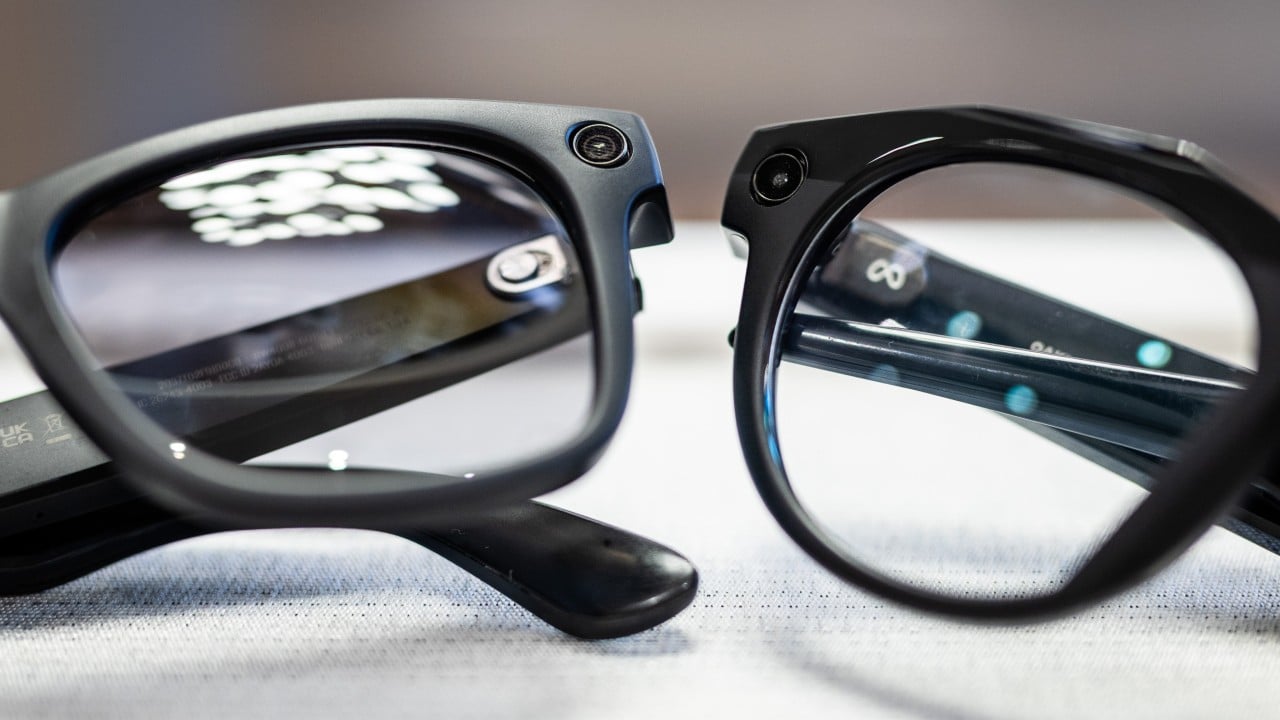
Consider what happens when the camera shrinks to the size of a grain of rice and hides inside an acetate frame that looks identical to a classic pair of Wayfarers. The hardware disappears into the ordinary clutter of human fashion. Meta’s latest iterations of AI-enabled eyewear—built in partnership with eyewear giant EssilorLuxottica—aren't clunky headsets that scream "cyborg." They are stylish, lightweight, and socially invisible.
I remember the first time I sat across a coffee shop table from a friend wearing an early pair of camera-equipped frames. Halfway through our conversation, he mentioned casually that he had just snapped a photo of my pour-over coffee to ask his AI assistant about the roast color. I hadn't seen him touch his temple. I hadn't noticed the tiny white indicator light pulse on the rim. My stomach dropped—not because a photo of my latte was a state secret, but because the invisible wall between private presence and digital capture had vanished without my consent.
What Actually Happened Behind Closed Doors
When regulators in Hong Kong took notice of Meta’s AI-powered glasses, they weren't reacting to science fiction. They were responding to a hardware reality already shipping to consumers globally, raising urgent questions under Hong Kong’s Personal Data (Privacy) Ordinance (PDPO).
In the standard corporate press statement that followed, Meta confirmed it had met with the PCPD to address privacy concerns surrounding its AI glasses. The company emphasized its built-in safeguards: an external LED light that illuminates whenever the camera is recording or taking a photo, a tamper-detection system that prevents the device from capturing footage if a user tries to cover that light with tape or ink, and a gentle chime that sounds when capture begins.
Listen closely to that reassurance, though, and you start to hear the cracks in the logic.
An LED light smaller than a sesame seed works well in a dimly lit living room where two friends are sitting face-to-face. Put that same device on a sun-drenched sidewalk in Tsim Sha Tsui, or inside a brightly lit shopping mall in Causeway Bay, and that tiny white dot becomes functionally invisible. Add in a bustling crowd where thousands of faces pass within feet of one another every minute, and the "notice" provided by a microscopic diode evaporates entirely.
Hong Kong’s privacy framework is built around six Data Protection Principles. At the very top sits Principle 1, which governs the purpose and manner of collection. Under this rule, personal data must be collected fairly, and individuals must generally be informed of the collection and its purpose at or before the moment it happens. A fleeting flash of light on a stranger’s eyewear frame does not constitute meaningful notice. It certainly does not constitute consent.
The Ghost of Glassholes Past
We have been down a version of this road before, and the history is instructive.
In 2013, Google released Explorer Edition units of Google Glass. Those devices featured a prominent prism hovering over the right eye, tethered to a thick titanium band that looked like a prop from a low-budget space opera. The public backlash was immediate, visceral, and unforgiving. Bars in Seattle and San Francisco banned them on sight. Wearers were mocked with a portmanteau—"Glassholes"—that summed up the collective disgust at having a camera strapped to someone’s face during a casual drink. Google Glass failed commercially not because the technology didn't work, but because its design screamed surveillance.
Silicon Valley learned a ruthless lesson from that failure. It didn't abandon the dream of face-worn cameras; it simply hired better industrial designers.
By partnering with legacy eyewear brands, Meta solved the aesthetic problem that killed Google Glass. Today’s AI glasses don't trigger our evolutionary threat radar because they look like ordinary prescription frames or sunglasses. Yet inside those familiar frames sits a vastly more powerful engine than anything Google dreamed up a decade ago.
In 2013, a face-worn camera could only record dumb video. Today, those frames are tethered to multimodal artificial intelligence models capable of analyzing everything in the wearer’s field of vision in real time.
When Seeing Becomes Indexing
Here is where the stakes shift from an annoyance to a structural transformation of public life.
Think of a standard video camera as a dumb tape recorder. It captures pixels, stores them on a card, and leaves the heavy lifting of interpretation to a human sitting in front of a screen later. Now, think of AI-enabled glasses as an active, tireless research assistant whispering in the wearer's ear.
When a user looks at a street sign in Cantonese, the multimodal AI translates it instantly. When they look at a jacket on a mannequin, the system identifies the brand and finds a cheaper listing online. And when they look at a person—even if the current consumer software restricts explicit facial recognition—the underlying architecture is designed to process, categorize, and contextualize visual data at machine speed.
Let’s introduce another hypothetical scenario to see how quickly this turns personal. Imagine a young nurse named Mei-Ling, riding the ferry across Victoria Harbour after a twelve-hour shift. She is exhausted, leaning against the railing, staring out at the water. Across the deck, a tourist wearing AI glasses pans his head across the skyline, narrating a travelogue to his assistant while recording a continuous stream of high-definition video to upload later to social media. Mei-Ling’s tired face, her hospital badge clipped to her scrubs, and the exact time and location of her commute are captured, uploaded to a cloud server for AI processing, and potentially broadcast to thousands of strangers—all because she happened to stand in the path of someone else’s gaze.
In that moment, who owns Mei-Ling’s likeness? Under Hong Kong’s privacy laws, any recorded image from which a person’s identity can be ascertained constitutes personal data. Yet Mei-Ling has no way of knowing her data was collected, no way to request its deletion, and no mechanism to opt out before the pixels leave the glasses.
The Illusion of the "Personal" Device
Tech companies love to frame wearable AI as an intimate, deeply personal tool. They talk about hands-free memories—capturing your child’s first steps without hiding behind a phone screen, or recording a recipe while your hands are covered in flour.
Those use cases are real, and they are genuinely appealing. Nobody wants to miss a fleeting moment of family joy because they were fumbling with a lock screen.
The problem lies in the asymmetry of the hardware. A smartphone is a bilateral social object; when you point it at someone, the geometry of the device announces your intention to the entire room. Face-worn cameras are unilateral. They piggyback on the most natural, involuntary human behavior in existence: looking around.
Every time you turn your head to check for traffic, glance at a menu board, or make brief eye contact with a passerby, a camera mounted on your temples sweeps across dozens of unconsenting bystanders. Even when the recording isn't active, the mere presence of identical-looking smart glasses in public introduces a low-grade paranoia into ordinary spaces. Is that person on the bench reading a book, or are they live-streaming the playground? Is your colleague nodding along during a sensitive workplace conversation, or are they feeding your words and facial expressions into an AI summarization tool?
Uncertainty does the work of surveillance all by itself. When you can no longer tell whether a pair of glasses is just glass and plastic or an active sensor array, you begin to police your own behavior in public. You hold back. You keep your head down. The shared commons—parks, cafes, transit hubs, public squares—quietly stiffens.
Why Hong Kong’s Intervention Matters Globally
It is easy to dismiss a regulatory meeting in one city as a localized bureaucratic hurdle, but Hong Kong occupies a unique position in the global tech ecosystem. As an international financial center with dense urban living and a long-established statutory privacy framework, what happens in the PCPD’s offices tends to echo far beyond Victoria Harbour.
Unlike jurisdictions where data privacy relies on fragmented sectoral rules, Hong Kong’s ordinance applies broadly across both public and private sectors, anchored by an independent commissioner with statutory powers to investigate complaints, issue enforcement notices, and publish guidance that shapes corporate compliance across Asia.
When the watchdog summons a company of Meta’s scale to explain how its hardware complies with local data collection rules, it sends an unmistakable signal to the entire consumer electronics industry: aesthetic invisibility is not a legal loophole. You cannot engineer around consent laws simply by shrinking the lens until people stop noticing it.
During their discussions, regulators pressed on the practical realities of how bystanders are notified and how visual data is handled once captured. While Meta pointed to its LED indicator and voice-prompt controls, the deeper tension remains unresolved. Software guardrails—like blurring faces or restricting facial recognition lookups—exist entirely at the discretion of the manufacturer. A firmware update can expand capabilities overnight, while the physical hardware sitting on millions of faces remains unchanged.
The Burden of Proof Has Flipped
For decades, the unspoken bargain of consumer technology was simple: ship the product first, celebrate the convenience, and let society clean up the mess years later. We saw it with social media algorithms, location-tracking apps, and smart home speakers that quietly recorded snippets of private living room conversations.
With ambient AI eyewear, that bargain breaks down completely. Once millions of people are walking down city streets with cloud-connected cameras disguised as everyday fashion, you cannot put the genie back in the bottle with a terms-of-service update.
The burden of proof has flipped. It is no longer enough for tech giants to promise that their users will behave responsibly, or to hide behind a two-millimeter light that vanishes in bright sunlight. If companies want to place cameras on the human face, they have to invent equally intuitive, unmistakable ways to respect the boundaries of the people standing on the other side of the lens.
Think about what that would actually require. It might mean standardized visual cues that are legible from ten feet away in broad daylight. It might mean hardware-level local processing where bystander faces are automatically anonymized on the chip before a single byte ever touches the cloud. Or it might mean accepting that certain spaces—locker rooms, hospitals, schools, and crowded public transit—require strict, enforceable limits on active wearables, enforced not by polite requests, but by geofenced software locks.
The Gaze That Looks Back
Step back onto that platform at Admiralty station.
The train doors slide open with a pneumatic hiss, and the crowd surges forward. David, our commuter in the charcoal suit, steps inside and grabs an overhead strap. Across the aisle, a teenager in a school uniform rests her forehead against the cool glass of the door, lost in her own thoughts, listening to music through wired earbuds.
In a healthy city, that teenager possesses a quiet, unremarkable superpower: the ability to be alone in a crowd. She can daydream, frown, cry, or simply exist without her likeness becoming raw material for someone else’s algorithm.
Technology should expand human capability, not shrink the space where we are allowed to simply be human. Until the makers of AI glasses solve the riddle of visible, undeniable consent, every pair of smart frames in a crowded room carries an unspoken question—and none of us standing in front of the lens ever agreed to answer it.