A young boy in a bright sterile room reaches for a bunch of colorful balloons. His fingers brush the latex. He smiles. It is a simple, quintessential image of childhood joy. But ten floors below him, in the basement of that same hospital, a liquid colder than the dark side of the moon is doing something far more important than lifting a party favor. It is keeping a superconducting magnet alive. Without that liquid, the MRI machine—the only tool capable of seeing the microscopic tumor behind the boy’s eyes—becomes a multi-million-dollar paperweight.
That liquid is helium.
We treat it like a joke. We associate it with high-pitched voices and birthday parties. We treat it as if it were infinite, a whimsical byproduct of the earth that will always be there to lift our spirits and our inflatables. It isn't. Helium is a non-renewable resource, a finite breath of the universe trapped in the earth’s crust over eons. And right now, the primary artery through which that breath flows to the world is being squeezed by the cold hands of geopolitics.
The Geopolitics of a Ghostly Gas
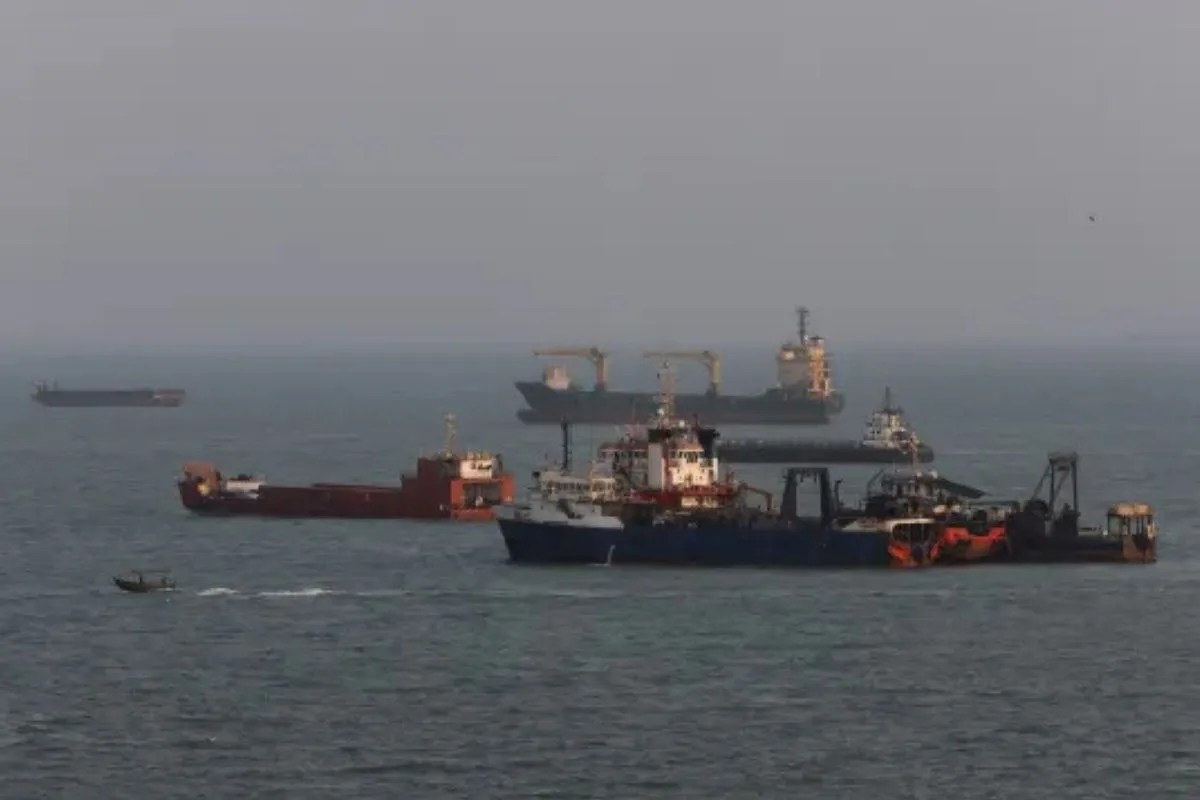
Imagine a map of the world not by its borders, but by its vulnerabilities. Your eyes would inevitably settle on the Strait of Hormuz. This narrow strip of water, a jagged throat between Oman and Iran, is famous for being the world’s oil spigot. When a tanker is seized there, gas prices in Ohio jump by twenty cents. But there is a second, more invisible crisis brewing in those turquoise waters.
Qatar is the world’s second-largest producer of helium. Because helium is usually captured as a byproduct of natural gas extraction, Qatar’s massive North Field is effectively a global reservoir for the high-tech world. Every year, billions of cubic feet of this gas are processed, liquefied, and loaded onto ships.
To get to the hospitals in London, the semiconductor labs in Taiwan, or the fiber-optic manufacturers in the United States, those ships must pass through the Strait.
The math is brutal. If the Strait closes—or even if insurance premiums for shipping vessels skyrocket due to regional conflict—the global helium supply chain doesn’t just slow down. It breaks. Unlike oil, which can be pulled from strategic reserves or shipped from a dozen different continents, helium has no easy alternative. You cannot simply "pivot" to another gas when you need to cool a quantum computer to absolute zero.
The Cold Reality of Absolute Zero
To understand why a hiccup in the Middle East matters to a tech executive in Silicon Valley, you have to understand the unique physical stubbornness of helium.
Everything else turns to solid when it gets cold enough. Helium does not. It is the only element that remains liquid at absolute zero under standard pressure. This makes it the ultimate coolant. In the world of high-end technology, heat is the enemy of precision.
Consider the MRI machine again. To create those incredibly detailed images of human soft tissue, the machine uses a massive superconducting magnet. To stay superconducting—meaning to allow electricity to flow without resistance—the magnet must be bathed in liquid helium at a temperature of approximately $-269$°C.
If the helium supply vanishes, the magnet warms up. This is known as a "quench." The liquid boils off into gas, escaping through emergency vents. Once a magnet quenches, restarting it is an agonizingly expensive and delicate process. It isn't like flipping a circuit breaker. It is more like trying to relight a fire in the middle of a hurricane using a single damp match.
A Chain of Invisible Failures
Let’s look at a hypothetical scenario, though one grounded in the very real anxiety of logistics managers worldwide.
Meet Sarah. She is a procurement officer for a major semiconductor firm. Her job is to ensure the "ultra-pure" helium required for cleaning silicon wafers and cooling the manufacturing process arrives on time, every time. In her world, a delay isn't measured in hours; it’s measured in millions of dollars of lost yield.
One Tuesday morning, news breaks of an "incident" in the Strait of Hormuz. A stray drone, a seized tanker, a diplomatic breakdown—the catalyst almost doesn't matter. The result is that the Qatari shipments are halted.
Suddenly, Sarah’s phone starts screaming.
The major industrial gas suppliers—the giants like Linde or Air Liquide—invoke "force majeure" clauses. This is the legal equivalent of saying, "The world is on fire, and we don't owe you anything." Sarah looks at her remaining inventory. She has three weeks of supply. Her competitors have two.
In a week, the price of helium on the spot market triples. In two weeks, it quintuples.
But it isn’t just about the money. It’s about the hierarchy of need. When the supply drops, who gets the gas? Does it go to the hospital to keep the MRIs running? Does it go to the Department of Defense for satellite cooling? Or does it go to Sarah’s factory to ensure the world has enough microchips for the next generation of smartphones?
The "Hormuz headache" isn't just a headache. It's a systemic stroke.
The Great Escapologist
The irony of our dependence on helium is that it is the most elusive substance on Earth. It is a noble gas. It doesn't react. It doesn't bond. It is so light that once it escapes into the atmosphere, it doesn't just hang around like carbon dioxide. It drifts upward, reaches the edge of our air, and leaks into space.
It is literally leaving the planet.
When we use helium to fill a balloon, we are effectively throwing away a piece of the Big Bang. Most of the helium on Earth is the result of billions of years of radioactive decay of uranium and thorium in the ground. We are mining the deep history of the planet to make a voice sound funny for five seconds.
In the face of a Middle Eastern blockade, this wastefulness stops being a quirk and starts being a tragedy. We have spent decades treating helium as a commodity when we should have been treating it as a strategic asset.
The Russian Complication
You might wonder why we don't just look elsewhere. If the Strait of Hormuz is the choke point, where is the bypass?
The eyes of the industry have long been turned toward Russia. The Amur Gas Processing Plant in East Russia was supposed to be the "Great Hope" of the helium world. It was designed to be a massive, world-altering source of supply.
But geopolitical reality intervened there, too. Between massive fires at the facility and the subsequent sanctions following the invasion of Ukraine, the Russian "savior" has become a phantom. Relying on Russian helium to offset a Middle Eastern shortage is like trying to put out a fire with a different kind of gasoline.
The United States, once the world’s guarantor of helium through the Federal Helium Reserve in Amarillo, Texas, has been steadily getting out of the business. The reserve, a massive underground salt dome that once held the world's primary supply, has been privatized. The "safety net" is no longer a government-managed strategic stockpile; it is a market-driven asset.
This leaves the global market walking a tightrope with no net, while the winds blowing through the Strait of Hormuz grow increasingly gusty.
The Human Cost of High-Tech Scarcity
The real story of the helium shortage isn't found in trade journals or shipping manifests. It’s found in the quiet conversations between doctors and patients.
It’s found in the laboratory of a researcher who is on the verge of a breakthrough in carbon-sequestering materials, only to have her experiment ruined because the liquid helium dewars arrived empty.
It’s found in the manufacturing plants of the Midwest, where the fiber-optic cables that power our high-speed internet are drawn through helium-cooled towers. If the gas runs out, the towers stop. If the towers stop, the expansion of rural broadband grinds to a halt.
We are a civilization built on the back of a ghost.
We have engineered a world that requires extreme cold to function, yet we have left the keys to the freezer in one of the most volatile neighborhoods on the map. The "Hormuz headache" is a warning. It is a signal that our technological advancement is precariously balanced on a supply chain that is far more fragile than we care to admit.
Living in the Leak
There is no easy fix. We cannot manufacture helium in a lab. We cannot "green" our way into more of it. We can only capture it more efficiently, recycle it with more discipline, and stop treating it as a disposable toy.
Some hospitals are now installing "sealed" MRI machines that use only a few liters of helium instead of thousands. Some chip manufacturers are investing in massive recycling plants that catch every escaping molecule. These are the right moves, but they are happening at a snail's pace compared to the speed of a geopolitical crisis.
The next time you see a balloon drifting away into the blue sky, don't just think about where it’s going. Think about what it’s taking with it.
Every atom of that gas is a piece of a cooling system we might desperately need tomorrow. As the tensions rise in the Persian Gulf and the shadow of conflict looms over the Strait of Hormuz, the world is beginning to realize that our most "uplifting" resource is the one we can least afford to lose.
The silence of a shuttered MRI clinic is a much heavier sound than the squeak of a party trick.
We are breathing in the last of a prehistoric treasure, and the window to protect it is closing faster than a tanker navigating a narrow, contested sea.
Would you like me to research the current status of the Amur Gas Processing Plant or the latest innovations in helium-free cooling technology?