The sea does not care about geopolitics. It cares only about wind, weight, and the eternal pull of the moon. Yet, thousands of miles away from the quiet harbors of home, men who carry the world's commerce on their backs find themselves caught in the crossfire of distant wars they did not start and cannot stop.
Consider the Strait of Hormuz. Narrow, shimmering under a brutal sun, it is a maritime bottleneck where a fifth of the globe's petroleum passes daily. Now, picture the Black Sea, its dark waters churned by modern anxieties, where the simple act of hauling grain feels like running a gauntlet. In these troubled corridors, danger is no longer an abstract headline on a morning broadcast. It is the sudden whine of an incoming projectile, the splintering of steel, and the chilling realization that anonymity offers no protection.
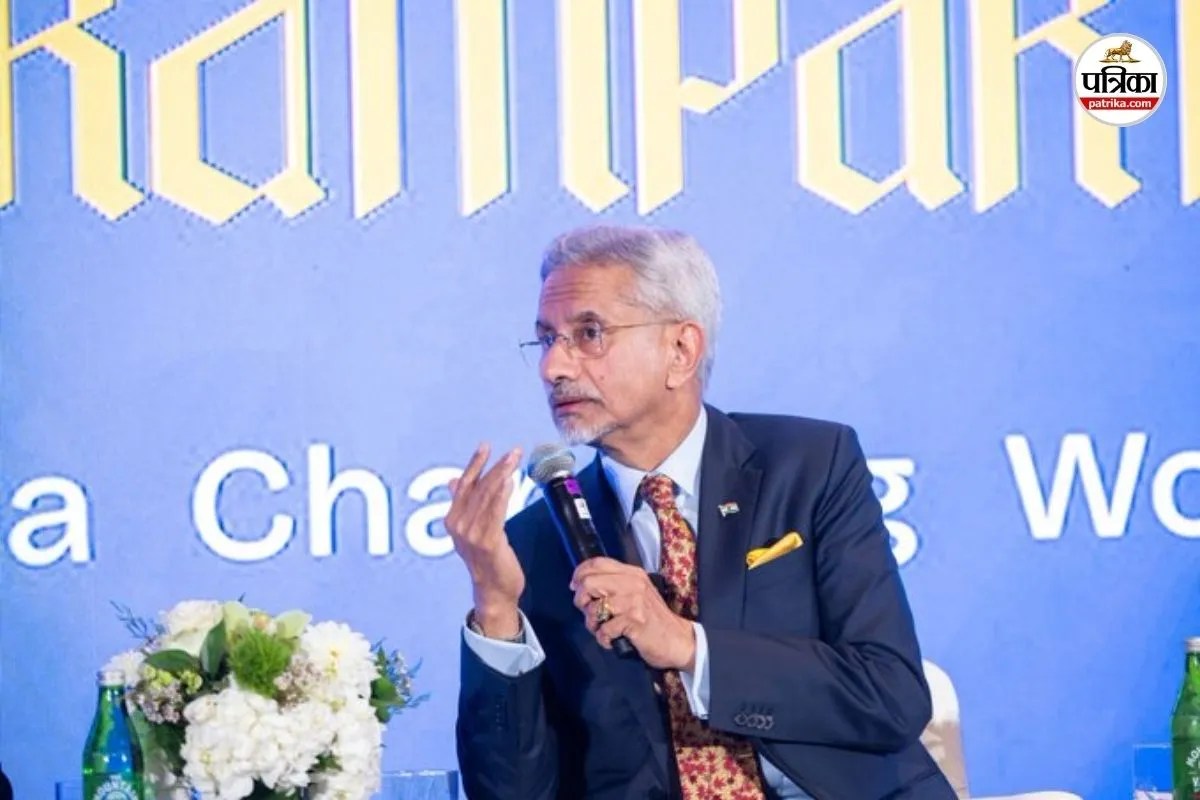
External Minister S. Jaishankar recently brought this grim reality before the United Nations, laying bare a ledger of assaults on Indian merchant mariners stretching from the Persian Gulf to the shores of Eastern Europe. His message was stark, stripped of diplomatic cushioning. The intentional targeting of innocent seafarers is indefensible.
Why does this matter to someone sitting thousands of miles inland, far from the salt spray and the hum of diesel engines? Because everything on your dining table, every component in your pocket, every drop of fuel in your car likely crossed an ocean guided by hands you will never see.
The Anatomy of Isolation
Imagine a sailor named Rajesh. (He is hypothetical, yet he is every man currently standing watch on a container ship off the coast of West Asia). He has been away from his family in Kerala for eight months. His world is a claustrophobic maze of stacked steel boxes, the relentless vibration of a massive two-stroke engine, and the endless expanse of salt water.
For Rajesh, the horizon used to represent freedom or at least a paycheck. Now, it represents vulnerability.
When regional tensions spike, commercial vessels are frequently treated as collateral damage or convenient leverage. Missiles do not check crew manifests. Drone boats do not ask for passports. When a ship carrying bulk commodities is struck, the explosion does not just shatter bulkheads; it shatters the fragile social contract of the high seas.
Maritime law once dictated that civilian mariners were neutral actors, immune to the hostilities of nations. That ancient understanding is fraying. When state and non-state actors alike use maritime choke points as strategic pawns, the ordinary worker becomes an involuntary combatant.
The Ripple Effect of Silence
It is easy to view global supply chains as infallible machinery. Cargo ships dock, cranes lift, trucks roll, shelves stay stocked. We treat the global economy like gravity—always there, never requiring thought.
But supply chains are made of flesh and blood. They are sustained by tired people working twelve-hour shifts in engine rooms that smell of hot oil and ozone. When the danger level spikes in vital shipping lanes, insurance premiums skyrocket. Crews demand hazard pay or refuse to sign contracts. Routes are diverted around the Cape of Good Hope, adding thousands of miles and millions of dollars to every voyage.
Ultimately, you pay for that detour. But the sailor pays with his life.
When Jaishankar stood at the podium of the United Nations, he was not merely reciting a casualty list. He was defending the dignity of labor on the global stage. He was pointing out a glaring moral hypocrisy: the world eagerly consumes the bounty delivered by the sea while turning a blind eye to the perils faced by those who harvest it.
The Human Cost Behind the Headlines
We live in an era saturated with digitized outrage. Wars are fought with algorithmic precision on social media feeds, reducing human suffering to fleeting pixels. But out on the water, suffering is visceral.
Think about the families waiting in coastal towns across India, the Philippines, and Eastern Europe. Every time a flashpoint flares up in the Red Sea or the Black Sea, a phone buzzes in the middle of the night. A wife glances at her screen with a knot in her stomach, praying that the breaking news alert is not about her husband's vessel.
This psychological toll is the invisible tax of modern globalization. We outsource our logistics to the horizon, forgetting that real human beings are steering those massive hulls through hostile waters.
Protecting these routes is not just a matter of military strategy or economic pragmatism. It is a fundamental test of international conscience. If the international community accepts that commercial crews can be targeted, threatened, or used as human shields, we cross a dangerous threshold into lawless maritime chaos.
The ships will keep sailing, because the world cannot stop eating, building, and burning fuel. But they should not have to sail through a war zone unprotected by the norms of civilization.
Out on the dark water, miles from land, Rajesh finishes his watch, steps out onto the deck, and looks up at a sky choked with stars. He listens to the steady thrum of the vessel beneath his boots, wondering if the world remembers he is out here.