Two hundred miles off the coast of Fujian, at four in the morning, the South China Sea does not look like a chessboard. It looks like ink.
If you stand on the steel deck of a merchant vessel cutting through those dark swells, the air tastes of salt, diesel, and wet iron. You cannot see the satellites arcing three hundred miles above your head, quietly mapping the wake of your hull. You cannot see the fiber-optic cables resting on the abyssal plain beneath your keel, carrying trillions of dollars in overnight algorithmic trades between Wall Street and Shanghai. You certainly cannot see the silent, frantic calculus happening inside fluorescent-lit conference rooms in Washington, D.C., and Beijing.
Yet every single part of that ship—from the semiconductor guiding its radar to the container of discounted oncology drugs stacked in its hold—is caught in the gravitational pull of the most consequential relationship on earth.
We talk about US-China relations in the language of cold abstractions. We read headlines about tariffs, naval posturing, and diplomatic summits as if they were box scores from a distant sport. We skim lists of geopolitical developments—a viral nickname on Chinese social media, a Pentagon wargame about autonomous swarms, a cross-border pharmaceutical deal—and file them away as background noise.
Stop. Look closer.
Those seemingly disconnected headlines are not random static. They are tremors from the same tectonic fault line. When two superpowers spend decades building an interlocking economic engine and then suddenly try to rip the gears apart while the machine is still running at full speed, the friction generates heat in places nobody expects. It reaches into the oncology ward of a midwestern hospital. It reshapes the psychology of a twenty-something software engineer in Shenzhen. It dictates whether the next major war is fought by teenagers in boots or by algorithms in the clouds.
To understand where this collision is taking us, you have to step away from the white papers and walk the invisible frontlines.
The Myth of the Monolith
Consider a hypothetical scene—one that plays out in various forms every Tuesday morning across both Washington and Beijing.
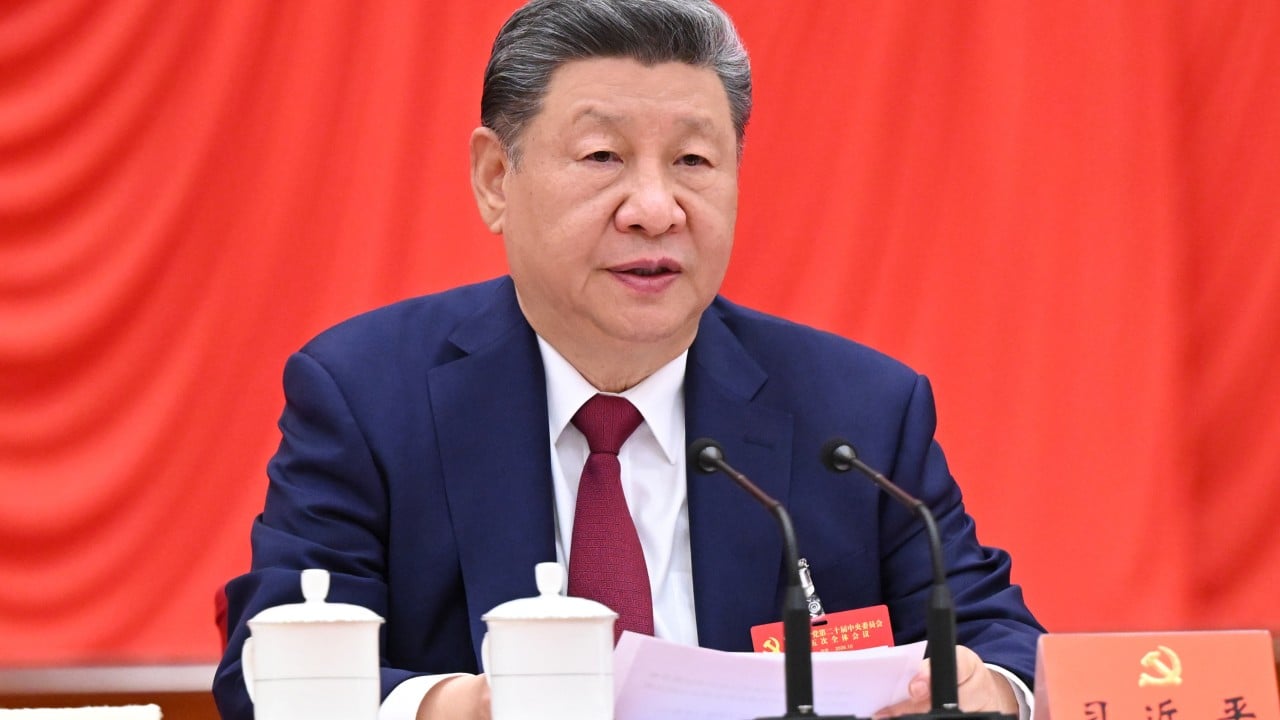
Imagine an American trade negotiator sitting across from a Chinese ministry official in a windowless hotel room in Geneva. Both are exhausted. Both are reading from talking points vetted by committees of lawyers and intelligence analysts. On paper, they represent two monolithic empires locked in a zero-sum struggle for the twenty-first century.
In reality, both nations are wrestling with profound internal contradictions that neither side fully understands.
Take the phenomenon that Chinese netizens dryly dubbed the "Queen of the Chinese"—a satirical, bitingly affectionate moniker pinned onto foreign figures or cultural icons who accidentally capture the public imagination on platforms like Weibo and Douyin. To an outsider skimming Western news digests, a viral nickname looks like trivial internet gossip. Look beneath the surface, and it tells a completely different story.
China’s digital sphere is the most sophisticated information-control apparatus ever constructed, yet inside those walls, a generation of hyper-literate, economically anxious young people communicates in an ever-shifting code of irony, memes, and historical allegory. When millions of users rally around an unexpected cultural symbol—whether it is a foreign diplomat’s blunt candor, a Western pop star’s unscripted moment, or a domestic entrepreneur’s fall from grace—they are testing the boundaries of public sentiment. They are signaling exhaustion with scripted nationalism and economic stagnation.
I remember sitting in a cramped noodle shop in Shanghai’s Jing’an district several years ago, listening to two young logistics managers argue over their phones. Neither mentioned politics directly. They didn't have to. They spoke entirely in internet slang—coded references to "lying flat," to housing prices that required three generations of savings, to the sudden disappearance of tech billionaires from the front pages. The air between them crackled with a quiet, sharp-edged cynicism that you would never detect from reading official state communiqués.
Washington frequently misreads this atmosphere. Policymakers in Capitol Hill hearing rooms often treat China as a singular, unblinking hive mind executing a hundred-year master plan with robotic precision. Beijing makes the exact same mistake in reverse, viewing every chaotic congressional hearing, every sudden executive order, and every shift in American public opinion as a coordinated, cynical plot to contain China’s rise.
Both capitals are haunted by ghosts of their own making. And when two giants misread each other’s internal anxieties as external aggression, the margin for error shrinks to zero.
The Swarm Over the Strait
Nowhere is that shrinking margin more terrifying than in the cold arithmetic of modern warfare.
For seventy years, deterrence in the Pacific rested on a simple, visible calculus: aircraft carriers, fighter wings, and amphibious troop transports. You could count them from orbit. You knew how long it took to build a destroyer, and you knew how many sailors it took to crew it. That predictability bought the world decades of uneasy peace.
That era is dead.
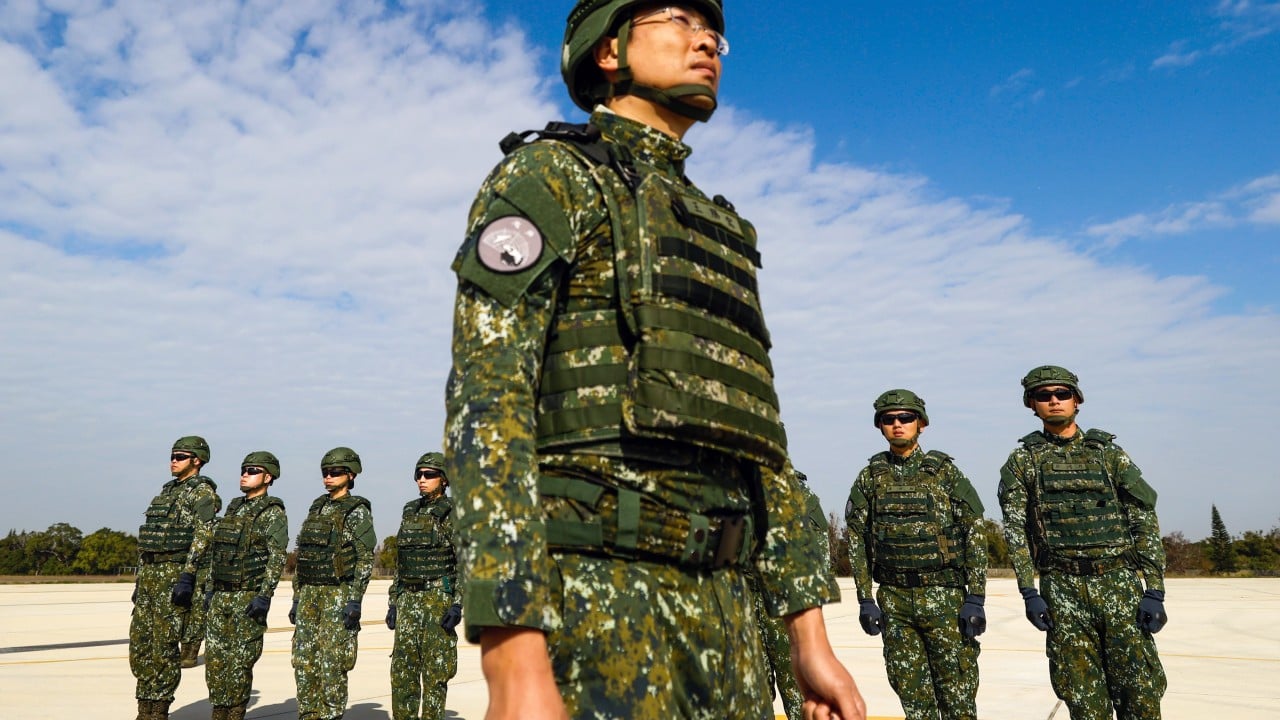
Walk into any defense-tech incubator from El Segundo to Hefei today, and the conversation has shifted entirely from heavy metal to disposable autonomy. Pentagon planners and People’s Liberation Army strategists are locked in a desperate, silent race to solve the same nightmare equation: how to fight—or survive—a drone war in the Taiwan Strait.
Think of it like the transition from medieval knights in plate armor to the longbow at Agincourt. For centuries, power belonged to the side that could afford the most expensive, heavily fortified centerpiece weapon. Suddenly, a cheap, mass-produced projectile launched in overwhelming numbers could render a king’s finest cavalry obsolete in an afternoon.
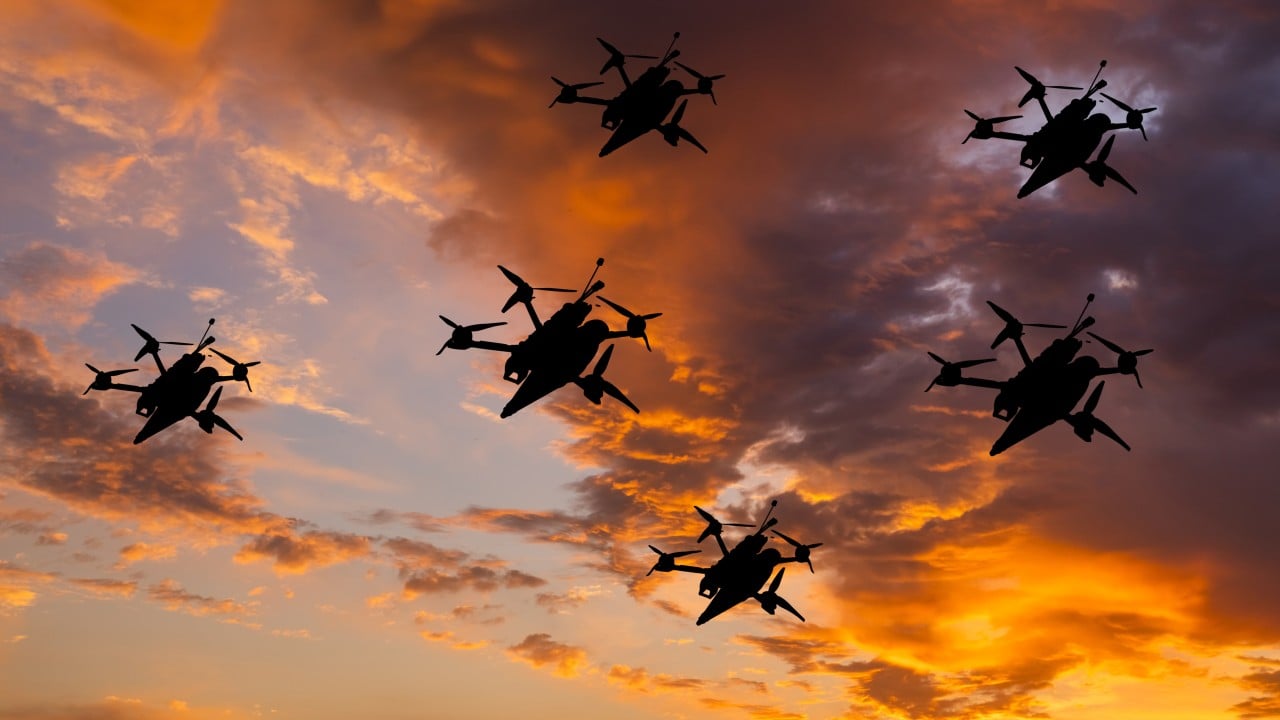
In modern military wargames, defense analysts call this the "hellscape" scenario. Instead of a traditional naval blockade or an amphibious landing preceded by weeks of visible troop buildups, a conflict over Taiwan would open with thousands of autonomous aerial, surface, and subsurface drones flooding the hundred-mile strait simultaneously. Cheap, AI-guided loitering munitions—costing a fraction of a single air-defense interceptor—would swarm radar arrays, blind satellites, and overwhelm billion-dollar destroyers simply by exhausting their magazines.
The math is brutal. If it costs two million dollars to shoot down a twenty-thousand-dollar drone, the defender goes bankrupt before the main fleet even leaves port.
China holds a structural advantage that keeps Pentagon logisticians awake at night: industrial scale. Through its state-backed "civil-military fusion" strategy, the same factories in Guangdong that manufacture commercial quadcopters for global hobbyists and agricultural spraying can pivot, on short notice, to churning out military-grade airframes by the tens of thousands. The United States, having spent thirty years offshoring its manufacturing base in pursuit of quarterly shareholder returns, now struggles to produce basic artillery shells and solid-rocket motors at a pace that would last more than a few weeks in a high-intensity Pacific conflict.
Yet the terrifying part isn't just the hardware. It is the speed.
When autonomous systems engage at machine speed—deciding within milliseconds which radar signature is a decoy and which is a command ship—human commanders are pushed out of the loop. A miscalibrated sensor on an unmanned surface vessel, a sudden squall interfering with optical targeting, a misunderstood patrol near a disputed shoal—any single spark could trigger an automated cascade of escalation before a diplomat in Washington can even pick up the secure phone to Beijing.
We are building a hair-trigger apparatus in the busiest shipping lane on the planet, and we are trusting software to keep its cool.
The Molecule That Crossed the Border
And yet, right alongside this machinery of mutual destruction, something bizarre and deeply human is happening. The same two countries preparing to out-build each other in autonomous weapons are quietly becoming dependent on each other to keep their citizens alive.
Consider what happens in the quiet, sterile corridors of oncology clinics from Houston to Boston.
Developing a breakthrough cancer therapy in the United States is a monumentally expensive, decade-long gamble. By the time a novel immunotherapy or targeted biologic clears Phase III clinical trials and reaches the pharmacy shelf, pharmaceutical giants routinely price a single course of treatment at $150,000 to $400,000 a year. Insurance companies balk. Patients mortgage their homes. The American biomedical engine produces miracles, and then prices them out of reach.
Over the past decade, China looked at that bottleneck and decided to hack the entire pharmaceutical supply chain.
Backed by aggressive state subsidies, streamlined regulatory approvals, and a massive domestic patient pool that allows clinical trials to enroll in months rather than years, Chinese biotech firms began engineering "fast-follower" and next-generation cancer drugs at a fraction of Western costs. PD-1 checkpoint inhibitors, antibody-drug conjugates, CAR-T cell therapies—molecules that cost hundreds of thousands of dollars in New York were suddenly being manufactured in Suzhou and Shanghai and sold at discounts of seventy to eighty percent.
The result is one of the great geopolitical ironies of our time. Even as Congress passes legislation like the BIOSECURE Act to sever ties with Chinese biotech contractors over national security fears, Western pharmaceutical titans—Merck, AstraZeneca, Pfizer, Johnson & Johnson—have quietly poured billions of dollars into licensing deals to buy Chinese-developed cancer molecules and bring them to global markets.
Imagine a patient sitting in an infusion chair in Ohio. Let’s call her Sarah—a hypothetical composite of thousands of real patients navigating the American healthcare maze. She has advanced non-small cell lung cancer. Her oncologist hands her a prescription for a next-generation targeted therapy that has shown remarkable survival rates in recent trials. Sarah does not care about export controls on gene sequencers or Senate committee hearings on intellectual property theft. She cares about seeing her daughter graduate from high school next June.
If that drug was discovered in a lab in Shanghai, licensed by a multinational firm in New Jersey, and manufactured using active pharmaceutical ingredients synthesized in Jiangsu province, where does "national security" end and human survival begin?
This is the core paradox of the US-China relationship. You cannot cleanly amputate a conjoined twin without risking both patients on the operating table.
Every attempt at "decoupling"—or what diplomats more politely call "de-risking"—runs headlong into the messy reality of a forty-year marriage of convenience. American consumers want cheap electronics and affordable medicine; American farmers need Chinese buyers for their soybeans; Apple and Tesla need Chinese supply chains to hit their margins. Meanwhile, China’s economy, battered by a collapsing property sector and an aging population, desperately needs Western capital, high-end semiconductors, and export markets to stave off domestic discontent.
Both sides want the leverage of separation without paying the price of divorce.
The Human Ledger
It is easy to get lost in the grand chess moves—the semiconductor export bans, the tariff threats, the naval exercises, the biotech licensing wars. When you zoom out too far, nations turn into abstract shapes on a map, and history feels inevitable, like two trains locked onto the same track.
History is never inevitable. It is made by people.
I think often of the ordinary lives suspended in the crossfire of this superpower rivalry. I think of the Chinese graduate student in materials science at a Midwestern university, spending three months in administrative limbo waiting for a visa renewal, treated as a potential espionage threat by one government and a suspect expatriate by the other. I think of the American factory worker in Ohio whose town was hollowed out when his plant moved to Guangdong in 2003, watching politicians promise a manufacturing renaissance that takes decades to build. I think of the fisherman in Palawan, steering his wooden outrigger past gray steel coast guard cutters ten times the size of his boat, wondering whether tomorrow morning he will still be allowed to cast his nets in the water his grandfather fished.
These people never appear in the joint communiqués. They are the invisible ledger on which the true cost of this rivalry is tallied.
When you read the news about US-China relations—whether it is a viral cultural meme revealing cracks in the armor of state control, a chilling simulation of drone swarms darkening the sky over Taiwan, or a life-saving cancer drug crossing borders that politicians want to seal—you are not reading seven separate stories. You are reading different chapters of the same human dilemma.
Can two proud, anxious superpowers learn to manage a rivalry without stumbling into a catastrophe that neither can survive? Or will fear, domestic politics, and automated weapons make the decision for them?
Out on the South China Sea, before dawn breaks over the horizon, the water remains dark and indifferent. Somewhere beneath the waves, a silent current carries warm tropical water north toward the poles while cold, dense water slips south along the ocean floor—two massive, opposing forces moving past each other in the dark, keeping the entire planet in balance.
For the ship cutting through the surface above, survival depends on a single, fragile truth: knowing exactly where the currents meet, and keeping a steady hand on the wheel.