The air behind the strip mall doesn’t just feel warm. It feels heavy, a shimmering wall of vibration that tastes like scorched copper and ozone. Elias, who has lived in this corner of Northern Virginia for forty years, used to sit on his porch to watch the fireflies. Now, he stays inside with the windows sealed tight. Even at midnight in October, his backyard feels like the exhaust vent of a titan.
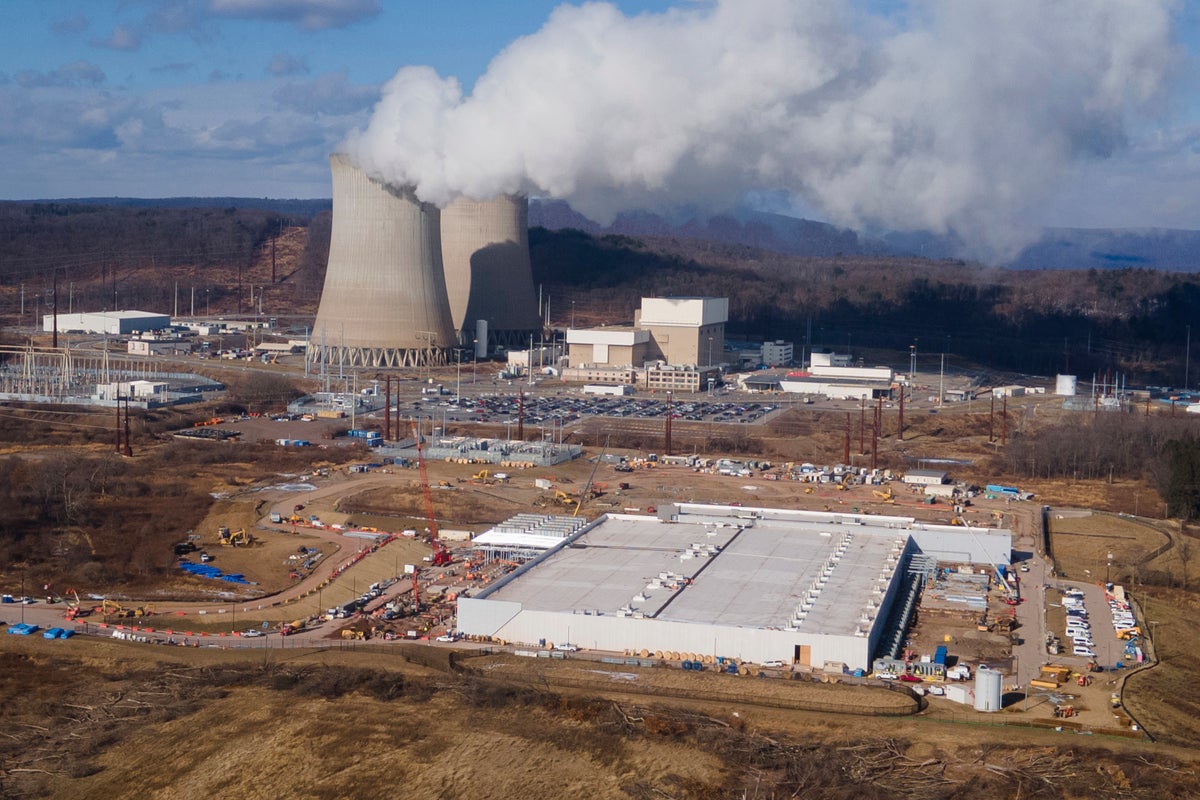
He isn't imagining the heat. He is living in the shadow of a data center, a windowless monolith the size of four football fields that breathes out the collective warmth of a million digital lives.
We talk about "the cloud" as if it’s a celestial, weightless entity. We picture our emails, our streaming marathons, and our endless AI queries floating in a cool, ethereal ether. The reality is far more industrial. The cloud is made of silicon, steel, and massive amounts of electricity. When that electricity powers the servers that store our memories, it produces a byproduct that cannot be deleted or archived.
Heat.
The Concrete Oven
Recent research has begun to quantify the fever Elias feels. Scientists studying the environmental footprint of these digital hubs have discovered a startling phenomenon: "heat islands" that don't just exist within the facility, but bleed out into the surrounding land. In some cases, the ground and air around a data center can be up to 16 degrees warmer than the natural landscape just a mile away.
Sixteen degrees.
That is the difference between a brisk autumn evening and a sweltering summer afternoon. It is the difference between a garden that thrives and one that turns to dust.
To understand why this happens, you have to look at the physics of a server rack. Every bit of data processed is a tiny burst of energy. Multiply that by billions of operations per second, and you have a furnace. To keep the machines from melting, massive cooling systems—essentially giant industrial air conditioners—strip the heat from the aisles and pump it outside.
Where does that heat go? It doesn't vanish. It settles. It hugs the asphalt of the massive parking lots. It radiates off the windowless concrete walls. It creates a microclimate where the sun’s warmth is trapped and amplified by the mechanical breath of the facility. For the people living in the houses next door, the data center acts as a permanent, invisible space heater that they never asked for and can never turn off.
A Neighborhood Under Siege
Consider a hypothetical family—let’s call them the Millers—who bought their home when the nearby lot was still a quiet meadow. Today, that meadow is a grey box. The Millers notice their electricity bills for air conditioning are twenty percent higher than their friends' bills across town. They notice their old oak tree is dropping leaves in July.
They are victims of a digital externalities.
The heat island effect is a well-known urban phenomenon where buildings and roads absorb the sun’s energy, making cities hotter than rural areas. But data centers represent a new, hyper-localized version of this crisis. Unlike a traditional office building that goes dark at 6:00 PM, a data center is a 24-hour engine. It is always breathing. It is always pushing.
The soil around these sites begins to change. Constant elevated temperatures can bake the moisture out of the earth, killing the microbial life necessary for healthy plants. This creates a feedback loop. Without greenery to provide shade and transpiration, the ground absorbs even more heat. The land becomes a thermal battery, charging up during the day and refusing to cool down at night.
The Thirst for Cooling
The irony is that as the world gets warmer, the data centers require even more energy to stay cool, which in turn generates more heat. It is a cycle of thermal escalation.
Some facilities try to solve this by using water. They evaporate millions of gallons to chill the air, essentially "sweating" to stay cool. But in regions already facing drought, this creates a secondary conflict. A community might find itself choosing between keeping its reservoirs full or keeping its TikTok feeds scrolling. When the water runs low, the facilities switch back to air cooling, and the heat islands expand once again.
We are building a world where our digital comforts are physically warping our physical geography. Every time we ask an AI to generate a high-resolution image or we stream a movie in 4K, a server somewhere works a little harder. A fan spins a little faster. A puff of hot air is pushed out into a neighborhood like Elias's.
The Search for a Heat Sink
Is there a way out? Engineers are currently experimenting with "heat reuse" projects. In some European cities, the excess warmth from data centers is being piped into local district heating systems to warm homes and swimming pools. Instead of being a pollutant, the heat becomes a resource.
But these solutions are expensive and require a level of urban planning that hasn't yet caught up to the "data center alley" gold rush happening in many parts of the United States. Right now, it is cheaper to simply vent the heat into the sky—and onto the neighbors.
We often think of tech regulation in terms of privacy, or speech, or monopolies. We rarely think of it in terms of thermodynamics. But as these facilities continue to grow, the "right to a cool breeze" might become the next great environmental battleground.
Elias doesn't care about the speed of his fiber-optic connection anymore. He cares about the fact that his porch, once a sanctuary, now feels like the back of a refrigerator. He watches the shimmering air above the data center and wonders how much longer the trees on his street can hold out.
The digital world is no longer contained within our screens. It is spilling out into the streets, drying the soil, and raising the temperature of the places we call home. We wanted the world at our fingertips. We just didn't realize how much it would burn.
The ground stays warm long after the sun goes down, a silent reminder that every byte has a temperature.