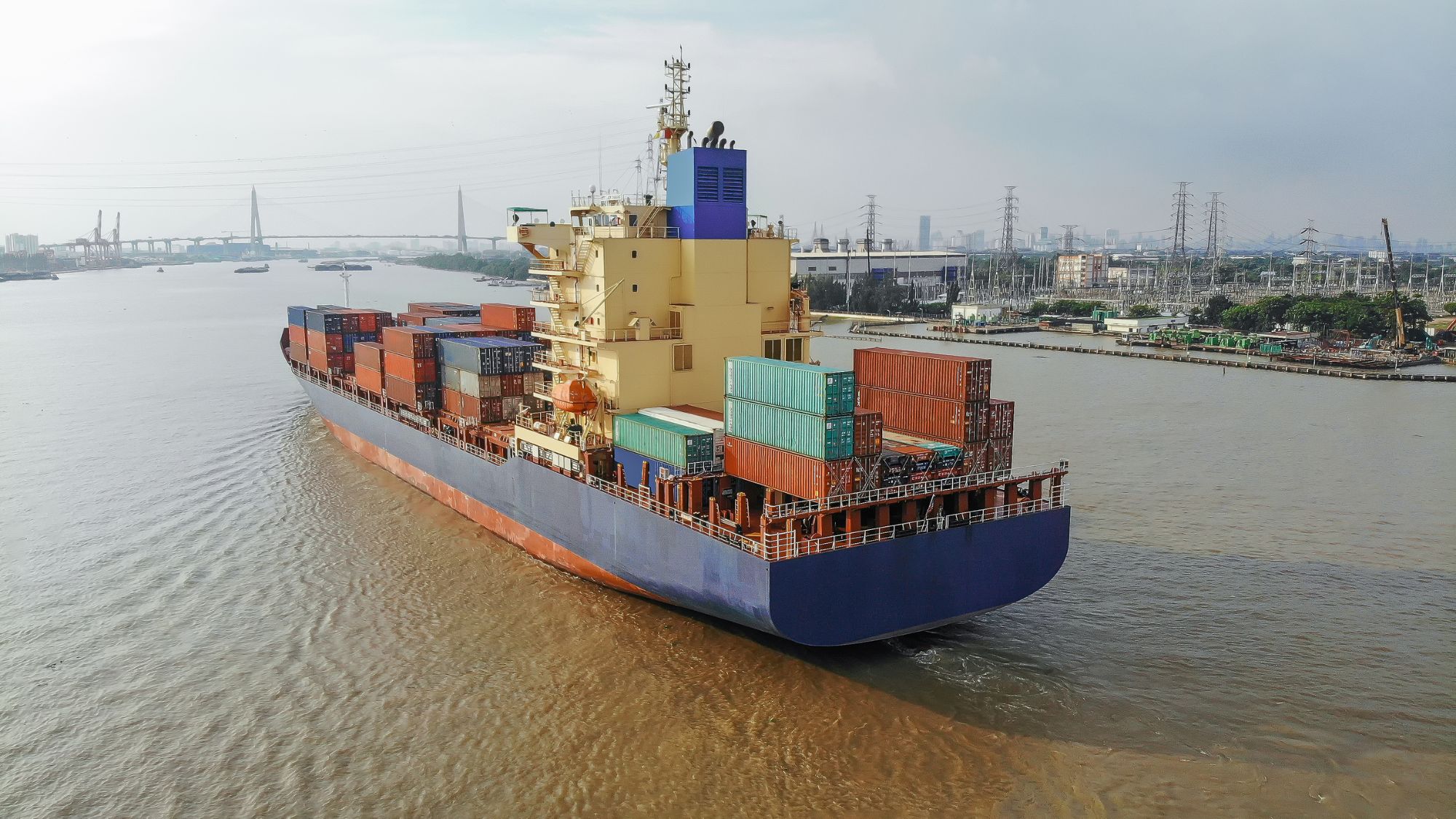
The Strait of Hormuz is often viewed through the lens of traditional naval warfare, where grey-hulled destroyers trade glares with fast-attack craft in a high-stakes game of maritime chicken. However, the true danger to the 21 million barrels of oil passing through this corridor daily is shifting from the surface of the water to the digital and logistical infrastructure that sustains it. While the world watches for missiles, the more sophisticated threat lies in the systemic degradation of the insurance, telecommunications, and automated port systems that keep the global supply chain from seizing up.
Energy markets have historically priced in "kinetic" risks—explosions, boardings, and direct military intervention. But we are entering an era where the strait can be effectively closed without a single shot being fired. This is not about a physical blockade. It is about the "software-defined" blockade, where cyber-interference and the weaponization of maritime law create a risk profile so high that commercial shipping simply refuses to enter the Persian Gulf.
The Digital Fragility of Maritime Transit
Modern tankers are no longer just massive steel vessels; they are floating data centers. Every aspect of their journey, from engine performance to GPS-guided navigation, relies on a constant stream of satellite data. If you jam the signals or spoof the Automatic Identification System (AIS) data in a concentrated area like the Strait of Hormuz, you create a navigational nightmare.
When a ship's coordinates start drifting on the screen while the physical horizon remains clear, the captain faces an impossible choice. Pushing forward risks a collision in one of the world's most crowded waterways. Dropping anchor makes the vessel a sitting duck. We have already seen "ghost" ships appearing on radar in the Black Sea and near Chinese ports—incidents where vessels seem to be miles away from their actual location. In the narrow, 21-mile-wide passage of the strait, even a minor desynchronization of GPS data can lead to a multi-vessel pileup that would take weeks to clear.
This digital vulnerability extends to the ports themselves. The Jebel Ali port in Dubai and the massive loading terminals in Saudi Arabia and Kuwait operate on highly integrated Industrial Control Systems (ICS). An attacker doesn't need to sink a tanker if they can freeze the pumps at the terminal or scramble the manifest data that tells the cranes which containers to move. Without the digital handshake between the shore and the ship, the physical movement of oil stops.
The Insurance Death Spiral
The most potent weapon in a modern conflict isn't a torpedo; it is the withdrawal of protection and indemnity (P&I) insurance. Most of the world’s shipping fleet is insured through a handful of London-based clubs. These entities are risk-averse by design. If the perceived threat level in the Strait of Hormuz crosses a specific threshold, "War Risk" premiums skyrocket.
We are seeing a trend where insurance giants are no longer willing to absorb the costs of "grey zone" aggression—incidents that fall short of war but cause significant operational delays. When premiums jump from $30,000 to $300,000 per voyage overnight, the economics of moving crude oil fall apart. Small independent operators might take the risk, but the majors—Shell, BP, Exxon—cannot justify the exposure to their shareholders.
If the insurance markets blink, the strait is effectively closed. You don't need a naval mine to stop a ship if the owner knows that a single incident could bankrupt their entire company because their policy was voided or became too expensive to maintain. This financial blockade is the "other" shock that remains under-discussed in Western capital cities. It is a bloodless, bureaucratic way to throttle the global economy.
The Failure of Subsea Infrastructure
Below the waves of the Strait of Hormuz lies a different kind of vulnerability: the subsea fiber optic cables that carry the vast majority of data traffic between Europe and Asia. This isn't just about high-speed internet for consumers. These cables carry the financial transactions, banking data, and corporate communications that allow the global market to function.
A "fishing accident" involving a heavy anchor could sever the primary data arteries connecting the East and West. While there are redundant paths, the loss of capacity in the Gulf would lead to massive latency issues and data bottlenecks. For high-frequency trading desks in London or Singapore, a millisecond of delay is a catastrophe. For a refinery trying to coordinate a just-in-time delivery of chemical catalysts, a data blackout means a complete production halt.
The proximity of these cables to the shipping lanes makes them easy targets for deniable sabotage. It is the ultimate asymmetric threat. A state actor or a well-funded proxy can cause billions of dollars in economic damage with a low-tech tool, all while maintaining plausible deniability.
The Myth of Pipeline Diversification
For years, the narrative has been that new pipelines across Saudi Arabia and the United Arab Emirates would render the Strait of Hormuz obsolete. The East-West Pipeline and the ADCOP line were supposed to be the safety valves.
The math says otherwise.
Total pipeline capacity that bypasses the strait currently sits at roughly 6.5 million barrels per day. Contrast that with the 21 million barrels that move through the water. Even at peak efficiency, the pipelines can only handle about 30% of the volume. Furthermore, these pipelines terminate at ports like Yanbu and Fujairah, which are themselves vulnerable to drone and missile attacks, as demonstrated by several incidents over the last five years.
The reality is that there is no "Plan B" for the Strait of Hormuz. The global economy is physically tethered to this specific stretch of water.
The Hydrogen and LNG Variable
We often talk about oil, but the Strait of Hormuz is increasingly the primary transit point for Liquified Natural Gas (LNG) and the emerging green hydrogen market. Qatar is the world’s leading LNG exporter, and every single one of its shipments must pass through the strait.
Unlike oil, LNG cannot be easily rerouted or stored in strategic reserves for long periods without massive infrastructure. If an LNG carrier is delayed, the power grids in Japan, South Korea, and parts of Europe begin to fail within days. The transition to "green" energy hasn't reduced the importance of the strait; it has simply changed the chemical composition of the cargo. The dependency remains absolute.
Weaponizing the Environment
One of the most overlooked "how" factors in a potential blockade is environmental warfare. The Persian Gulf is a shallow, enclosed body of water with high salinity and a delicate ecosystem. A deliberate oil spill at the narrowest point of the strait would do more than just stop ships; it would shut down the desalination plants that provide drinking water to millions of people in the region.
If a tanker is sabotaged and leaks its cargo, the cleanup effort requires a massive influx of specialized vessels and equipment. This creates a legitimate maritime exclusion zone for "safety and environmental protection." A hostile actor can use an ecological disaster as a pretext to physically bar entry to the strait for months, all while claiming they are trying to save the sea.
This creates a paradox for Western navies. You cannot easily send a carrier strike group through a massive oil slick without damaging the ships' cooling systems and intake valves. The environment itself becomes the barrier.
The Human Factor and the Talent Drain
There is a final, less technical factor: the crew. The merchant mariners who man these tankers are not soldiers. They are civilians from the Philippines, India, and Eastern Europe working for a paycheck. As the Strait of Hormuz becomes a "high-risk" zone, the pool of qualified officers willing to sail these waters is shrinking.
When a vessel is seized or struck by a drone, it isn't just the cargo at risk; it is the lives of twenty people. We are reaching a point where the psychological toll on crews is leading to a labor shortage on the Gulf routes. If you can't find a crew to man the ship, it doesn't matter how much oil is in the ground or how many pipelines you build.
The industry is currently ignoring the fact that shipping is a human-centric business. The "shock" will come when a major shipping line announces it can no longer staff its Gulf-bound fleet because the insurance costs and the physical risks have become untenable for the average sailor.
The Shadow Fleet Problem
The rise of the "shadow fleet"—unregulated, under-insured tankers used to circumvent sanctions—has introduced a new level of chaos into the strait. These vessels often turn off their AIS, use forged documentation, and are frequently in poor mechanical condition.
In a congested waterway, these ships are moving landmines. A mechanical failure or a steering malfunction on a rusted shadow-fleet tanker could block the channel just as effectively as a purposeful attack. Because these ships operate outside the normal legal and regulatory framework, there is no clear protocol for who is responsible for salvaging them if they break down in the middle of the shipping lane.
The Strait of Hormuz is no longer a simple theater of geopolitical posturing. It is a complex, hyper-connected system where a failure in one node—be it digital, financial, or environmental—can trigger a cascade that stops the flow of energy entirely. The world is looking for a "shock" that looks like a war, but the real crisis will likely look like a series of technical glitches and insurance cancellations that slowly, then suddenly, bring the world to a standstill.
Track the "War Risk" premium adjustments from the London insurance market over the next quarter. If those rates stabilize at triple their historical average, the blockade has already begun.