Pop Mart just posted a net profit that would make most retail CEOs weep with joy. We’re talking about a 309% surge in net income to 12.8 billion yuan ($1.85 billion) for 2025. Revenue nearly tripled. Yet, the reward from the stock market was a brutal 23% nosedive in share price on Wednesday.
It feels like a glitch in the matrix. How does a company crush every financial metric and still watch its valuation vanish in a single afternoon? For a different look, read: this related article.
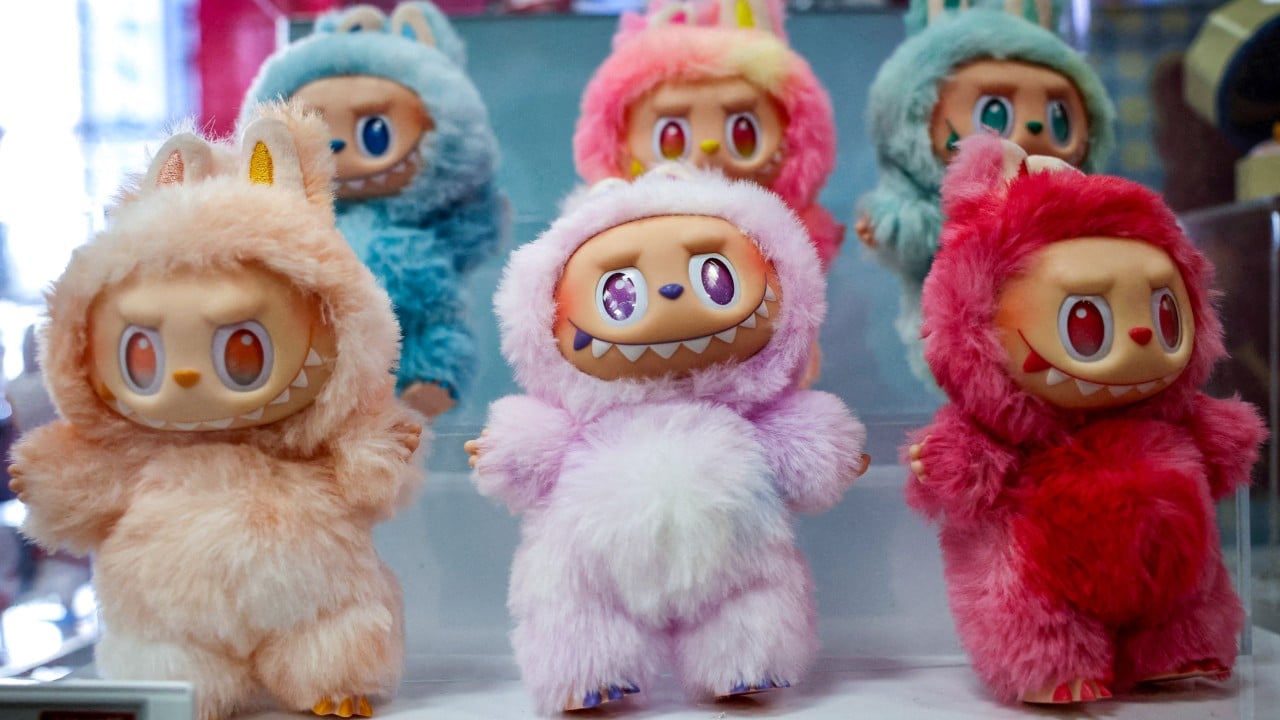
The answer isn’t in the math; it’s in the monster. Specifically, Labubu. That snaggle-toothed, mischievous elf from "The Monsters" series has become a global obsession, but for investors, that obsession is starting to look like a dangerous addiction. Pop Mart has a Labubu problem, and the market is officially staging an intervention.
The Labubu Trap
In 2024, Labubu accounted for about 23% of Pop Mart's revenue. Fast forward to the end of 2025, and that number has ballooned to 40%. One single character is now carrying nearly half the weight of a multi-billion dollar empire. Similar insight on this trend has been published by The Motley Fool.
Investors aren't stupid. They've seen this movie before. They remember the Beanie Babies craze. They remember when "Molly"—Pop Mart’s original flagship—was the only thing anyone cared about. Molly’s sales fell well below expectations this year, bringing in 2.9 billion yuan against a much higher forecast. If Molly can fade, Labubu can too.
When a company becomes a "one-trick pony," even a very profitable trick, the risk profile changes. The market is pricing in the "Labubu Crash" before it even happens. The fear is simple: what happens when the trend-conscious Gen Z buyers in Thailand, London, and New York move on to the next shiny thing?
Cracks in the Expansion Strategy
Pop Mart’s CEO, Wang Ning, likes to compare his company to Disney. He wants you to think of Labubu as Mickey Mouse. But Mickey has nearly a century of movies, theme parks, and cultural integration behind him. Labubu has TikTok trends and "ugly-cute" aesthetics.
While international revenue grew fourfold last year—now making up 44% of total sales—there’s a catch. This growth was almost entirely fueled by Labubu mania. In the U.S. market, growth rates actually started to cool significantly toward the end of the year.
- Supply vs. Scarcity: To fight off scalpers, Pop Mart ramped up production from 10 million units a month to 50 million.
- The Price of Plenty: By flooding the market to meet demand, they’ve accidentally killed the "hype" factor. Resale prices on platforms like eBay and Dewu have plummeted by over 80% for some series.
- The Dividend Sting: Adding insult to injury, the company slashed its dividend payout ratio from 35% to 25%.
Basically, the company is asking investors to fund a massive, risky global expansion while the very thing driving that expansion—the Labubu hype—is showing signs of fatigue.
Can Twinkle Twinkle Save the Day
Management is desperately trying to point toward their other IPs. They’ve got 17 characters now pulling in over 100 million yuan each. Skullpanda did okay, hitting 3.5 billion yuan. Twinkle Twinkle, a newer addition, is growing fast and accounts for a huge chunk of sales in Southeast Asia.
But none of these characters have the "gravity" of Labubu. They don't draw the 10-hour queues. They don't cause the same frenzy.
The company is doubling down on "content." They’ve partnered with Sony Pictures for a Labubu movie. They’re building theme parks. They’re trying to build a soul for these plastic toys so they don't just end up in a landfill once the "blind box" dopamine hits stop working. It’s a race against time.
What You Should Do Now
If you’re holding Pop Mart or thinking about jumping in after this dip, don't look at the P/E ratio. Look at the culture.
- Watch the secondary market: If Labubu resale prices continue to tank, the primary sales will follow. Hype is the only thing keeping these margins at 72%.
- Monitor the "New Trio": Keep a close eye on Twinkle Twinkle and Crybaby. If they can’t pick up the slack as Labubu's growth "normalizes" to the 20% predicted for 2026, the stock has further to fall.
- Check the U.S. footprint: Pop Mart is betting big on California and London. If those stores don't hit their efficiency targets without a viral mascot leading the way, the "global powerhouse" narrative is dead.
The "rookie racing driver" analogy used by Wang Ning is accurate. The car is moving incredibly fast, but the driver is struggling to keep it on the track. Until Pop Mart proves it can sell a toy that isn't a viral monster, the smart money is staying on the sidelines.
Keep your eyes on the April 2nd court date regarding the copyright lawsuit against Bambu Lab. If Pop Mart can't protect its IP from 3D-printing pirates, even the Labubu craze won't be enough to save the bottom line.