The modern discourse on war crimes in the Middle East is a theater of the absurd. We have replaced strategic clarity with a frantic, legalistic moralism that neither stops wars nor protects civilians. Most people screaming about "war crimes" on social media couldn’t tell the difference between jus ad bellum and jus in bello if their lives depended on it. They treat the Geneva Conventions like a list of prohibited microaggressions rather than what they actually are: a pragmatic, often brutal framework designed by states to allow war to continue while maintaining a veneer of order.
Stop looking for a "good guy." Stop waiting for a court in The Hague to settle a civilizational struggle. The law isn't a referee in this fight; it’s a weapon of the weak against the strong and a shield for the strong against the weak. If you want to understand what is actually happening in Gaza, Lebanon, or Israel, you have to stop viewing the conflict through the lens of a human rights brochure and start looking at the physics of urban combat.
The Myth of "Proportionality"
The most misunderstood word in the English language right now is "proportionality."
In the lazy consensus of the evening news, proportionality means "an eye for an eye." If ten people die on one side, only ten should die on the other. This is a kindergarten-level interpretation of International Humanitarian Law (IHL).
In reality, proportionality has nothing to do with the symmetry of casualties. It is a cold, utilitarian calculation defined under Article 51(5)(b) of Protocol I to the Geneva Conventions. It asks: Is the expected incidental loss of civilian life excessive in relation to the concrete and direct military advantage anticipated?
If a high-ranking commander is hiding in a bunker beneath a residential block, the law allows for a massive amount of "collateral damage" as long as the military objective is deemed significant enough. I have watched analysts fumble this for decades. They look at a crater and see a crime. A general looks at the same crater and sees a calculated cost-benefit analysis. You can hate the math, but you cannot claim the math is illegal just because the result is horrifying.
The Human Shield Trap
The "Human Shield" argument is usually dismissed by activists as a cheap Israeli talking point. It isn’t. It is the defining tactical reality of 21st-century asymmetric warfare.
When a non-state actor like Hamas or Hezbollah integrates military infrastructure into civilian zones—hospitals, schools, mosques—they aren't just committing a war crime (perfidy and failing to distinguish); they are effectively rewriting the rules of engagement. They are betting that Western sensibilities will find the cost of attacking them too high.
But here is the grim truth that nobody wants to admit: under IHL, the presence of civilians does not render a military objective immune from attack. If a school is used to launch rockets, it loses its protected status. Period. The legal burden of the civilian deaths then shifts, in a complex and often debated way, toward the party that placed them in harm's way.
We are witnessing a "race to the bottom" of victimhood. One side uses civilians as armor; the other side shoots through that armor and claims they had no choice. Both are technically operating within the horrific logic of modern warfare, yet the public expects a "clean" war that has never existed and never will.
The ICC is a Paper Tiger with a Political Agenda
The International Criminal Court (ICC) and the International Court of Justice (ICJ) are being treated as if they are the Supreme Court of the World. They aren't. They are political bodies masquerading as judicial ones.
The ICC has no police force. It has no army. It relies entirely on the cooperation of states that are often the very subjects of its investigations. When the ICC issues warrants for leaders in the Middle East, it isn't "administering justice." It is engaging in high-stakes virtue signaling.
I’ve seen the internal mechanics of these international bodies. They are staffed by career bureaucrats who are as susceptible to the prevailing geopolitical winds as any politician in Washington or Tehran. To believe that a judge in a robe can resolve a dispute over land and existence that has lasted a century is more than naive—it’s dangerous. It provides a false sense of resolution while the bodies continue to pile up.
Urban Warfare is the Death of Ethics
Every armchair general points to "precision munitions" as the solution. "Why can't they just use a sniper?" they ask.
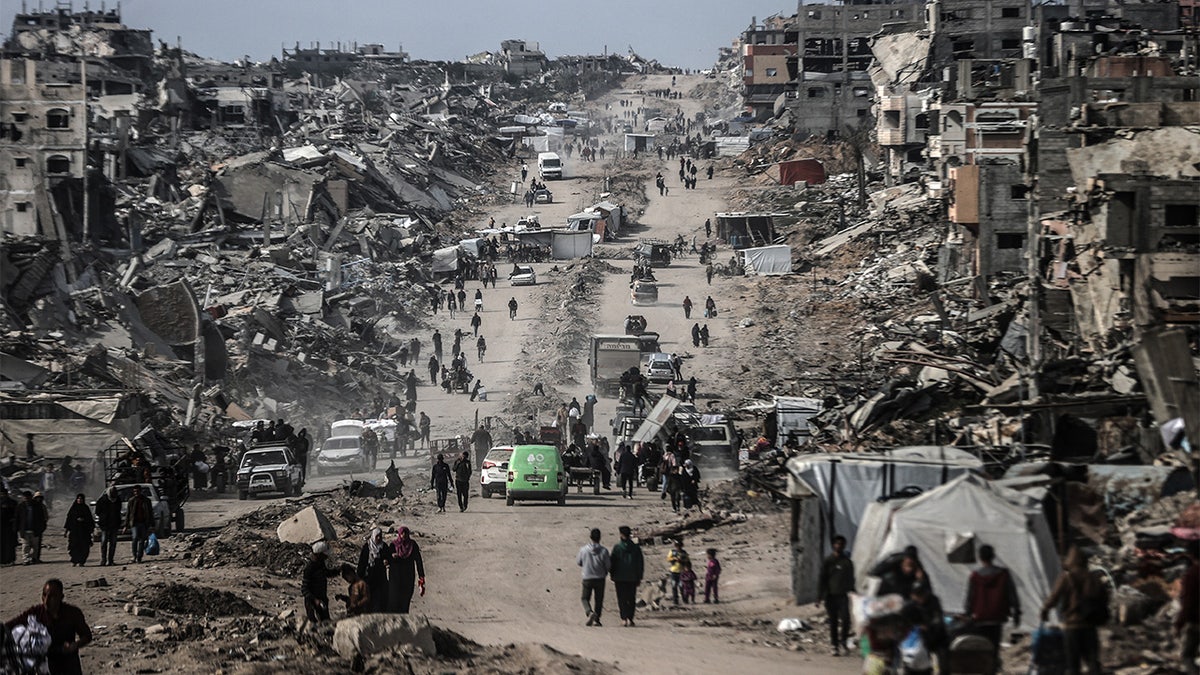
This is the fallacy of the "Clean War." In a dense urban environment like Gaza—one of the most crowded places on Earth—there is no such thing as a surgical strike. Every bomb, no matter how "smart," creates a pressure wave. Every collapsed tunnel shifts the foundation of the house next door.
If you want to fight a war in a city, you are signing up for the slaughter of innocents. There is no middle ground. The only way to avoid war crimes in urban combat is to not fight the war at all. But once the first shot is fired, the "laws of war" become a series of loopholes.
- Evacuation Orders: Are they humanitarian warnings or forced displacement?
- Siege Warfare: Is it a legitimate tactic to starve out an enemy or a collective punishment of a population?
- Dual-Use Infrastructure: Is a power plant a civilian necessity or a military enabler?
The law allows for all of these to be argued both ways. That isn't a bug in the system; it's a feature. The laws were written by military powers to ensure they always have a legal path to victory.
The Weaponization of Genocide
We have reached a point where the word "Genocide" has been stripped of its meaning. It has become a linguistic nuclear option used to shut down debate.
Under the 1948 Genocide Convention, the bar is incredibly high: you must prove specific intent to destroy a group, in whole or in part. Tragic, massive death tolls are not, by themselves, evidence of genocide. If they were, every major conflict in human history would be a genocide.
By crying "genocide" at every escalation, activists are actually doing a disservice to the victims of actual genocides like the Holocaust or Rwanda. They are turning a specific legal definition into a generic synonym for "a lot of people I care about are dying."
This isn't just a semantic argument. When you mislabel a conflict, you misapply the solution. You stop looking for a ceasefire or a political settlement and start demanding a total dismantling of the "genocidal" entity. It makes the conflict existential for both sides, ensuring that the violence will never end.
The Actionable Truth
If you actually care about the people on the ground, stop obsessing over whether a specific strike violated Article 48. Start looking at the strategic incentives that make these strikes inevitable.
- Acknowledge the asymmetry. You cannot apply the same standards to a state military and a guerrilla insurgency and expect a coherent result.
- Demand political, not legal, solutions. No judge is going to end this. Only a negotiated reality where both sides feel secure enough to stop killing will.
- Recognize the theater. When a leader mentions "international law," they are usually trying to justify what they were going to do anyway or prevent their opponent from doing what they need to do.
The "laws of war" are not there to make war nice. They are there to make war possible without total societal collapse. They are a compromise with the devil. If you find them insufficient, it’s not because the law is being broken—it’s because the law was never designed to save us.
Stop looking for a legal exit from a moral catastrophe. War is the failure of law, not a venue for its perfection. Pick up a history book, put down the legal brief, and realize that in this region, the only "law" that has ever truly mattered is the law of survival.