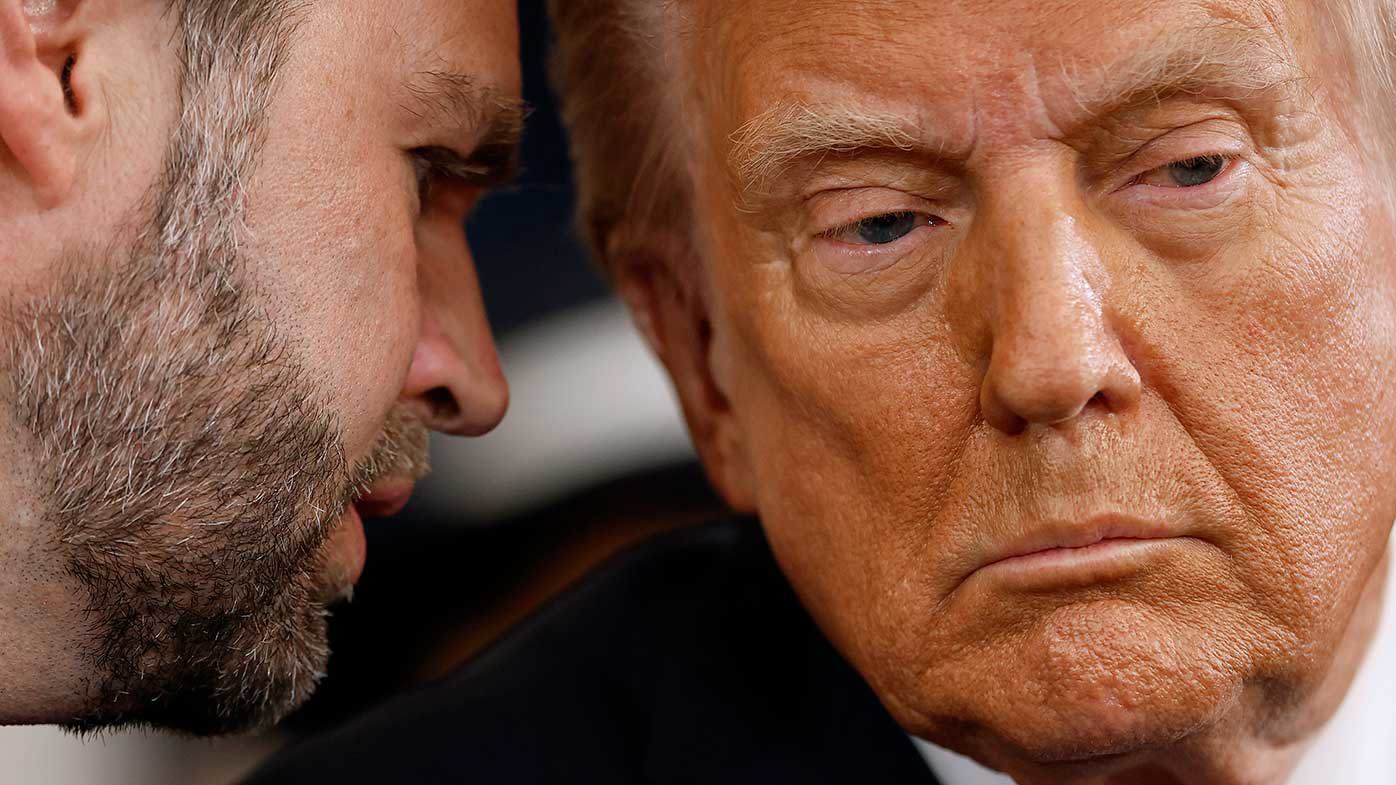
The tension inside the West Wing has moved beyond simple policy disagreement and into the dangerous territory of information warfare. Vice President JD Vance is privately warning that President Donald Trump is operating on a curated stream of intelligence that paints a dangerously optimistic picture of the conflict with Iran. This rift is not just about whether to fight, but whether the Commander in Chief is being told the truth about the costs.
The Filtered Reality of the Oval Office
Since the war began on February 28, the President has been increasingly isolated within a bubble of "battlefield successes." Insiders report that military officials and certain hawkish advisers are feeding Trump a steady diet of strike footage and reports of Iranian infrastructure collapsing. The intent is clear: reinforce the narrative that the "maximum pressure" campaign is working and that Tehran is on the verge of total surrender.
But Vance, a veteran of the Iraq War who built his political identity on skepticism of foreign entanglements, sees a different set of data. He is looking at the long-term economic drain, the resilience of Iranian proxy networks, and the reality that a "decapitated" Iranian leadership often leads to a more chaotic and unpredictable insurgency.
The Vice President’s concern centers on the idea of "rose-colored" briefings. Sources close to the situation suggest that while Trump is being told Iran is "eager to make a deal," the reality on the ground in places like Kharg Island—where 90% of Iranian crude exports originate—is a humanitarian and environmental disaster that is hardening Iranian resolve rather than breaking it.
The Steve Witkoff Text and the Breakdown of Command
A recent incident in Budapest highlighted the breakdown in communication between the two highest offices in the land. While standing next to Hungarian President Viktor Orbán, Vance was blindsided by reporters asking about ongoing U.S. strikes. He was forced to check his phone in real-time, discovering a message from Steve Witkoff, the administration’s Middle East envoy, regarding developments he should have already known.
This wasn't just an awkward moment for the cameras. It exposed a frightening reality: the Vice President is being kept out of the immediate loop, and by extension, he is unable to provide the "skeptic's check" he promised to be.
- Trump's View: The war is nearly won; bridges are down, and the enemy is ready to sign a "better deal" than the JCPOA.
- Vance's Fear: The U.S. is being lured into a decade-long quagmire by advisers who are hiding the true strength of Iran's "Axis of Resistance."
Why the Intelligence Loophole Matters
When a President believes a war is easy, they are less likely to seek diplomatic off-ramps. Trump recently boasted that negotiation with Iran is "sort of an easy negotiation" because of the damage inflicted. This mindset ignores the intelligence suggesting that Iran is currently constructing massive security barriers around its underground nuclear facilities, making them even more resistant to the very strikes Trump believes will end the program.
Vance’s skepticism is rooted in history. He has publicly stated that his adult life was shaped by presidents who "threw America into unwise wars and failed to win them." By questioning the intelligence pipeline, he is trying to prevent the administration from falling into the same trap as the Bush and Obama eras—where "mission accomplished" was a slogan, not a reality.
The Economic Toll No One Mentions
While the President focuses on the military objectives, the domestic fallout is beginning to worry the political wing of the White House. Susie Wiles and other senior aides have reportedly expressed concern that the President isn't being told how the war is hurting the GOP's chances in the upcoming midterms. The blockade on the Strait of Hormuz has sent global shipping costs soaring, and while Trump claims the Strait is "completely open" for everyone but Iran, the insurance markets disagree.
The cost of maintaining a global naval blockade is astronomical. If the President is being told this is a "low-cost" operation, he is being lied to.
The Realities of the Naval Blockade
- Fuel Costs: U.S. Navy assets are burning through fuel at a rate not seen since the height of the Cold War.
- Global Backlash: Allies in Europe and Asia are beginning to ignore U.S. sanctions, with China and Russia actively funding Iranian reactor construction despite the strikes.
- The "Invisible" Casualty: U.S. commercial shipping is now a target for Iranian mines, a threat that Hegseth and other hardliners downplayed during the initial planning phases.
The Shadow of the Iraq War
Vance’s deployment to Iraq in 2005 as a military journalist left him with a deep-seated distrust of military bureaucracy. He knows how reports are "cleaned up" as they move up the chain of command. A strike that hits a bridge might be reported as a "strategic victory" in the Oval Office, but on the ground, it may simply be a catalyst for a new wave of recruitment for the Houthis or Hezbollah.
The Vice President has tried to play the role of the loyal soldier in public, standing alongside Trump and calling him a "smart president." But the private warnings are getting louder. He isn't just worried about the war; he's worried about the integrity of the office. If the President is making life-and-death decisions based on a filtered, sanitized version of reality, the risk of a miscalculation that leads to a third world war becomes a mathematical certainty.
The administration is currently engaged in a high-stakes game of chicken with Tehran, setting 60-day deadlines and threatening to "knock out every single power plant." If those threats are based on the belief that Iran has "no cards" left to play, the U.S. is in for a violent awakening. Iran still holds the power to disrupt global energy markets for years, regardless of how many bridges are destroyed.
Vance is right to be afraid. In a conflict of this magnitude, the most dangerous weapon isn't a missile—it’s a lie told to the person with their finger on the button.