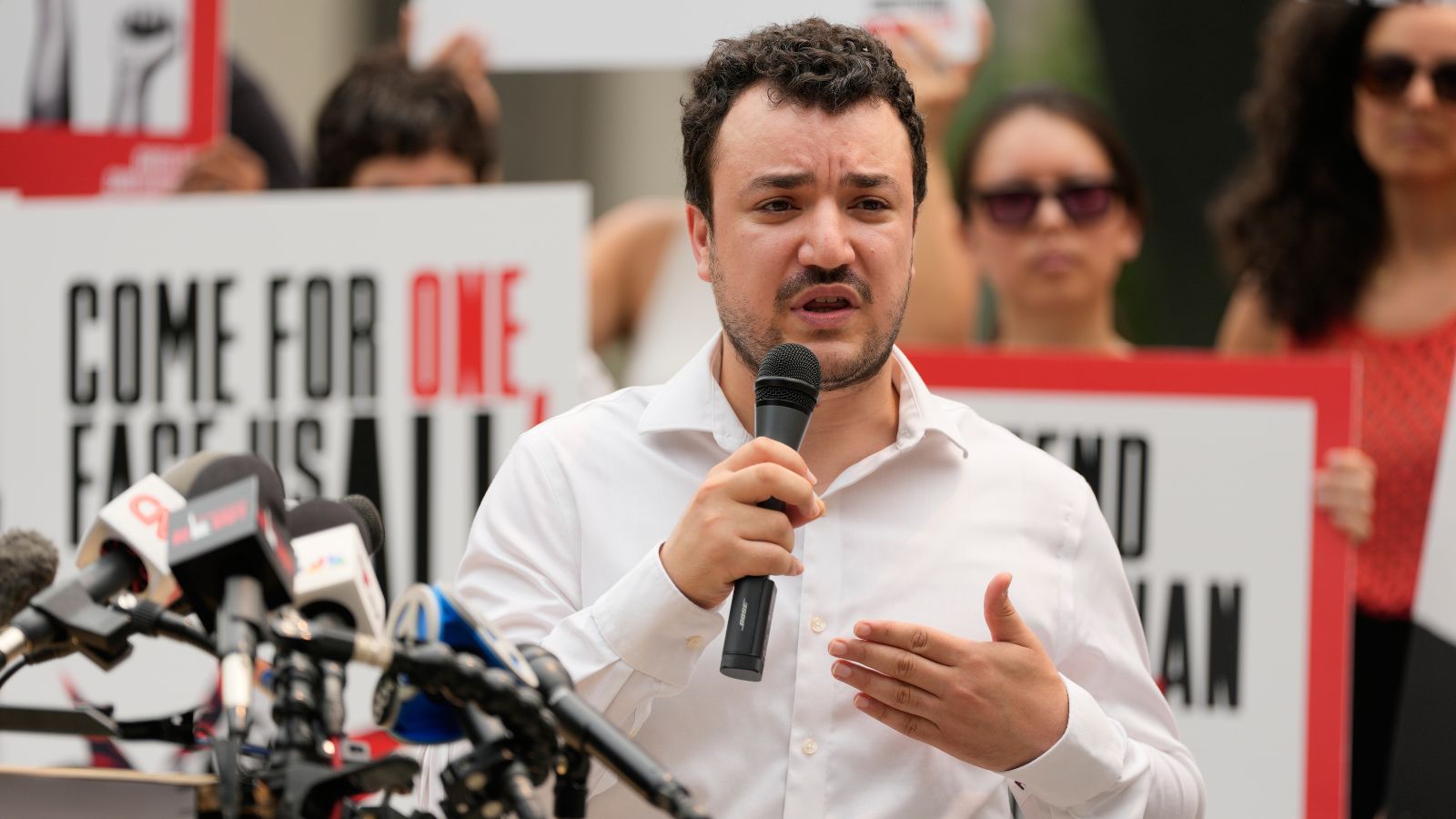
Modern universities operate under a dual mandate that creates an inherent structural conflict. On one side, institutions function as educational enclaves bound by commitments to free inquiry, academic freedom, and student welfare. On the other, they operate as complex corporate entities managing multi-billion-dollar endowments, federal research grants, philanthropic donor bases, and federal regulatory compliance under civil rights statutes such as Title VI. When geopolitical crises trigger intense campus polarization, this dual mandate fractures. The recent civil rights lawsuit filed by former Columbia University graduate student Mahmoud Khalil against the institution exposes the operational breakdown that occurs when institutional risk aversion supersedes the fundamental duty of care owed to student populations.
The litigation moves beyond symbolic political grievances to target the core economic and legal mechanics of institutional governance. By examining the complaint through the lens of corporate liability, administrative inertia, and constitutional protections, a clear operational failure emerges. Universities do not merely bear witness to campus conflict; their administrative choices actively shape the vector, velocity, and severity of the harm inflicted upon student activists.
The Structural Anatomy of Institutional Risk Aversion
To understand why elite universities frequently default to administrative suppression or passive abandonment during political crises, one must examine their cost functions. A university administration evaluates risk primarily through financial exposure, reputational capital, and regulatory compliance metrics. When external political actors, congressional committees, and major donors apply pressure, the perceived cost of defending politically unpopular student speech spikes dramatically.
In this economic framework, dissenting student activists represent high variance and low financial return. Conversely, institutional donors and federal funding streams represent baseline operational solvency. When external pressure groups target student activists through doxing, coordinated online harassment campaigns, and demands for disciplinary action, risk-averse administrators face a perverse incentive structure. Protecting targeted students requires expending political capital, confronting powerful external stakeholders, and inviting federal scrutiny. Conversely, appeasing external pressure through administrative indifference or selective enforcement imposes immediate, localized costs that the institution can externalize onto vulnerable individuals.
Khalil’s legal action formalizes this dynamic as actionable negligence and deliberate indifference. The complaint details how Columbia University administrators systematically ignored repeated warnings regarding coordinated harassment campaigns, doxing trucks, and hostile external interference. By treating student safety as a negotiable variable subordinate to institutional public relations management, the university crossed the threshold from passive mismanagement to active complicity in civil rights violations.
The Legal Threshold of Deliberate Indifference
In civil rights litigation, establishing institutional liability for peer harassment or targeted targeting requires proving more than mere administrative incompetence. Plaintiffs must demonstrate deliberate indifference—a legal standard defined by conduct that is clearly unreasonable in light of known circumstances.
When applied to campus governance, deliberate indifference manifests through specific operational failures:
- The systematic refusal to investigate documented reports of targeted doxing and physical intimidation.
- The selective application of student conduct codes based on the political content of speech or identity of the speaker.
- The covert or overt sharing of student records and personal data with external governmental or political entities without adherence to statutory privacy protections.
- The creation of an atmosphere of intimidation wherein targeted students are compelled to navigate hostile environments without institutional backing.
The evidentiary record assembled in Khalil's litigation illustrates these failures with granular precision. Rather than deploying campus security and legal resources to shield students from external harassment, administrative leadership often redirected those resources toward managing compliance demands from federal investigators and congressional inquisitors. This represents a fundamental inversion of institutional duty. The university traded the legal rights of its students to mitigate its own regulatory and financial vulnerability.
The Feedback Loop of Pretextual Compliance
A critical dimension of the Columbia precedent involves the operational mechanisms used to discipline dissent. When institutions attempt to appease external political pressure without overtly violating internal charters, they frequently resort to pretextual enforcement. This strategy involves identifying minor, administrative, or technical infractions and scaling them up to justify severe disciplinary or academic sanctions.
In Khalil's case, administrative pressure included threats to withhold graduation credentials and the deployment of non-disclosure agreements designed to suppress public discussion of institutional coercion. These tactics reveal a corrupted compliance apparatus. Compliance protocols, originally designed to ensure ethical standards and academic integrity, were repurposed as instruments of political containment.
The economic consequence of pretextual enforcement is the imposition of asymmetric costs on targeted individuals. While the university employs institutional legal teams funded by endowment revenues, student activists must absorb legal fees, reputational damage, professional disruption, and, in severe cases, immigration detention and deportation proceedings. The widening gap between institutional resource abundance and individual resource scarcity turns the disciplinary process itself into a form of punishment.
Systemic Vulnerabilities in Modern University Governance
The institutional crisis at Columbia University is not an isolated anomaly; it is a structural stress test that exposes systemic vulnerabilities across higher education. Most university governance models rely on consensus-driven bureaucracies that lack the agility and ethical resilience required to withstand intense ideological polarization.
When external actors apply coordinated pressure across legal, financial, and media channels, traditional academic governance structures experience complete operational failure. Deans, provosts, and boards of trustees are structurally optimized for fundraising, curriculum oversight, and property management—not for defending civil liberties against state-backed political interference. Consequently, when federal agencies or partisan congressional committees demand the suppression of specific viewpoints or the exposure of dissident rosters, university leadership routinely folds because their internal incentive systems penalize resistance.
This dynamic creates a dangerous precedent for the future of academic institutions. If universities establish a legal and operational baseline where student civil rights are treated as disposable bargaining chips during political crises, the foundational premise of the university as a sanctuary for independent thought collapses. Campuses cease to be incubators of critical inquiry and transform into risk-managed corporate franchises governed by compliance checklists and political calculus.
Strategic Forecast for Institutional Accountability and Risk Mitigation
The litigation initiated by Mahmoud Khalil introduces a profound counter-incentive into higher education administration. By converting administrative negligence into high-stakes financial and legal exposure, civil rights lawsuits force universities to recalculate the cost function of abandonment.
To insulate themselves against systemic liability and restore institutional integrity, universities must re-engineer their governance frameworks around rigorous operational principles:
- Establish absolute operational firewalls between internal student disciplinary processes and external political or governmental demands, strictly enforcing statutory privacy protections for student records.
- Codify objective, content-neutral enforcement standards for campus conduct codes, eliminating discretionary administrative loopholes that enable pretextual targeting.
- Allocate dedicated institutional legal and security resources to defend student populations against external doxing, harassment, and intimidation, regardless of the political popularity of the speech involved.
- Restructure board oversight to ensure that fiduciary responsibility encompasses the protection of student civil liberties as a core institutional asset rather than a liability to be managed away.
Institutions that fail to implement these structural reforms will face escalating litigation, permanent reputational degradation, and a total loss of internal legitimacy. The era of quietly trading away student safety to appease external power centers is meeting direct legal resistance. The legal liability now attached to administrative indifference ensures that protecting free expression and student welfare is no longer just an ethical aspiration—it is an existential survival requirement for modern higher education.