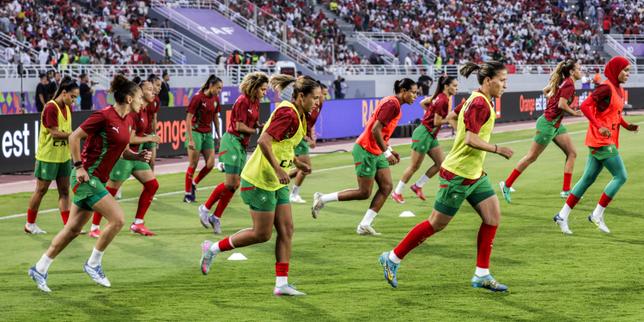
The Women Africa Cup of Nations stands at a severe structural crossroads. Despite inflated executive rhetoric and lofty continental ambitions, the tournament remains crippled by chronic underfunding, absent broadcasting infrastructure, and a persistent refusal by national federations to treat women's football as an elite asset rather than an administrative afterthought.
When the continent gathers for the Women Africa Cup of Nations, the public narrative presented by official channels relies on steady progress and historic participation numbers. That surface-level optimism crumbles under basic scrutiny. Behind the glossy federation press releases lies a stark operational reality. Players fight for unpaid bonuses, training camps lack basic medical support, and domestic leagues across major footballing nations operate on budgets that would not cover a single week of a men's second-division salary.
The Anatomy of Institutional Neglect
Money tells the truest story in modern sport. Confederation of African Football allocations for women's competitions have historically treated the tournament as a line item to be minimized rather than an investment to be scaled. While the men's Africa Cup of Nations commands hundreds of millions in media rights and corporate sponsorships, the women's equivalent often struggles for consistent linear television placement across its own member states.
Consider the broadcast distribution network. In several regions, fans cannot watch matches legally without resorting to pirated streams or obscure social media feeds. This is not merely a logistical failure. It is a commercial catastrophe. Without broadcast visibility, television rights retain zero value. Without valuable rights, corporate sponsors refuse to enter the market. Without sponsors, federations rely entirely on government subsidies and sporadic FIFA grants that routinely vanish into administrative black holes before reaching the players on the pitch.
We have spent decades watching administrators pose with oversized checkbooks for photo opportunities while basic structural needs go unmet. Travel logistics remain a recurring embarrassment. Teams arrive in host nations days before kick-off due to chaotic flight arrangements, or face bureaucratic visa hurdles orchestrated by their own home federations. These are not isolated anomalies. They are symptoms of an entrenched system that views women's sport through a charitable lens instead of a commercial one.
+------------------------------------------------------------------------+
|                      THE CYCLE OF UNDERFUNDING                         |
|                                                                        |
|  Low Broadcast Visibility -> Zero Commercial Sponsorship ->            |
|  Stagnant Federation Budgets -> Substandard Player Conditions          |
+------------------------------------------------------------------------+
The Grassroots Choke Point
Elite success at the continental level requires a functioning domestic foundation. That foundation is largely missing. In countries with immense football passion, girls' academies are practically non-existent outside of a few isolated private initiatives. Talent emerges not because of a structured developmental pathway, but in spite of the total absence of one.
Young players display extraordinary technical raw material, yet they reach the national team level without tactical education, proper strength and conditioning, or adequate nutritional guidance. When these players face opponents from nations where professional youth structures are standard, the physical and tactical gap becomes glaring.
The domestic leagues tell an equally grim tale. In many member associations, female players are classified as amateurs while expected to train full-time. They receive stipends equivalent to pocket money, forcing many to maintain second jobs or abandon the sport entirely by their mid-twenties. The peak earning years of an athlete pass by while federation officials debate whether to cover basic insurance policies.
Where the Money Actually Goes
FIFA's dedicated development funds for women's football are heavily earmarked on paper. In practice, tracking these funds across fifty-four distinct member associations proves nearly impossible for independent journalists. When money arrives at a local federation headquarters, it frequently gets diverted to cover administrative shortfalls in the men's programs.
This internal cross-subsidization is an open secret. Men's national teams, burdened by inflated travel budgets and expensive foreign coaching staffs, routinely siphon resources intended for grassroots women's development. Local executives justify the diversion by pointing to the immediate political pressure of the men's game, where losing an election depends entirely on the senior men's results. Women's football, possessing less electoral weight within local executive committees, absorbs the financial shock.
The Talent Drain and Global Inequality
African brilliance shapes the global game. Walk through any top-tier European women's league and you will find exceptional African talent carrying clubs to domestic and continental glory. Yet this success fails to enrich the domestic ecosystem at home.
The moment a player demonstrates elite potential, she signs for a European or North American club. This migration is understandable given the professional vacuum domestically, but it creates a bifurcated national team. A handful of globally polished stars fly in from London, Lyon, or Madrid to join teammates who have spent the preceding six months training on uneven pitches with inadequate equipment. Bridging that competitive divide within a five-day training window before a continental championship match is an impossible coaching assignment.
European clubs benefit immensely from this dynamic, acquiring world-class talent at a fraction of the cost required to develop European players. Meanwhile, African domestic leagues receive no training compensation or solidarity mechanisms that actually impact grassroots growth. The wealth generated by African athletic genius leaves the continent entirely.
Shifting the Paradigm of Power
Fixing the Women Africa Cup of Nations requires dismantling the current governance model. Token representation on executive committees is no longer sufficient. Women's football needs dedicated, autonomous operational structures with ring-fenced budgets that cannot be raided by cash-strapped men's departments.
Transparency must become non-negotiable. Every dollar distributed by governing bodies to support the women's game must be publicly accounted for down to the club level. Independent financial audits should dictate whether a federation retains its voting rights within continental assemblies.
Furthermore, corporate partners must be held accountable. Brands that utilize African female athletes for progressive marketing campaigns in Western markets must be pressured to invest directly in the local infrastructure that produces those athletes. Philanthropy is not a substitute for fair commercial valuation.
The talent on the pitch is world-class. The passion of the fans is unmatched. What remains broken is the machinery of power built to administer them. Until that machinery is forced to change, the tournament will continue to fight its own administrators just to survive on the global stage.


