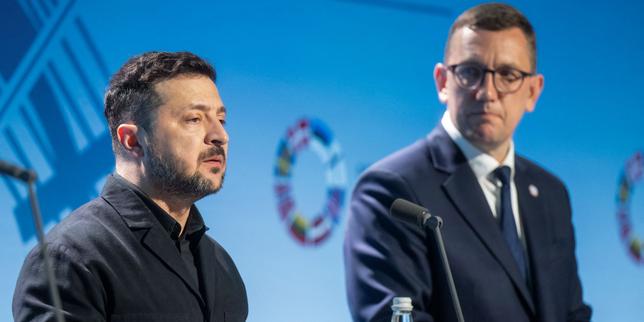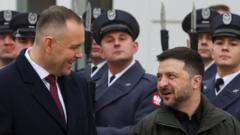
Volodymyr Zelensky sparked a geopolitical firestorm that threatens the bedrock of European security by signing a decree naming an elite Special Operations Forces unit the Heroes of the UPA.
To understand why this choice has brought diplomatic relations between Poland and Ukraine to a sudden, grinding halt, one must look past the immediate wartime optics. Kyiv views the Ukrainian Insurgent Army, or UPA, through a singular, modern lens: a historical symbol of fierce anti-Soviet, anti-Moscow resistance. Poland, however, views the group as perpetrators of the Volhynia massacre, a wartime slaughter that claimed the lives of an estimated 100,000 ethnic Poles.
By tying a frontline elite unit to this dark chapter of World War Two history, Zelensky chose domestic military morale over regional diplomatic harmony. This decision directly triggered an intense backlash from Warsaw, prompting Polish President Karol Nawrocki to initiate proceedings to strip Zelensky of the Order of the White Eagle, Poland's highest state honor. The fallout is not merely symbolic; it exposes a profound structural fracture between two of Europe's most vital wartime allies.
The Friction Between Mythmaking and History
National mobilization requires powerful symbols. For a country entering its fifth year of all-out war against a massive invading force, Ukraine looks to historical eras of partisan warfare to steel its troops. According to Ukrainian Foreign Minister Andrii Sybiha, the honorary name was selected by the soldiers themselves, driven by an intent to honor those who fought Bolshevik-communist occupation, rather than to offend Warsaw.
But history is rarely tidy, and it cannot be compartmentalized by decree.
During the chaos of World War Two, the UPA waged a brutal guerrilla campaign for an independent Ukrainian state. In 1943, that campaign manifested in coordinated, horrifyingly violent ethnic cleansing across the Volhynia region. For Poles, the UPA is not a symbol of liberty; it is synonymous with genocide.
Historical Perspectives on the UPA Legacy
┌───────────────────────────────────────┬───────────────────────────────────────┐
│          The Ukrainian View           │            The Polish View            │
├───────────────────────────────────────┼───────────────────────────────────────┤
│ • Anti-Soviet partisan resistance     │ • Perpetrators of Volhynia Massacre   │
│ • Symbol of national independence     │ • Systemic slaughter of 100,000 Poles │
│ • Focus on fight against Moscow       │ • Unforgivable wartime war crimes     │
└───────────────────────────────────────┴───────────────────────────────────────┘
The political costs of this move are accumulating with remarkable speed. Former Polish President Lech Wałęsa publicly renounced his prominent Ukrainian flag lapel badge, stating that the decree directly insulted the memory of his murdered compatriots. Meanwhile, far-right political figures in Warsaw, including Deputy Speaker of the Sejm Krzysztof Bosak, are actively leveraging the controversy to demand that Poland officially block Ukraine's accession to the European Union.
Domestic Pressure and the Calculus of Survival
Zelensky is operating under intense, multifaceted domestic pressure. Frontline fatigue is widespread, the eastern front remains under relentless Russian pressure, and the political establishment in Kyiv faces ongoing scrutiny regarding internal corruption and stalled democratic processes.
In this pressure-cooker environment, maintaining the absolute loyalty and morale of the armed forces is paramount for survival. The Special Operations Forces are the backbone of Ukraine's asymmetric defense. If an elite unit requests a specific historical moniker to steel its resolve before heading back to the trenches, a wartime president faces a brutal internal calculus.
Rejecting the request risks alienating the very fighters keeping the state alive. Accepting it means alienating the western neighbor providing the logistical pipeline for the weapons those fighters use. Zelensky chose the trenches over the diplomats.
A Gift Packaged for Moscow
The timing of this diplomatic rupture could not be worse for European stability. The Polish Ministry of Foreign Affairs issued an unequivocal warning noting that the decree directly harms bilateral dialogue and hands an invaluable narrative gift to Russian state media.
For years, Moscow has sought to paint Ukraine as a state defined by historical extremism. By officially incorporating the UPA name into the state’s modern military apparatus, Kyiv has inadvertently validated a core pillar of the Kremlin's propaganda machine. It allows adversarial intelligence networks to exploit genuine Polish grief, driving a wedge into Western unity just as NATO prepares for critical strategy summits.
Polish Prime Minister Donald Tusk has attempted to manage the damage, insisting that the Polish state and public remain fundamentally unified regarding the strategic necessity of supporting Ukraine against Russia. Yet even Tusk conceded that the decree is an unfortunate incident that deeply violates Polish historical sensitivity.
The Geopolitical Cost of Unsettled Pasts
Strategic partnerships cannot survive indefinitely on shared fear alone. They require a baseline of mutual psychological and cultural respect. The true tragedy of the current impasse is that it disrupts genuine, hard-won progress. Over the last two years, Warsaw and Kyiv had quietly established a institutional framework to handle these historical wounds. Joint historical congresses were planned, and critical exhumation and reburial operations for the victims of the Volhynia massacres had finally resumed.
All of that momentum has stalled. Poland’s state historical institute and its Ukrainian counterpart remain locked in a bitter debate, with Ukrainian officials occasionally downplaying the massacres as a local wartime episode rather than state-sanctioned genocide.
This issue cannot be managed by simply asking Poland to reduce the level of emotions. For Warsaw, the issue is structural. A nation cannot seamlessly integrate into the political and moral architecture of the European Union while officially venerating organizations associated with the mass slaughter of European civilians.
Kyiv’s calculation that the strategic necessity of the war would always shield it from the consequences of its domestic choices is proving dangerously flawed. Poland remains Ukraine’s geographic gateway to the West. If the road through Warsaw becomes completely blocked by the ghosts of 1943, no amount of battlefield heroism will easily reopen it.