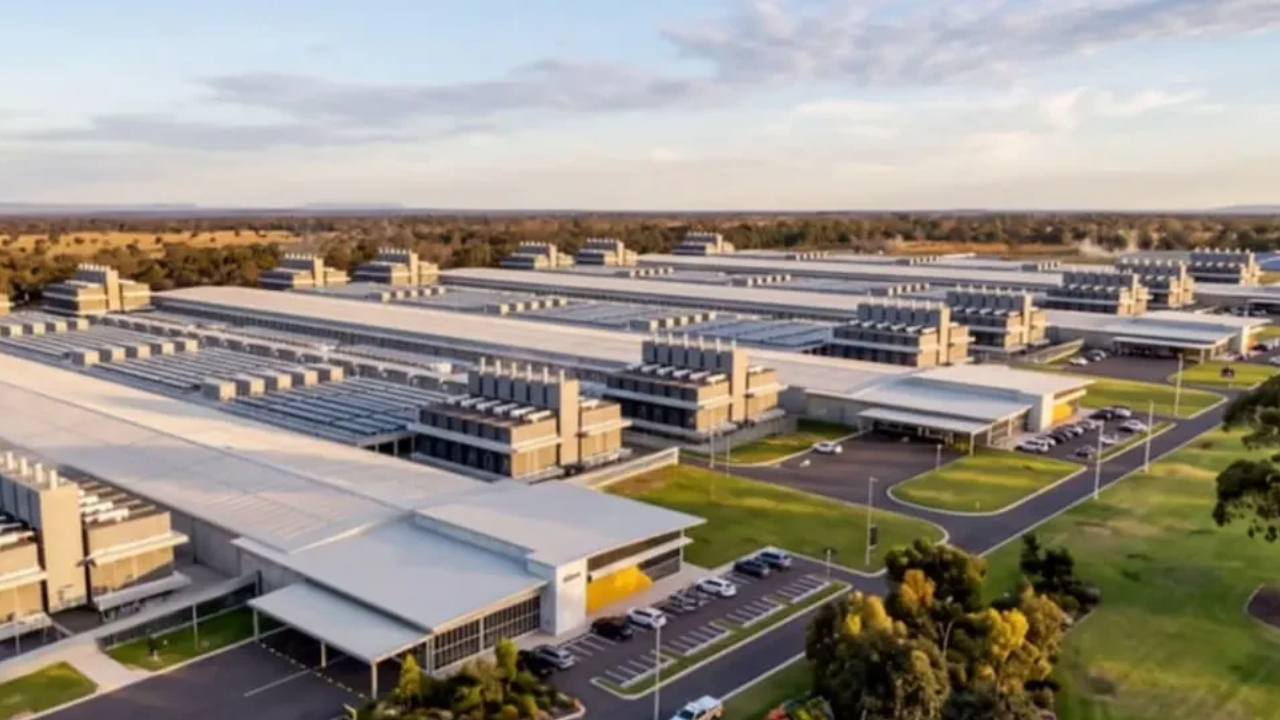
More than 1,000 residents have pushed back against a proposed A$15 billion data centre near Wagga Wagga because regional communities bear the strain of power, water, and land-use trade-offs while hyperscale computing captures value far outside the local economy. The conflict in southern New South Wales captures a wider clash between artificial intelligence infrastructure ambitions and everyday regional realities. When a single compute campus carries a price tag measured in tens of billions of Australian dollars, it stops looking like a routine commercial build and starts looking like an industrial transformation dropped onto a rural economy.
I have covered infrastructure fights across regions for decades. The pattern rarely changes at first glance. Developers arrive with sleek projections about jobs, modernization, and digital readiness. Locals show up at town halls and submission portals armed with anxieties about electricity bills, agricultural land, noise, and who actually gets paid once construction wraps up. What makes the Wagga Wagga pushback stand out is the scale of the capital expenditure relative to a regional hub built around farming, logistics, education, defense, and small-to-medium enterprises.
Why Regional Towns Become Targets for Hyperscale Capital
Big compute projects chase land, power access, fiber routes, and relative political or spatial breathing room. Metro hubs face tighter land constraints, fiercer neighborhood opposition, and congested grid pockets. Regional centers like Wagga Wagga sit at a crossroads of transport and regional activity, making them attractive on paper to planners looking beyond crowded coastal capitals.
Developers often frame rural or regional sites as win-win territory. To an infrastructure fund or cloud operator, open space and strategic positioning look like an opportunity to build at scale without fighting dense inner-city streetscapes every hundred meters.
Locals read the same map differently. To residents in and around Wagga Wagga, a A$15 billion project does not feel like a polite addition to the neighborhood. It feels like a sudden reallocation of regional priorities toward global compute demand.
The friction begins with scale asymmetry. A A$15 billion capital figure is staggering in any context, and in a regional setting it immediately raises questions about whether local infrastructure, civic services, and housing markets can absorb the shock without squeezing existing residents. Even when a developer promises long-term economic upside, skepticism hardens fast when the physical footprint dwarfs established local industries.
The Hidden Math Behind Power, Water, and Grid Stress
Data centres are often marketed as clean, quiet, high-tech workplaces. In reality, they are heavy industrial loads disguised in clean architectural cladding. Servers run around the clock, drawing continuous electricity and generating heat that must be managed relentlessly.
Every megawatt of IT load brings downstream engineering consequences. High-density server racks need steady power delivery and cooling capacity, and regional transmission and distribution networks were not originally designed around sudden hyperscale spikes. When a massive load enters a regional grid, questions immediately surface about network upgrades, reliability, peak demand pressure, and who ends up footing the bill through tariffs or infrastructure charges.
Water is the second flashpoint, even where developers propose closed-loop or low-water designs. Communities in agricultural regions understand water scarcity in their bones. Drought cycles, irrigation allocations, and seasonal rainfall swings shape how people judge any project that touches local water supplies or competes for regional resources during dry stretches.
Infrastructure debates turn bitter when residents suspect they are absorbing physical trade-offs for returns booked somewhere else.
Noise adds another layer of everyday irritation. Chillers, backup generators, transformers, and cooling fans do not clock off at five o'clock. For nearby households, low-frequency hums or periodic generator testing can turn a quiet rural or semi-rural setting into a constant reminder of an industrial neighbor.
None of these engineering challenges are insurmountable in isolation. Closed-loop cooling exists. Renewable power agreements and on-site storage can offset grid carbon intensity. Acoustic barriers can tame certain sound profiles. Yet technical fixes on a slide deck rarely calm a room full of people worried about real-world execution over a twenty- or thirty-year operating life.
Jobs Promises Versus Long-Term Local Reality
Follow the labor math and the local skepticism makes even more sense. A massive build phase can pull in hundreds or thousands of construction workers, earthmovers, electricians, riggers, and suppliers. That temporary surge can boost local cafes, motels, hardware stores, and service contractors while cranes are up.
Then construction ends. Once the facility goes live, permanent staffing at a large data centre is typically modest relative to the capital invested. High-end automation, remote monitoring, and centralized cloud operations mean a multi-billion-dollar campus does not automatically create thousands of permanent local jobs.
Consider a hypothetical example to see how the numbers can feel lopsided to a resident. Suppose a hypothetical regional build promises 1,200 construction roles over two years, followed by 65 permanent operations jobs once opened. A local worker might look at those numbers and ask what happens to housing availability and rental prices during the boom, and who actually qualifies for or lands those 65 ongoing roles when specialized engineering talent is often flown in or recruited from major tech hubs.
That is not an argument against technological progress. It is a straightforward look at economic incidence. When capital costs are enormous and permanent headcount is lean, the bulk of financial value tends to flow to equipment vendors, financiers, energy suppliers, and cloud or AI customers rather than staying inside the host town.
Why Over 1,000 Voices Matter Politically and Socially
Crossing the threshold of more than 1,000 opposed residents changes the temperature of a regional planning fight. In a community of Wagga Wagga's size, four-figure opposition is not background noise. It signals broad concern cutting across different streets, livelihoods, and age groups.
Opposition rarely comes from a single stereotype. Some residents worry about farmland conversion and visual impact on rural character. Others care deeply about climate and energy use, questioning whether massive new compute loads slow down broader decarbonization goals if fossil generation fills gaps during peak periods. Still others focus on practical governance: transparency, consultation timing, environmental safeguards, and accountability if initial promises fall short.
Developers sometimes misread early pushback as mere resistance to change. That is a costly mistake. Often, residents are pushing back against feeling side-lined in decisions that reshape their daily environment. When people feel information is drip-fed or technical jargon is used to brush off practical concerns, distrust snowballs.
What Developers Usually Get Wrong in Regional Rollouts
Too many infrastructure pitches start with valuation and vision instead of local friction points. Announcing a headline dollar figure before answering basic questions about water sourcing, grid impact, noise limits, and community benefits invites suspicion from day one.
Another common misstep is treating consultation as a box-ticking exercise late in the process. By the time sleek renders and grand announcements hit the press, locals often feel the real deals have already been sketched behind closed doors. Meaningful engagement requires candor about trade-offs, binding commitments rather than vague goodwill, and clear avenues for independent review.
What Critics Can Overlook in Infrastructure Debates
Fairness cuts both ways, and honest analysis has to name the blind spots on the anti-project side too. Modern economies depend on digital infrastructure for banking, healthcare records, logistics, education, government services, and emerging AI tools. Saying "no" to every major facility everywhere simply pushes demand onto other grids, other regions, or older, less efficient infrastructure.
Nor is every proposed project identical. Cooling technologies vary widely, power sourcing models differ dramatically, and well-structured agreements can direct real revenue and capability upgrades into local technical training, grid resilience, and civic projects. Lumping every data centre together as an automatic disaster obscures the real differences between a poorly sited, water-guzzling build and a tightly regulated facility with strict environmental and community guardrails.
The Gray Area Between Regional Growth and Local Sacrifice
There is no clean, painless formula here. Every big infrastructure project creates winners and losers, or at minimum uneven burdens. If communities refuse all large-scale industrial and digital builds, regions risk missing out on capital investment and modernization. If governments and developers bulldoze local concerns to hit national or commercial targets, social license fractures and projects stall in bitter fights.
Real accountability lives in the details. What happens if power demand spikes during summer heatwaves? Where does water come from during dry years, and what enforceable limits apply? How are noise thresholds monitored and enforced after ribbon-cutting? What concrete, legally backed benefits stay in the region rather than evaporating once the press releases fade?
Until those questions get straight, verifiable answers rather than polished assurances, resistance like the more than 1,000 residents opposing the A$15 billion Wagga Wagga data centre will keep growing louder. Demand hard numbers, binding safeguards, and transparent scrutiny before a single shovel breaks ground.