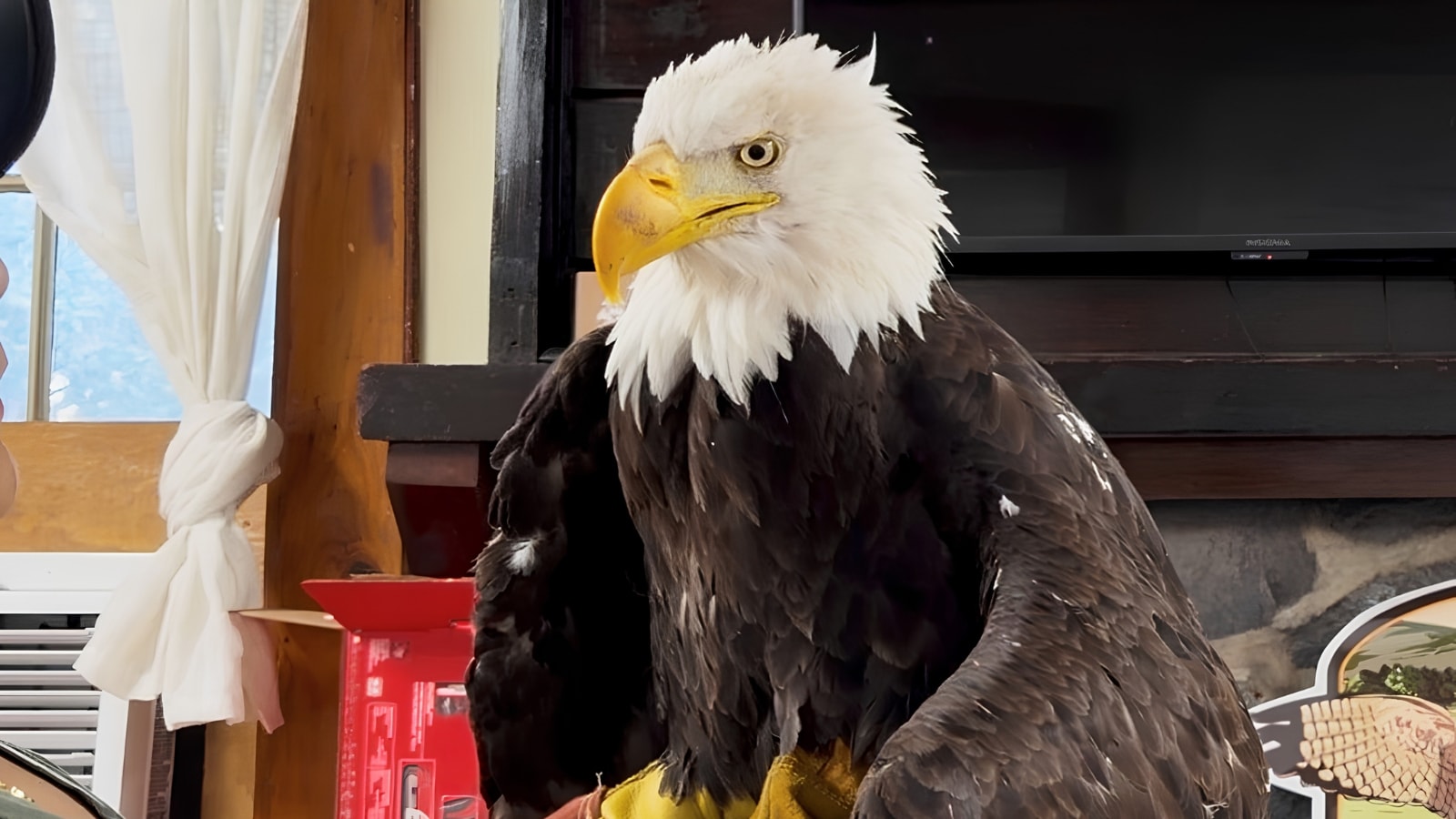
Highly pathogenic avian influenza caused the death of Jackie, the roughly 14-year-old California bald eagle whose Big Bear Valley nest drew millions of livestream viewers over the years. Wildlife officials and veterinary pathologists confirmed in October 2026 that the virus was the primary underlying driver of her decline following her August 10, 2026 death at the Ojai Raptor Center.
Basic news coverage treats Jackie's passing like an abrupt plot twist in a popular nature soap opera. One moment a beloved eagle is on camera; the next, a viral pathogen takes her out. That framing misses how wild raptors actually die. Jackie did not drop dead overnight from a single textbook symptom. Her body unraveled across weeks of compounded physiological strain, starting long before she was picked up on the ground in July and ending inside a clinical care ward where veterinarians fought plummeting red blood cell counts.
Watching a wild bird through a high-definition webcam creates a powerful illusion of intimacy. Viewers see close-ups of feathers ruffled by mountain wind, beak-to-beak care with mate Shadow, and chicks begging for fish. What a camera lens cannot show is microscopic tissue damage inside a muscular stomach, clotting cascades inside blood vessels, or the quiet, relentless toll of a virus circulating through wild birds and their prey.
The Necropsy Behind the Headlines
When a high-profile animal dies, the public usually wants a neat verdict. Pathologists rarely get to hand one out.
Veterinary pathologists at the San Diego Zoo Wildlife Alliance conducted the necropsy alongside laboratory and toxicology testing in coordination with the California Department of Fish and Wildlife and the Ojai Raptor Center. Their findings pointed to highly pathogenic avian influenza as the primary underlying cause of Jackie's decline, yet they emphasized that multiple severe, interconnected disease processes were unfolding at once.
In many bird flu cases, raptors suffer acute neurological signs, respiratory distress, or rapid systemic collapse. Jackie's case took a different route. According to the pathology findings, the infection produced a severe ulcer in her gizzard—the muscular portion of a bird's stomach that grinds food. Damaged tissue in that organ caused persistent internal bleeding and opened a gateway for bacteria to enter the bloodstream, leading to bacterial sepsis.
A single viral label rarely captures the full medical reality of a wild raptor; often, the pathogen sets off a chain reaction of bleeding, anemia, and secondary infection that no single drug can easily reverse.
Pathologists also detected HPAI genetic material across multiple tissues, including the damaged gizzard lining. Alongside the chronic stomach lesions and sepsis, examiners found severe inflammation and blood clots in her heart and major blood vessels, plus liver and lung abnormalities.
Testing ruled out West Nile virus and high lead levels. Toxicology screening did detect brodifacoum, an anticoagulant rodenticide, in her liver. Anyone who has covered wildlife toxicology knows how tempting it is to blame rat poison whenever a raptor turns up sick or dead. Here, pathologists checked the evidence carefully. Because the necropsy did not show the classic uncontrolled hemorrhage typical of acute rodenticide toxicity, investigators did not identify the rodenticide as the primary cause of death.
Still, having a chemical contaminant on board alongside a brutal viral infection and a bleeding gizzard is not nothing. In wildlife medicine, comorbidities rarely sit in neat, isolated boxes. Even when one factor is ruled out as the main killer, overlapping stressors shrink an animal's margin for survival.
How a Grounding and Anemia Unfolded
By the time Jackie was found on the ground near Dana Point Park on July 17, 2026, her condition had already been compromised. Witness cell phone video showed an altercation involving two subadult eagles. Jackie defended herself by rolling onto her back and using her talons, yet she could not fly far afterward.
When a wild raptor cannot sustain flight, something fundamental has shifted. Flight requires extraordinary metabolic output, intact musculoskeletal coordination, and oxygen transport capacity.
Transferred to the Ojai Raptor Center, Jackie was diagnosed with severe anemia. For weeks, clinicians worked to stabilize her through intensive care. Anemia in a bird of prey is not a minor lab footnote; if red blood cells drop low enough, tissues starve for oxygen, organs struggle to recover, and routine physical exertion becomes hazardous.
During the first week of August, her anemia worsened. By August 9, the center reported her condition as unstable, with her packed cell volume—a measure of the proportion of red blood cells in the blood—dropping below 6 percent before rebounding slightly to 9 percent. She died early the next morning, on August 10.
Her remains were cremated afterward to prevent potential transmission of the virus. That detail underscores a practical reality of modern wildlife response: a beloved local icon is still a potential biohazard when carrying HPAI. Emotional attachment does not suspend contagion protocols.
Why a Familiar Eagle Matters Beyond Sentiment
To understand why Jackie's death hit so hard across Southern California and among online viewers worldwide, you have to look at what she represented on the ground in Big Bear Valley.
Bald eagles once faced catastrophic decline in the contiguous United States, driven largely by habitat loss, shooting, and the widespread use of the pesticide DDT before its 1970s ban and federal protections helped the species recover. For years, bald eagles visited Big Bear primarily as seasonal winter migrants. Jackie—hatched in the valley to parents Ricky and Lucy and ruling the area for roughly 14 years alongside her mate Shadow—became part of a year-round presence along the lake's less developed north shore.
Livestream cameras turned conservation from an abstract policy debate into daily routine. Viewers watched snowstorms bury incubating birds, celebrated successful fledglings, and grieved setbacks. When Friends of Big Bear Valley and the San Bernardino Mountains Land Trust worked to protect nearby hunting habitat, public awareness generated by the broadcast helped give those conservation efforts real momentum.
Yet popularity cuts both ways. When millions of people watch a wild animal every day, it is easy to start treating her like a character with plot armor.
She wasn't. She was a wild predator navigating real pathogens, weather, territorial pressure, and human-altered landscapes. A single wild bird's death does not erase decades of bald eagle recovery, nor does it mean every eagle in the region is doomed. Officials noted after the necropsy that camera observations gave no sign that Shadow or the eaglets were ill.
The Bigger Disease Picture for Raptors
Jackie's death highlights a hard truth about highly pathogenic avian influenza in wild birds of prey. Eagles, hawks, and owls sit near or at the top of local food webs. Scavenging waterfowl or preying on infected birds exposes raptors directly to high viral loads.
Unlike a backyard songbird feeder where sick birds might quietly disappear into brush, a prominent nesting eagle carries outsized symbolic weight. Her illness forces a sharper look at how wildlife disease surveillance works in practice.
Consider a hypothetical example of how an outbreak might play out in a remote mountain basin: a few waterfowl carry HPAI into a high-elevation lake, a scavenging raptor picks up the virus, and no camera is pointed at the shoreline. Unless someone finds a carcass in accessible terrain and submits it for testing, that case never enters public awareness. Nest cams give researchers and the public an extraordinary window into behavior, yet cameras are concentrated on a tiny fraction of wild habitats.
Necropsies performed by specialized institutions like the San Diego Zoo Wildlife Alliance do crucial work by documenting atypical presentations—such as gastric ulceration and secondary sepsis—that might otherwise be misread. Knowing how a virus behaves inside different host tissues helps veterinarians and wildlife managers refine expectations when sick raptors arrive at rehabilitation centers.
At the same time, wildlife health managers face real limits. You cannot vaccinate an entire free-ranging population of bald eagles across mountain ranges and coastlines. You cannot sanitize every wetland or prevent every encounter between wild birds.
What communities and conservation groups can control is reducing avoidable human-created stressors where possible, supporting licensed rehabilitation and diagnostic networks, and keeping realistic expectations about wildlife mortality. Even in protected landscapes, disease remains an active, unpredictable force.
Life After the Nest Cam
In the weeks following Jackie's death and her autumn necropsy report, Big Bear's story kept moving. Memorial gatherings brought together residents, supporters of Friends of Big Bear Valley, and representatives of the Yuhaaviatam of San Manuel Nation. Meanwhile, Shadow remained in Big Bear, and subsequent reports noted his interactions with another bald eagle at the nest site.
Nature does not hold its breath for long after a loss. A territory remains a piece of geography with food, water, trees, and wind.
For anyone who followed Jackie's life on screen, the clearest takeaway is straightforward: support local wildlife rehabilitation centers and state wildlife health programs before a crisis hits, and look past viral headlines to the messy biological reality that actually shapes wild survival.