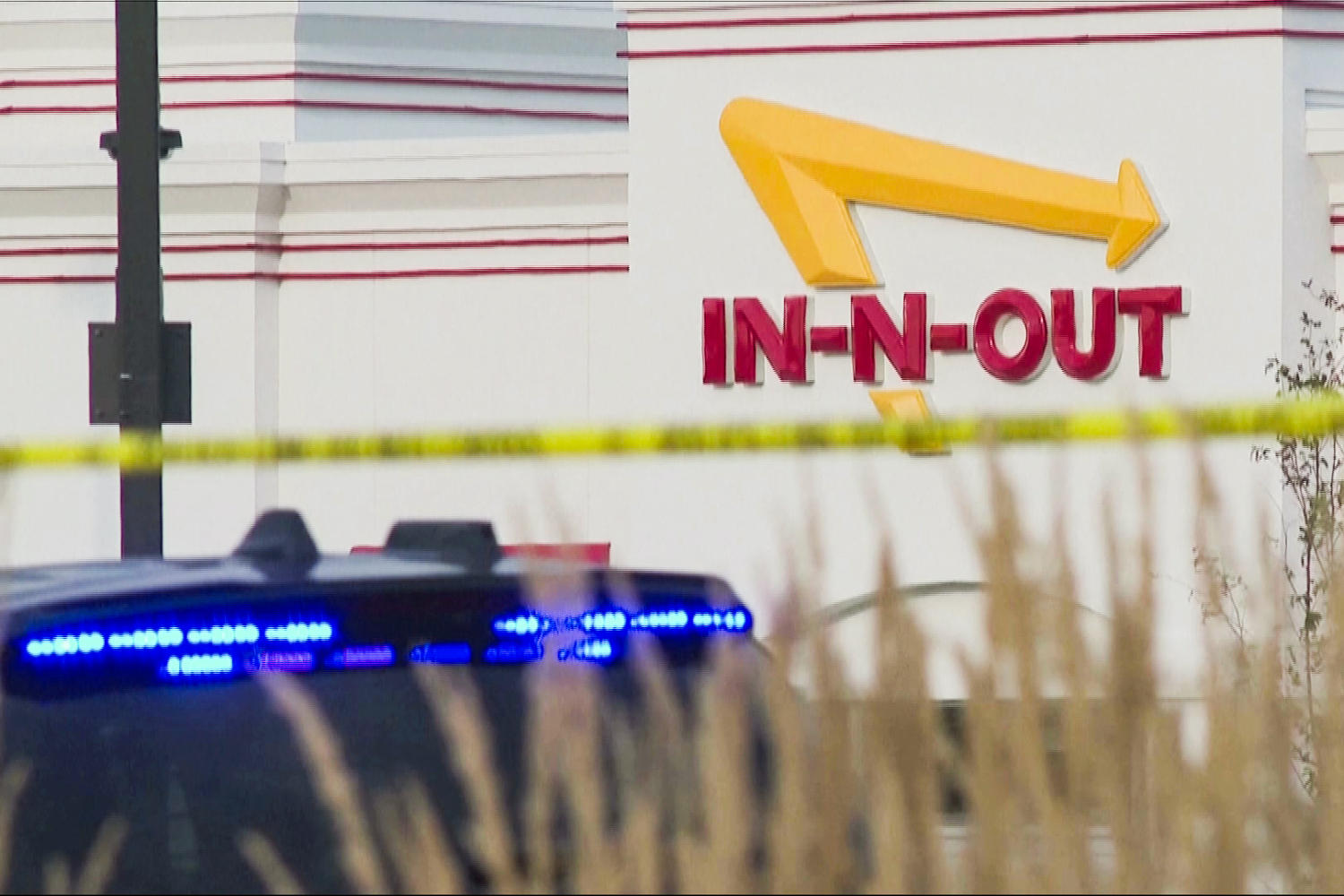
When a gunman opened fire at a newly opened In-N-Out Burger in Twin Falls, Idaho, leaving multiple people dead and injured, the immediate narrative focused heavily on a chaotic response that included an armed civilian and an off-duty state trooper. Media outlets rushed to the familiar, comforting script of the good guy with a gun who distracted the shooter and potentially saved lives.
Reality is rarely that neat.
Decades of analyzing public mass casualty events show a dangerous tendency to distill multi-variable tragedies into cinematic hero-versus-villain showdowns. The Twin Falls incident, which occurred on a Saturday afternoon in a busy commercial district, deserves a far more rigorous breakdown than a simple narrative of swift intervention.
The Anatomy of an Unfolding Crisis
The location matters. A freshly opened fast-food franchise serves as an acute focal point for massive crowds, heavy foot traffic, and disoriented patrons unfamiliar with optimal exit routes. When the suspect unleashed gunfire using high-powered rifles, the enclosed dining room transformed into a tactical nightmare.
Witness accounts and preliminary reports indicate that chaos reigned long before any civilian intervention took shape. Panic causes cognitive overload. Patrons freeze, drop under tables, or bottleneck at narrow entry points.
An armed bystander and an off-duty officer introduced a new variable into a high-stress environment already saturated with indiscriminate violence. While initial mainstream reports highlighted how a civilian carrying a concealed handgun with a suppressor distracted the active shooter, tactical analysts know that introducing multiple armed actors into a chaotic, smoke-filled, screaming room multiplies the risk of friendly fire and target misidentification.
Quantifying the Intervention Myth
We must look closely at what intervention actually achieves versus what public imagination wants it to achieve.
Statistically, active shooter events unfold with terrifying speed. Most incidents conclude within minutes, frequently before law enforcement or armed civilians can deploy effective counter-measures. Relying on bystanders to disrupt active shooters shifts the burden of structural safety onto untrained private citizens who happen to be carrying weapons.
Consider the operational friction. Law enforcement arriving at a chaotic scene must instantly evaluate every person holding a firearm as a potential threat. In a crowded fast-food restaurant, visibility is low, panic is absolute, and auditory clues are unreliable.
The presence of a civilian with a firearm did not stop the tragedy from claiming multiple lives; it merely fractured the timeline of the attack. Distracting a shooter can alter their focus, but it is an unpredictable byproduct of random chance rather than a predictable security protocol.
The Structural Failure of Public Spaces
Focusing exclusively on the heroic interlude misses the structural vulnerabilities baked into modern American commerce. High-density commercial properties prioritize customer flow and open-access layouts over defensive architecture.
Glass walls, single-point order counters, and minimal physical barriers make locations like the Twin Falls restaurant soft targets. When an individual walks in with long rifles, the architecture offers zero passive defense.
No amount of armed civilian presence solves the foundational design flaw of open-concept retail spaces built without blast-resistant glass, secure employee zones, or pre-planned evacuation corridors.
Moving Beyond the Soundbite
The public appetite for clean resolutions creates a distorted picture of public safety. Every time a tragedy occurs, the discourse immediately splits into predictable partisan talking points about firearm access, leaving the actual mechanics of human behavior under extreme stress largely unexamined.
We fail to ask why emergency exits remain chained or poorly marked during peak operating hours. We fail to scrutinize the training deficiencies of commercial staff who receive zero active-threat instruction during onboarding.
The Twin Falls tragedy is not an isolated proof point for armed civilian efficacy. It is a sobering reminder of how quickly modern public spaces can descend into unmanageable carnage, and how little our systemic safety measures have evolved to protect ordinary people eating lunch on a Saturday afternoon.
The smoke clears, the political arguments recycle themselves, and the fundamental vulnerabilities remain completely unaddressed