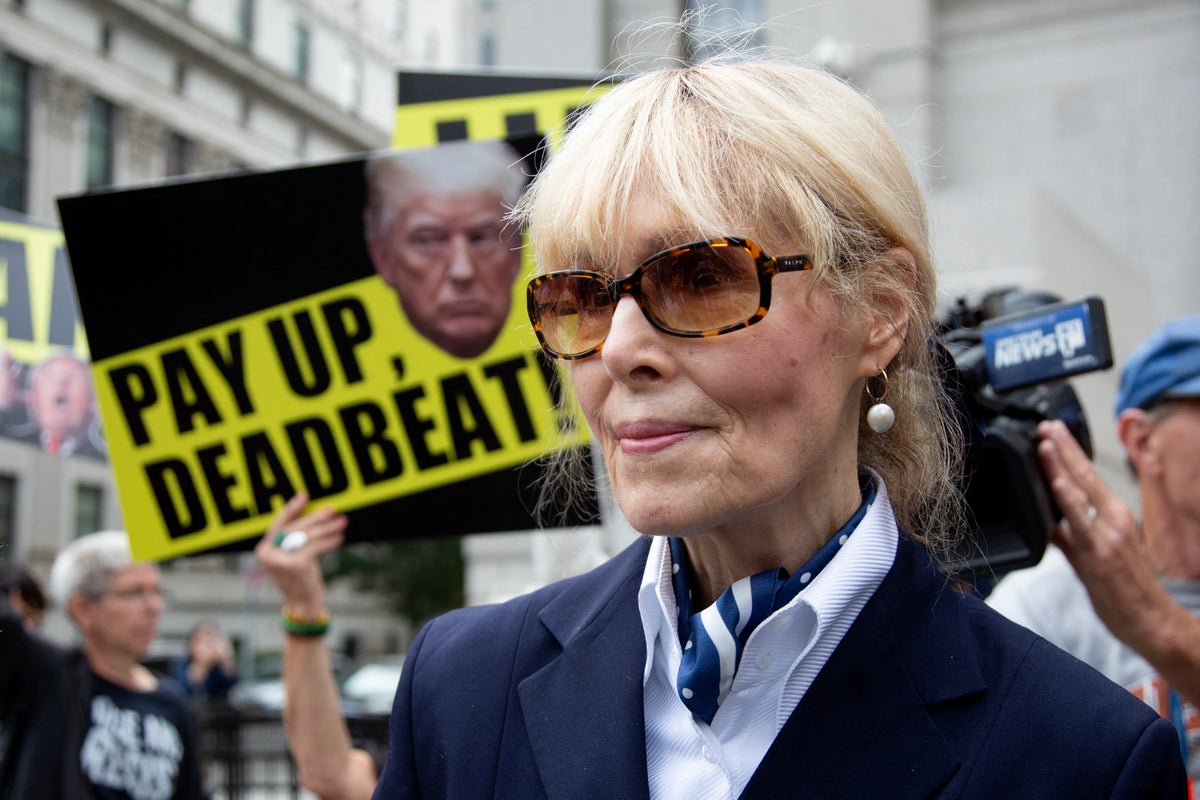
The United States Supreme Court has officially closed the door on Donald Trump's final bid to overturn the 2023 civil jury verdict finding him liable for sexually abusing and defaming writer E. Jean Carroll. In an unsigned order, the high court denied a petition for a rehearing, leaving intact a five million dollar judgment that has already been paid out to Carroll. This latest refusal arrives after the justices initially declined to hear the core appeal back in June, effectively cementing an unyielding legal reality for a defendant who has spent years fighting civil liability across multiple fronts.
Rehearings at the highest court in the nation are statistical anomalies. They are almost never granted, requiring extraordinary intervening circumstances that rarely materialize under standard appellate mechanics. Yet the strategic calculus behind filing such a long-shot petition goes beyond the immediate five million dollar penalty. Trump's legal team attempted to link the issues in this finalized case to broader, pending arguments regarding presidential immunity. By trying to keep the docket alive, defense attorneys hoped to create doctrinal alignment with separate, high-stakes litigation involving a much larger eighty-three million dollar defamation verdict.
The Supreme Court refused to bite. By issuing a swift, silent denial, the justices signaled that the mechanics of the 2023 trial are entirely distinct from the complex constitutional questions surrounding executive authority during a presidency.
The Anatomy of a Decades-Old Dispute
To understand why this specific Supreme Court refusal matters, one must look backward to the genesis of the litigation. The conflict traces back to allegations that Trump assaulted Carroll in a department store dressing room during the mid-nineteen-nineties. For years, the dispute remained in the realm of public accusation and vehement denial. It transformed into an active legal battle only after Carroll went public with her memoir and Trump responded with public statements dismissing her claims as a complete fabrication.
Under New York's Adult Survivors Act, a legislative window opened that allowed civil claims otherwise barred by statutes of limitations to be brought forward. Carroll seized that window. A federal jury subsequently weighed the testimony, evaluated the credibility of both parties, and concluded that Trump was liable for sexual abuse and subsequent defamation.
The distinction between the findings is vital. The jury did not find Trump liable for rape under the strict legal definitions presented in the jury instructions, but they did find him liable for sexual abuse involving forcible penetration. That distinction became a primary shield for the defense during initial arguments, yet appellate courts repeatedly found that the evidentiary standard met every requirement of civil liability under state law.
The Mechanics of Payment and Finality
Legal judgments on paper mean little until the capital changes hands. Following the initial refusal by the Supreme Court to hear the primary appeal in June, the legal friction shifted to financial execution.
Trump had previously deposited the original five million dollar award, along with accrued interest, into a court-managed escrow account. Once the high court initially declined review, a Manhattan federal judge ordered the release of those funds. Carroll's legal team swiftly collected a total exceeding five point six million dollars.
Because the money has already left the court account and landed in the plaintiff's possession, Monday's denial of a rehearing is more than a theoretical defeat. It strips away any remaining legal mechanism to claw those funds back. The verdict is not merely surviving on a docket; it is fully executed history.
The Immunity Question That Remains Open
While the five million dollar case is closed, the broader legal war between Carroll and Trump persists. The focal point now shifts entirely to the separate eighty-three point three million dollar judgment awarded by a different jury.
That massive penalty stems from statements Trump made in two thousand and nineteen while occupying the Oval Office. Because those remarks occurred during his first term as president, his defense team possesses a constitutional lever that was unavailable in the 2023 case. They are leaning heavily on the Supreme Court's landmark ruling regarding presidential immunity.
That precedent established that former presidents enjoy substantial immunity from criminal prosecution for official acts. Extending that logic to civil defamation suits arising from statements made while serving as head of state is a novel and aggressive legal theory. The Department of Justice and Trump's private counsel have both petitioned the high court to review the eighty-three million dollar award on those exact grounds.
The Supreme Court has not yet indicated whether it will grant certiorari for that larger case, with any decision expected later in the year.
The Limits of Judicial Strategy
The failed rehearing petition highlights the strict boundaries of appellate persistence. In high-profile litigation involving powerful political figures, legal teams often deploy every procedural tool available—from emergency stays to petitions for reconsideration—to maintain momentum and shift public narratives.
Yet the Supreme Court operates on strict doctrines of finality. When a lower appellate court affirms a unanimous jury verdict based on solid evidentiary grounds, and no clear constitutional violation taints the record, the highest court routinely steps aside. Trump's attempt to conflate post-presidency civilian statements with official executive duties failed to convince the justices.
The five million dollar chapter is finished. All eyes now turn to whether the Supreme Court will choose to wade into the murky waters of presidential immunity in civil torts when the eighty-three million dollar petition arrives for a formal conference