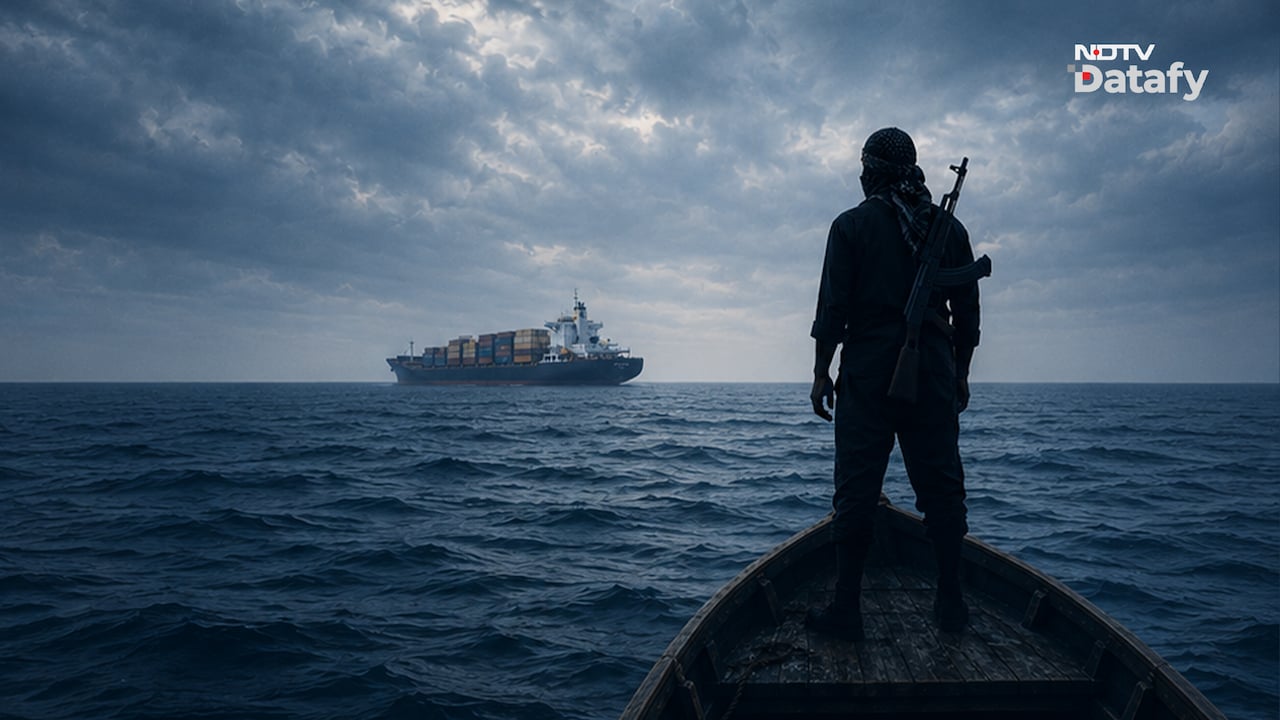
International maritime commerce is once again bleeding in the western Indian Ocean and the approaches to the Bab el-Mandeb strait, driven by a calculated resurgence of Somali piracy that feeds directly off regional geopolitical fractures. The narrative that Somali maritime banditry was permanently neutralized a decade ago has collapsed under the weight of observable reality. Between January and July 2026 alone, international monitoring bodies logged over a dozen hostile incidents off the Somali coast and the Gulf of Aden, a sharp escalation from the quiet years that followed the peak crisis of 2008 through 2012.
This is not a random spike in maritime criminality. It is a structural symptom of a profoundly altered security environment where naval forces have been pulled toward higher-priority flashpoints, leaving a vacuum that opportunistic criminal networks and militant proxies are exploiting with surgical precision. Don't forget to check out our previous article on this related article.
The Anatomy of the Naval Vacuum
To understand why small skiffs and seized dhows are once again transforming into effective mother ships hundreds of miles offshore, one must examine where the warships went. During the height of the international anti-piracy campaigns, a dense coalition of naval assets patrolled the maritime corridors linking the Suez Canal to the Arabian Sea. That shield worked because it was omnipresent.
Over the past three years, however, global naval priorities shifted dramatically. The escalation of hostilities involving regional state and non-state actors—including kinetic exchanges in the Red Sea and the Persian Gulf—forced multinational coalitions to redeploy heavy strike groups and surface action units away from the Somali basin. Frigates and destroyers tasked with escorting merchant traffic through chokepoints were pulled into high-threat kinetic zones, leaving the vast expanse of the western Indian Ocean under-monitored. If you want more about the background of this, Associated Press provides an in-depth breakdown.
Pirate syndicates noticed the horizon clearing. Operating from coastal redoubts in regions like Puntland, these networks preserved their institutional memory, logistical contacts, and financial backers even during periods of dormancy. When the gray-hull patrols thinned out, the threshold for launching successful hijackings dropped precipitously.
The Militant Nexus
What separates the current wave of maritime violence from historical precedent is the convergence of interests between groups that previously operated in distinct silos. The modern pirate no longer functions as an isolated coastal fisherman driven solely by local economic desperation. Instead, intelligence reports and security assessments highlight a transactional architecture binding Somali pirate cells, al-Shabaab factions, and Houthi operatives in Yemen.
For instance, logistical exchanges documented by international observers indicate that regional actors have supplied advanced tracking equipment, communications gear, and weaponry to groups operating along the Horn of Africa. In return, maritime disruption is manufactured without requiring the primary sponsors to absorb the direct political fallout.
This hybrid ecosystem provides several tactical advantages to non-state actors:
- Plausible deniability for regional proxies seeking to complicate commercial navigation.
- Shared intelligence regarding cargo movements, tanker schedules, and routing vulnerabilities.
- Diversification of illicit revenue streams, including weapons smuggling and ransom acquisition.
When a chemical tanker or bulk carrier is boarded hundreds of miles east of Mogadishu, the operation relies on a sophisticated chain of command that stretches from tactical sea-teams back to land-based financiers and regional militant liaisons.
The Economic Impact on Altered Trade Lanes
The geopolitical instability rippling through the Middle East has forced commercial shipping lines to constantly recalibrate their routes. As persistent security risks in the Red Sea forced many operators to weigh longer transits around the southern tip of Africa or seek alternative regional corridors, the remaining traffic through the Gulf of Aden became exposed to renewed predatory behavior.
Insurance underwriters have responded by adjusting risk premiums upward for vessels transiting the western Indian Ocean. Even a modest increase in successful seizures triggers disproportionate reactions across global supply chains, driving up freight rates and operational expenditures. Shipowners are forced to re-implement hardening measures that had fallen into disuse, including the deployment of armed private security teams, high-pressure water cannons, and citadel construction. Yet, armed guards on a slow-moving bulk carrier provide only a baseline defense against well-armed boarding teams utilizing multiple skiffs launched from hijacked mother vessels.
The Limits of State-Building Ashore
Maritime security cannot be solved exclusively at sea. The root causes of maritime crime remain anchored in the political and economic fragilities of the Somali mainland. Despite years of international capacity-building efforts, the central government and regional administrations struggle to project consistent authority over remote coastal stretches and lawless interior districts.
Widespread economic hardship, compounded by environmental shocks and illegal foreign fishing fleets depleting local marine stocks, leaves coastal communities vulnerable to the financial gravity of criminal syndicates. When legitimate local economies offer meager survival prospects, the multi-million-dollar payout of a single hijacked cargo vessel reshapes local power dynamics, buying complicity and silence from communities that might otherwise reject the pirate presence.
Counter-piracy operations that rely solely on intercepting skiffs treat the fever while ignoring the infection. Without synchronized investments in local governance, legal infrastructure, and coastal economic alternatives, every drawdown in naval enforcement will inevitably invite a return of the criminal enterprises that have plagued these waters for generations. The international community faces a stark reality: maintaining secure global trade routes requires sustained, long-term vigilance rather than episodic military interventions that fade the moment the next geopolitical crisis claims the world's attention.


